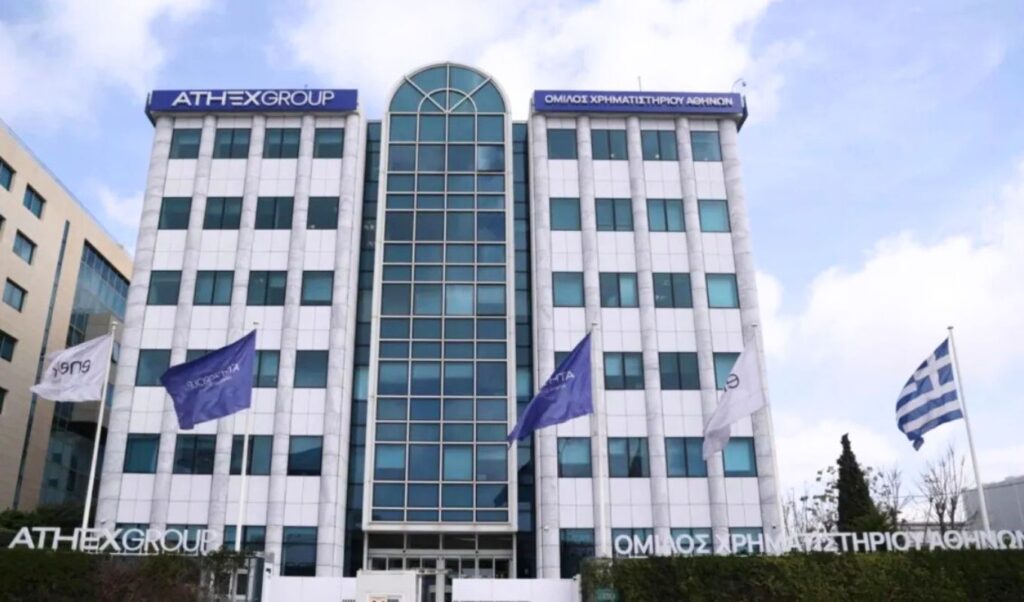
A “hemorrhage” of €10.4 billion was recorded in the capitalization of the stock market, while the main stock index fell 6.81% as a result of the war since the beginning of conflicts in the Middle East. Specifically, the General Index has almost wiped out the gains it had recorded during 2026, while the banking index shows losses of 8.35% since the beginning of military operations. Meanwhile, the total market value of listed companies decreased to €146.722 billion, compared to €157.126 billion before the war began.
Athens Stock Exchange: Where the biggest losses are recorded
Among large-cap stocks, shares of EYDAP (+7.78%), HELPE (+1.87%) and Motor Oil (+0.05%) resisted the downward trend. The biggest losses were recorded by Aegean Airlines (-15.60%), Optima Bank (-12.68%), Viohalco (-12.55%), Elvalhalcor (-12.47%), Titan (-11.43%) and Piraeus Bank (-11.33%).
Following are shares of Athens Airport (-9.62%), Eurobank (-8.88%), PPC (-8.47%), Lamda (-8.44%), OPAP (-8.10%), Alpha Bank (-7.72%), Sarantis (-6.15%), National Bank (-6.06%), Jumbo (-5.96%), Bank of Cyprus (-5.83%), OTE (-4.74%), GEK TERNA (-4.43%), Coca Cola HBC (-4.40%) and Metlen (-3.97%). Small declines are recorded by Aktor (-0.38%) and Piraeus Port Authority (-0.53%).
The duration and intensity of the conflict between the US and Israel with Iran will determine the consequences for market performance and the economy of the European Union and consequently Greece.
Moody’s has a baseline scenario of a 4 to 6-week conflict in the Middle East, which implies, in its assessment, controlled impacts on the energy market, Gulf economies and international trade.
However, if the conflict extends beyond this timeframe, the effects will be cascading and warns of credit risks.
The duration of the conflict will directly determine the impact it will have on the Athens Stock Exchange. This is stated in a relevant report by Axia – Alpha Finance, which notes that the impact of the war on the Athens Stock Exchange is, for now, limited. Initially, investors should recognize that some stocks have more “defensive” characteristics (OTE, OPAP, Jumbo, GEK Terna, Cenergy, ADMIE and EYDAP).
Mixed effects are expected for refineries in the short term. This is because, short-term, both HelleniQ Energy and Motor Oil appear able to cover their input needs for several weeks. Companies like PPC, Metlen as well as GEK-TERNA, Motor Oil and HelleniQ Energy could benefit short-term from stronger pricing. Regarding Aegean Airlines and Athens Airport, there is an assumption that passenger traffic to and from the Middle East may decrease, directly affecting flight volume. According to Axia – Alpha Finance, limited short-term impact is expected on both Piraeus Port and Thessaloniki Port from a limited conflict. For Piraeus Port, an escalation of the conflict could have immediate and negative impact on demand and profitability at cruise and passenger terminals.
For the market, as Optima Research notes, the key question remains the duration and intensity of the crisis, as these will determine whether the effects remain manageable or become a substantial development obstacle for 2026. Greece remains a net importer of energy goods, meaning any increase in oil and natural gas prices burdens the trade balance and limits growth potential. According to Optima Research, for every $10 per barrel increase in oil prices, Greek GDP is negatively affected by 0.15%.
Bank of America includes the Athens Stock Exchange among the most attractive markets in the EEMEA region (Eastern Europe, Middle East and Africa). It notes that Greek stocks continue to offer a strong combination of valuations, dividend yields and earnings prospects. However, escalating geopolitical tensions in the Middle East creates a new uncertainty factor that could affect investor risk appetite internationally.