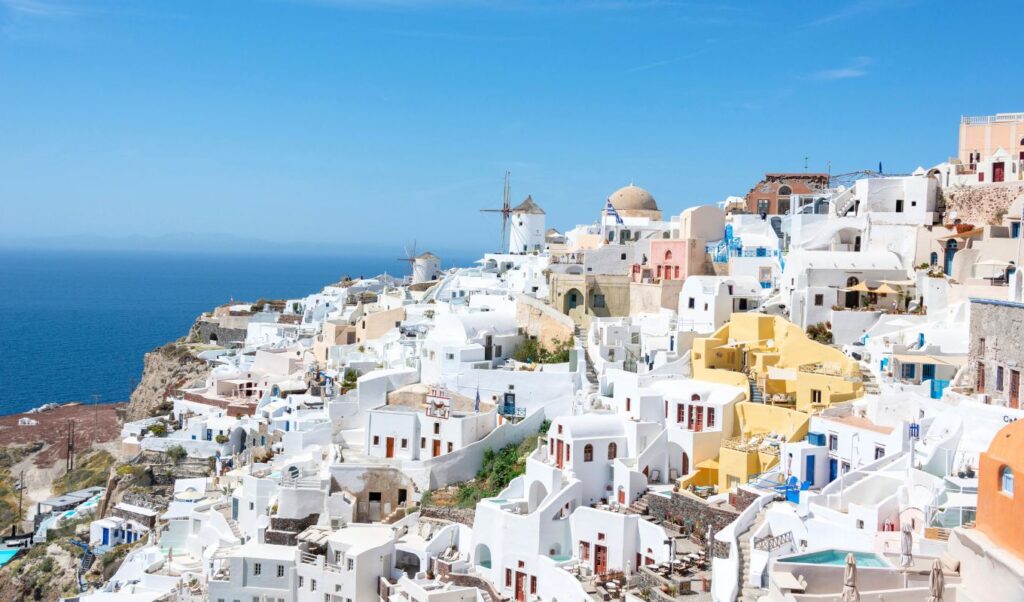
2025 was a good year for Greek tourism. According to data from the Bank of Greece, nearly 38 million visitors came to our country last year, marking a 5.6% increase compared to 2024. Meanwhile, average spending per trip increased by 3.8%, showing that not only are more visitors coming, but they’re also spending more. These numbers aren’t just statistics. They translate into revenue for hotels, restaurants, travel agencies, transportation, and every service related to tourism. Tourism continues to be a fundamental source of income for the Greek economy and an important driver of growth.
Read: Greek government bonds prove resilient despite major losses in European markets
The tourists who leave the most money in Greece
The travel balance shows the difference between money that foreign tourists spend in Greece and what Greeks spend when traveling abroad. In 2025, the surplus was 20.25 billion euros, increased by almost 1.5 billion compared to 2024. This means that receipts from foreign visitors far exceed the expenses of Greek travelers abroad, which helps the economy and balances the trade deficit. Travel receipts, meaning the money tourists spend in Greece, reached 23.63 billion euros. Of this amount, roughly half came from EU countries (12.7 billion euros) and the remainder from non-EU countries, with a significant increase of 14.7%. The countries that spend the most are Germany, the United Kingdom, Italy, the USA, and France, with Americans recording the highest average spending per trip.
While increasing visitor numbers means more revenue, average spending per trip is equally important. For example, Germans spend an average of 636 euros per trip. They are numerous (approximately 5.95 million travelers), which is why they contribute significantly to the economy. The British, although fewer in number, spend an average of 765 euros per trip. Americans are the most “expensive” visitors, with average spending of 1,108 euros per trip, although their numbers are smaller (1.55 million travelers). Italians spend approximately 585 euros, while the French have relatively stable spending despite a small decline in arrivals. This data shows that the most valuable tourists aren’t always the most numerous, but those who spend the most money on average.
December 2025 data
The December 2025 data is particularly interesting. In the last month of the year, arrivals increased by 49% compared to December 2024, reaching 1.315 million travelers. However, average spending decreased by 10.6%, as many were tourists who prefer budget travel outside the summer season. The increase in arrivals led December receipts to 623 million euros, 33% more than December 2024. This shows that even in winter, tourism can be a significant source of revenue, especially from countries like the United Kingdom (+176% in receipts) and Italy (+59.4%).
Data analysis shows that tourists from Germany, the United Kingdom, Italy, and the USA are the most important for the country’s revenue. Greece benefits both from the large number of visitors and their average spending. In other words, it’s not enough just to have many tourists arrive, but they must also spend considerable money. Net receipts from travel services offset a significant portion of deficits created by goods trade and strengthen the economy overall. For investors, this means that markets with high spending per trip are particularly interesting for hotels, dining, experiences, and high-quality services. Meanwhile, market diversification is important. The increase in visitors from non-EU countries, such as the USA, shows that Greece can attract tourists who spend more, regardless of economic difficulties in Europe.
2025 confirms that the most valuable tourists for Greece are those who combine arrival numbers with high average spending per trip. Germany, the United Kingdom, Italy, and the USA stand out as the most important markets. Greek tourism remains strong for the economy, providing revenue, jobs, and investment opportunities, while the challenge for the future is to maintain this balanced mix of quantitative and qualitative demand, so that Greece remains a year-round destination.
Published in MoneyPro of Parapolitika