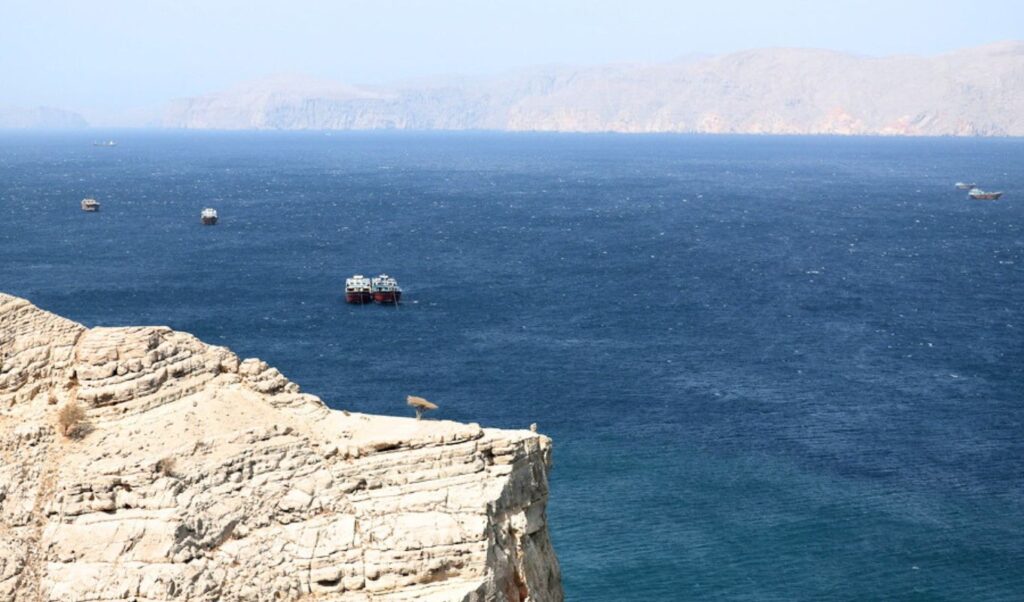
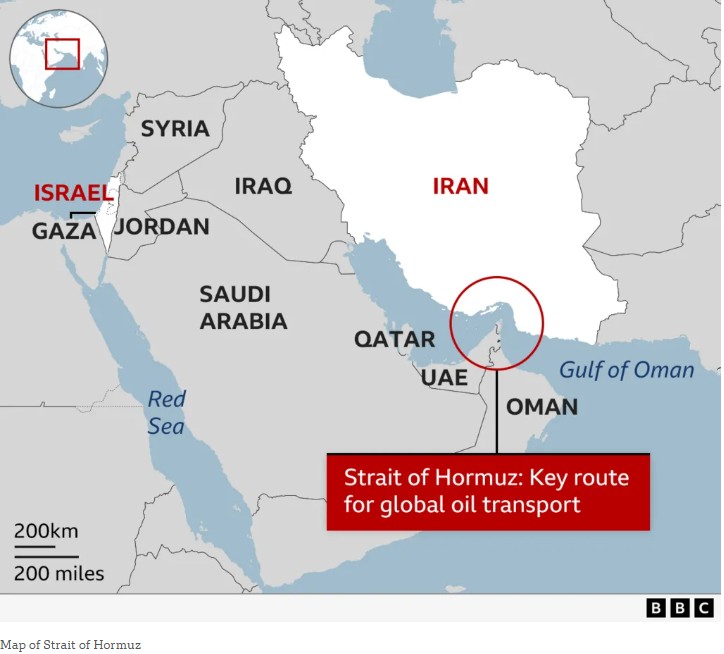
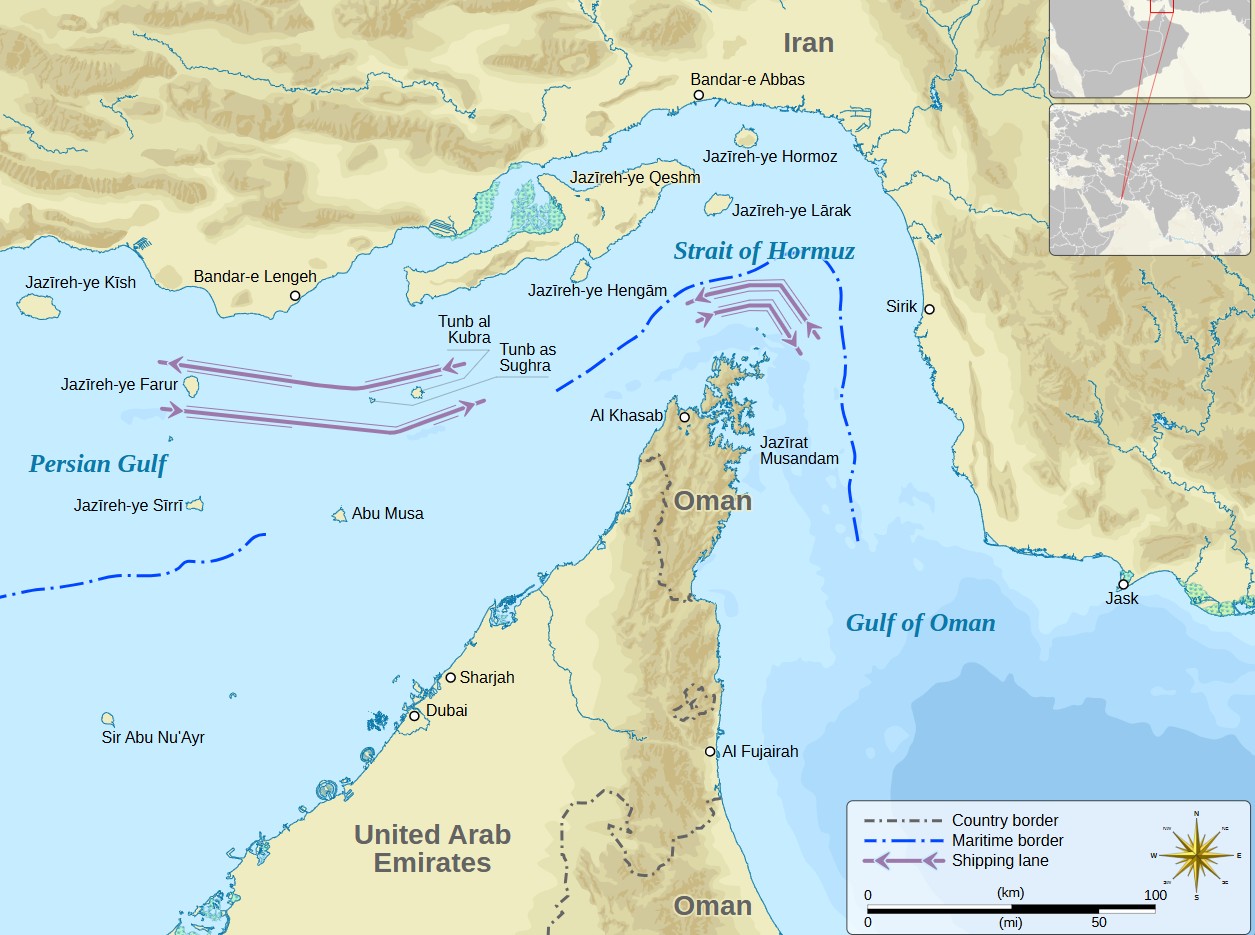
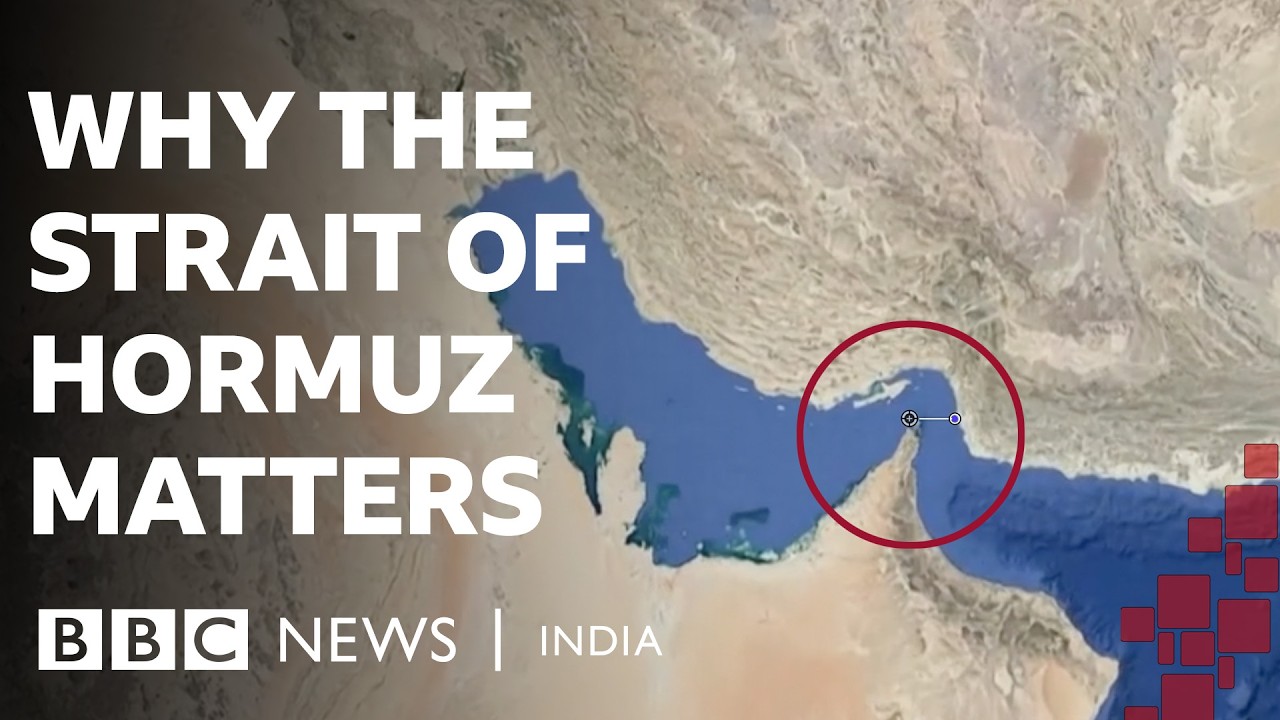
A maritime passage just three kilometers wide is holding the global economy “hostage” today. On February 28, 2026, the US and Israel launched coordinated airstrikes against Iran as part of operations “Epic Fury” and “Lion’s Roar,” resulting in the death of Supreme Leader Ayatollah Ali Khamenei. Tehran’s retaliation quickly extended to sea, with traffic through the Strait of Hormuz, which carries one-fifth of the planet’s daily oil consumption, nearly halted amid Iranian attacks on tankers. According to the Washington Post, the war is disrupting financial and energy markets globally, with oil prices skyrocketing and the threat of inflation menacing households worldwide.
Read: Iran: Closes Strait of Hormuz – “We will bomb all ships,” say Revolutionary Guards
Why there’s no easy replacement for the Strait of Hormuz
To understand the magnitude of this crisis, one need only look at the numbers. According to the US Energy Information Administration (EIA), an average of 20 million barrels of oil per day passed through the Strait in 2024, equivalent to approximately 20% of global petroleum product consumption. The Strait of Hormuz is also critical for liquefied natural gas (LNG) trade, as roughly one-fifth of global LNG exports passes through this route. Notably, Qatar, which represents the overwhelming majority of these volumes, suspended LNG production after Iranian drones hit its facilities at Ras Laffan and Mesaieed, depriving markets of one of the planet’s largest natural gas suppliers, according to CNBC.
“The strait is closed by the shipping industry itself”
The paradox of this crisis is that no official blockade declaration was needed to stop traffic. According to CNBC analysis, shipping rates for large VLCC tankers — which carry 2 million barrels from the Middle East to China — shot to record levels of $423,736 per day, an increase of over 94% in just one day. Major insurers, including Norwegian Gard and Skuld, British NorthStandard, and the London P&I Club, announced they were withdrawing war risk coverage for ships in the region, CNBC reports. The result was aptly summarized by maritime publication Lloyd’s List: “The strait is closed – not by Iran, but by the shipping industry itself.” In other words, Iran didn’t need to impose a blockade; the threat of attack was enough for companies to withdraw their ships, as no insurer was willing to cover the risk anymore. What this means for the global economy
The impacts extend far beyond the gas pump. According to Al Jazeera analysis, Ali Vaez of the International Crisis Group warned that closing the Strait would fuel inflation and push fragile economies closer to recession within weeks. More expensive energy means everything can become more costly – from bread and milk to rent and electricity bills. Even more categorical, according to CNBC, was former White House energy advisor Bob McNally: “A prolonged closure of the Strait of Hormuz is a guaranteed global recession.” The reason is simple: even if other OPEC countries wanted to increase production to fill the gap, their oil has nowhere to go, since it’s located in the Persian Gulf, behind the same blocked Strait.
What it means for consumers’ wallets
Consumers are already feeling the initial consequences. Brent crude rose 10-13% in the first trading sessions, with analysts predicting possible rises above $100 per barrel if disruption continues. This translates directly to higher gasoline and heating oil prices, but the chain doesn’t stop there. According to NBC News, modern supply systems rely on “just-in-time” logic, meaning raw materials arrive exactly when needed. When transport times extend by weeks, this model collapses: raw materials are delayed, components don’t arrive on time, producers feel it first and consumers follow with delays, tight inventories, and higher prices. Simply put: from supermarket shelves to electronics and pharmaceuticals, the Persian Gulf crisis has a way of reaching every citizen’s wallet.
Which goods are immediately at risk
According to NBC News, beyond fuels, goods dependent on this sea route include aluminum, sugar, and fertilizers, while slowdowns or production halts are expected in automotive, electronics, and pharmaceuticals, as well as goods requiring temperature-controlled transport. According to the EIA “US Energy Information Administration,” approximately 30% of European aviation fuel supply originates from or passes through the Strait of Hormuz – meaning airline tickets are also under pressure.
Which countries are hit hardest
According to extensive CNBC analysis, Asia bears the greatest burden: Thailand, India, South Korea, and the Philippines are the most exposed countries due to their high dependence on energy imports. China, India, Japan, and South Korea collectively represent 69% of all crude shipments passing through the Strait – their factory lines, transport networks, and electrical grids depend on uninterrupted energy supply from the Gulf. According to analysis by energy data company Kpler, South Korea and Japan have natural gas reserves for only two to four weeks. If the crisis extends beyond this period, the two countries — which depend almost entirely on imports to fuel their factories and households — will face a real energy crisis.
What alternative routes exist and why they’re insufficient
The only practical alternative for container ships is bypassing via the Cape of Good Hope. According to CNBC, Maersk announced that all Middle East-India routes to Mediterranean and eastern US will be diverted via the Cape, while Xeneta chief analyst Peter Sand characteristically emphasized that “there is no real alternative” to maritime transport. For oil, according to official US energy data, Saudi Arabia and the United Arab Emirates have land pipelines that can bypass the Strait, but they can transport only 2.6 million barrels per day. To understand the problem’s magnitude: this is less than one-quarter of the 20 million barrels that normally passed through the Strait daily — the remainder has nowhere else to go. According to The Conversation analysis, supply chains only function when there’s predictability, and when this is lost, businesses globally cannot plan, order, or deliver. The longer the disruption continues, the deeper and more permanent the economic damage becomes.
How far can the crisis extend
Analysts estimate that a total and long-term closure remains the most extreme and currently less likely scenario. According to CNBC, Amrita Sen of Energy Aspects estimated that “what the US won’t be able to control are individual attacks on tankers, and this is enough to keep the market in a state of extreme alert.” Speaking to NBC News, Rystad Energy’s head of geopolitical analysis Jorge León emphasized that this situation is unlike the corresponding crisis of last June, where Iranian counterattacks were limited and expected. This time, the scope and intensity of attacks far exceeded market expectations, he said characteristically.