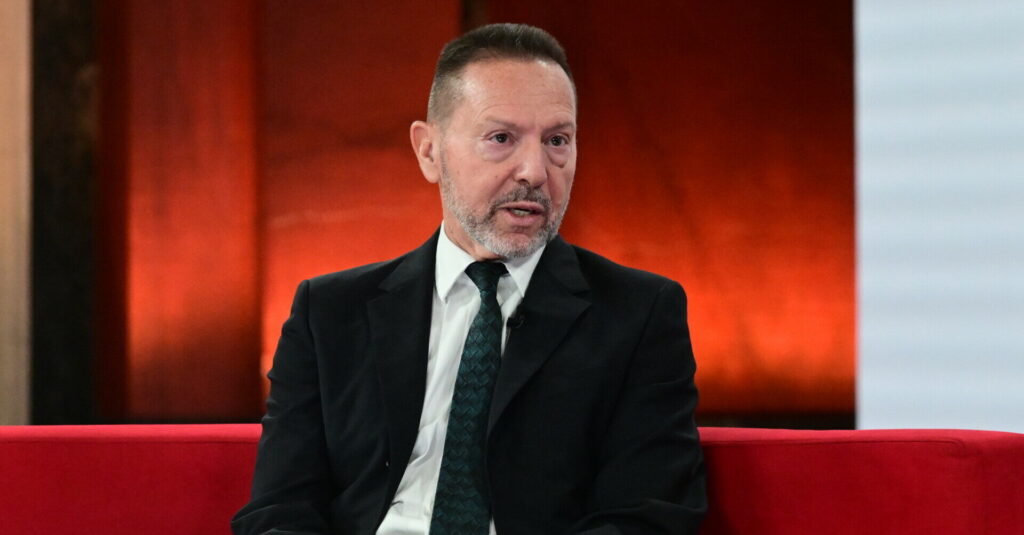
Measures for the case that inflation charts a new rally, like in 2022, due to the war situation in Iran and the Middle East, is what Yannis Stournaras calls on the European Central Bank (ECB) to take via Reuters. Specifically, the Governor of the Bank of Greece proceeded to estimate that the ECB should keep its options open in setting interest rates, as the impacts of the conflict in Iran, including a potential inflation increase, will depend on its duration.
The Greek ECB policymaker stated that the US-Israel war against Iran, which is expanding to other countries in the region, is considered to threaten to increase inflation and negatively affect Europe’s already meager economic growth, making energy more expensive and disrupting the supply of other products as well.
Yannis Stournaras stated that a prolonged conflict would increase inflation, but it is still too early to draw conclusions. “If negotiations start tomorrow, there will be de-escalation,” he said in a phone interview with Reuters. “If it continues, there will be upward pressure on inflation. I don’t rule out either of the two. Therefore, we should show flexibility.”
Israeli Prime Minister Benjamin Netanyahu stated that the war against Iran “is not going to last years.” US President Donald Trump initially predicted that the conflict would last four to five weeks, but has since tried to justify a broad, indefinite-duration war.
For now, however, Yannis Stournaras said that the European Central Bank should monitor the conflict’s development. “Its impact on inflation and production depends on the duration and depth of the armed conflict,” he said.
“As we have no visibility on either and taking into account inflation prospects, in my opinion we should not rush to change any of the monetary policy parameters now, but be vigilant and monitor the situation very carefully,” he emphasized. He described the conflict as “another serious supply-side shock” hitting the eurozone economy, which has already been struck by an energy shock following Russia’s invasion of Ukraine in 2022 and US trade tariffs last year.