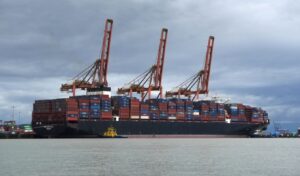
The public discourse about the Greek economy in recent years has often been trapped in the stereotype of a “coffee shop economy.” A narrative that portrays the country as relying solely on tourism, hospitality and low-productivity activities, unable to develop a modern and competitive production model. However, a new study by INSETE challenges this image with documented evidence, revealing a more complex and dynamic reality. According to the study, after 2015 goods exports increased at an average annual rate of 7.8%, exceeding both the growth in tourism receipts which moved at 4.8%, and GDP growth which stood at 3.4%. This data demonstrates that extroversion is not limited to tourism, but extends to the productive sector as well.
Read: Pierrakakis: Greece is changing its production model – By 2026 we will move even faster
Economy and manufacturing production
Meanwhile, manufacturing production has been growing at a rate of approximately 3% annually from 2013 to 2024, higher than the overall economy’s growth rate. The strengthening of manufacturing has been accompanied by increased employment in the sector, at a rate of 2.3% annually, almost double the average rate of total employment growth. At the same time, investments in machinery and technological equipment are strengthening at an average rate of 8.8%, indicating an upgrade of productive capacity. Particularly impressive is the turnaround of the agri-food sector, which from a deficit of 3 billion euros in 2008 recorded a surplus of 460 million euros in 2023. This development reflects improved international competitiveness in a sector of strategic importance.
Greek economy: What the study highlights
The study also notes that the improvement of the Real Effective Exchange Rate based on unit labor costs has contributed to international competitiveness, while productivity in normal periods increases at rates of 1.23% and 1.9% respectively in recent periods. The conclusion is not that the Greek economy has no weaknesses. On the contrary, challenges remain. However, the narrative of a one-dimensional “coffee shop economy” does not capture the full picture. The challenge is not to reject tourism, but to capitalize on positive changes and strengthen the structural shift toward a more resilient and export-oriented production model.