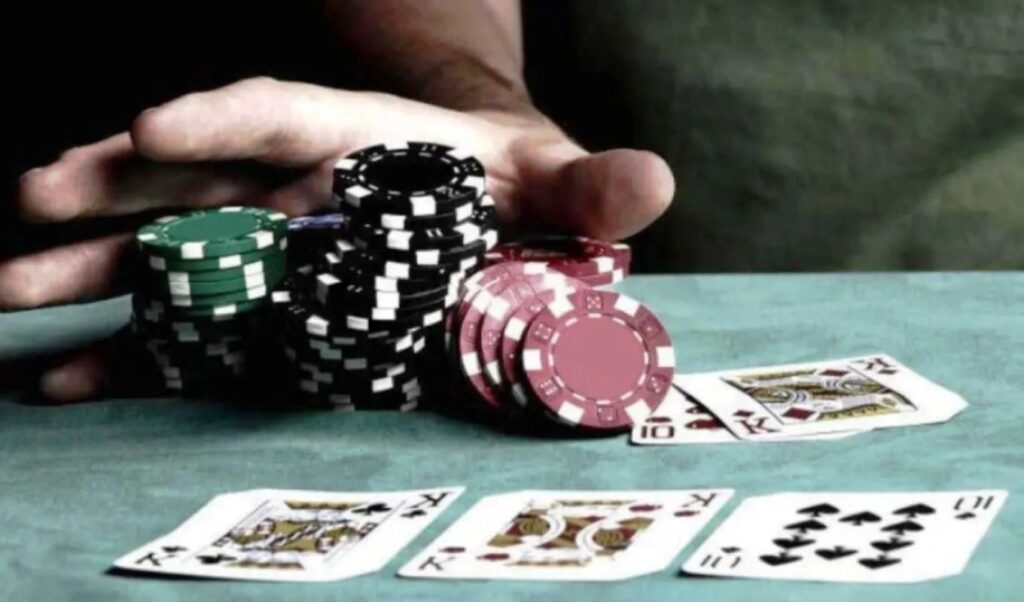
A package of measures to combat illegal gambling, which exceeds 1.5 billion euros and constitutes a “gaping wound” for state coffers, is being prepared by the Ministry of National Economy, with a bill expected to be submitted to Parliament in the coming period.
The bill aims to comprehensively address the phenomenon, both in physical spaces and online. Among the key interventions, immediate sealing of establishments where illegal gaming is detected is foreseen, as well as long-term revocation of their operating licenses, under municipal responsibility. At the same time, the conditions for granting and maintaining operating licenses for internet cafes, which often operate as “storefronts” for illegal activities, are being significantly tightened.
What the bill provides for illegal gambling – emphasis on criminal provisions
Particular emphasis will be placed on criminal provisions, so that the new framework operates as a deterrent for offenders. Those who organize games without a license will face heavy prison sentences and high monetary fines, while in cases of games of chance the sanctions become even stricter, reaching up to multi-year imprisonments. Specifically, if the games are games of chance, imprisonment of up to 10 years and a monetary penalty of 50,000 to 100,000 euros is provided.
The new framework becomes particularly strict when aggravating circumstances occur, such as professional activity, commercial scale, participation of minors, or reoperation of establishments after sealing. At the same time, penalties are also provided for players who knowingly participate in illegal games of chance, with increased severity in cases of recidivism.
Control mechanisms
The bill also includes provisions for protecting control mechanisms. Those who obstruct or frustrate inspections by competent authorities will face prison sentences and monetary sanctions. As emphasized by the Minister of National Economy and Finance, Kyriakos Pierrakakis, the government’s goal is to create a modern and holistic framework, adapted to technological developments, that will strike illegal gambling at its root and strengthen the protection of society, especially minors.
The bill is being drafted in cooperation with the Gaming Supervision and Control Committee (GSCC), which will have new tools and enhanced supervisory powers. The GSCC maintains and updates in real time the “blacklist” of unlicensed websites, which today includes more than 11,000 sites.
Foreign platforms also under scrutiny
Foreign platforms that bypass the Greek regulatory framework, advertise online, accept Greek players and handle millions of euros without control are also under scrutiny. The list is cross-referenced through DNS filtering, while there is cooperation with prosecutorial, prosecuting and international authorities.
According to official data, in 2024, 9.5% of the population participated at least once in illegal gambling games, a percentage corresponding to approximately 799,000 people. Of these, 390,000 played online from home via mobile or computer, while 215,000 participated with physical presence in organized spaces, such as clubs, illegal clubs or internet cafes.
Additionally, 194,000 people combined both forms of gaming, both online and in person. Regarding game types, 401,000 people bet on sports betting, 392,000 played roulette, 309,000 “slot machines,” while 18,000 tried other games of chance. The highest participation in illegal gambling is recorded by the 18–34 age group, as more than one in four players of unlicensed games belongs to this category.