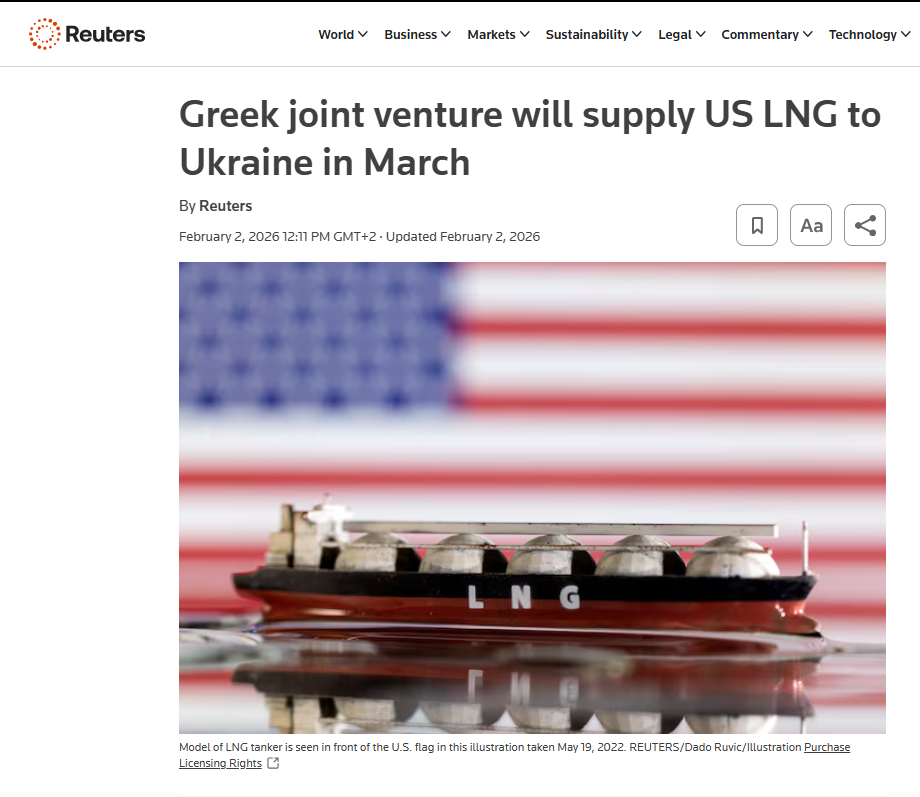
The Greek consortium between Aktor and DEPA, Atlantic Sea LNG Trade, has secured the first supply agreement for liquefied natural gas (LNG) from the United States to Ukraine, marking a significant development for the region’s energy map. As reported by Reuters, the first shipment will take place in March, while this agreement strengthens Greece’s strategic position as a crucial transit hub for natural gas imports to the European continent, particularly as the European Union prepares for a complete ban on Russian gas imports by the end of 2027.
Critical energy support for Ukraine
Ukraine is facing the most severe energy crisis since the war began, as its energy sector suffers continuous Russian attacks, extreme winter conditions, and accumulated infrastructure damage. President Volodymyr Zelensky stated last week that the country has achieved significant diversification of natural gas supply sources, a move proving vital for its energy security.
What the LNG agreement with Greek involvement includes
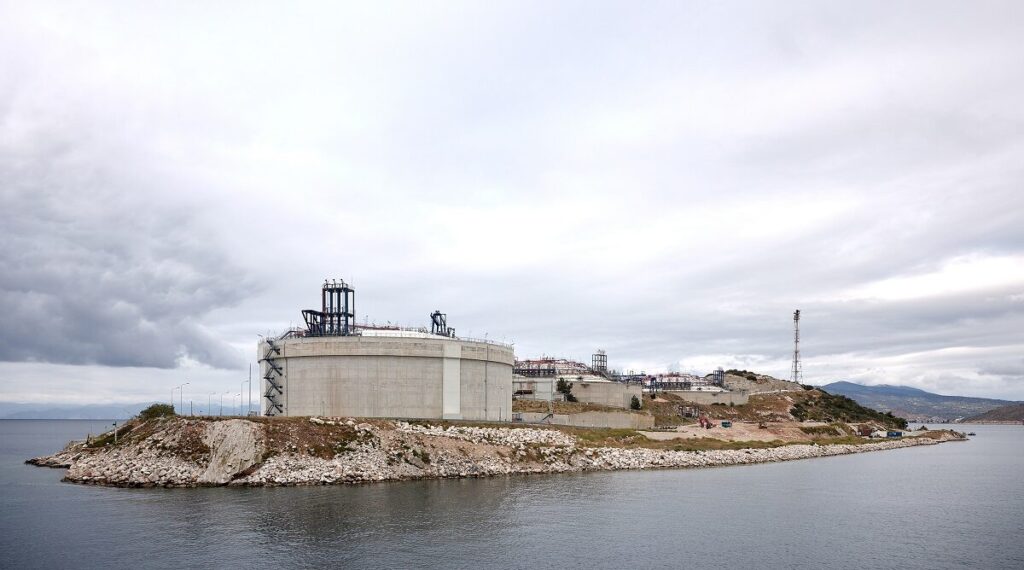
The American liquefied natural gas cargo will arrive at the Revithoussa LNG terminal and its delivery to Ukrainian energy company Naftogaz is scheduled for March. The transport will be carried out through the pipeline connecting Greece to Ukraine via Bulgaria, Romania, and Moldova, as announced by Atlantic Sea LNG Trade, the consortium between Aktor and Greek natural gas supplier DEPA. The maximum quantity that can be delivered may reach up to one terawatt hour, depending on the available capacity of the involved natural gas network operators. This flexibility in delivery volume allows adaptation to actual needs and technical network capabilities.
Long-term LNG strategy
Greece signed an agreement in late 2025 for importing 700 million cubic meters of American liquefied natural gas annually, as part of the first long-term agreement with Washington. This agreement forms part of the broader strategy to replace Russian supplies to Europe with alternative energy sources. As Reuters reports, the Greek consortium emerges as a catalytic factor for regional energy security, leveraging the country’s geostrategic position and modern LNG infrastructure.