U.S. President Donald Trump ultimately backed down from threats to impose additional tariffs on European countries over Greenland, a development that allows the European Union to proceed normally with the ratification process of the trade agreement with Washington.
However, the aggressive rhetoric and moves by the White House left an even deeper imprint on transatlantic relations, one of the main pillars of the post-war international architecture. Despite the partial de-escalation, suspicion between Brussels and Washington intensified, with Commission President Ursula von der Leyen warning that changes to the international order are not just “seismic,” but also permanent in nature.
Economic policy uncertainty at historic high, according to ECB and ESRB
At the same time, the American president added another uncertainty factor to the already burdened international economic environment, following successive disruptions recorded during the first year of his new term. As highlighted in a recent report by the European Central Bank and the European Systemic Risk Board, the economic policy uncertainty index skyrocketed last April to its highest level since 2015, following the announcement of comprehensive “retaliatory” tariffs by Trump on April 2. The same report emphasizes that geoeconomic fragmentation and geopolitical risks are evolving into major sources of instability, weighing on growth prospects and increasing pressures on financial markets.
Explosive gold rally following Greenland tensions
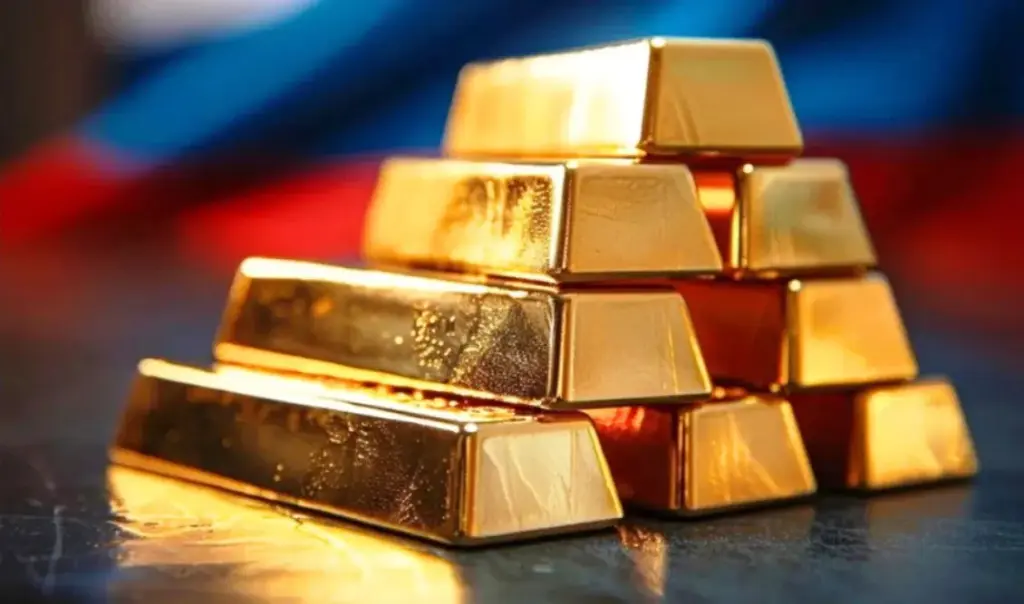
Following tensions around Greenland, concerns were further reinforced, reflected in the unprecedented rally of gold and other precious metals, which traditionally function as safe investment havens. Gold’s rise even exceeded the levels of 1979, when the second oil crisis following the Iranian revolution had triggered strong market shocks.
Since early 2026, its price has strengthened by 15%, following the 64% jump recorded in 2025, approaching $5,000. Indicative of investors’ intense nervousness is that the upward trajectory continued even after Trump’s retreat on tariffs and Greenland issues. On Wednesday afternoon, shortly before his speech in Davos and his meeting with NATO Secretary General Mark Rutte, gold recorded a new historic high at $4,887. On Thursday, despite an initial correction of around 1.2%, prices returned to an upward trajectory, recording new records.
Similarly, silver moved to levels near $100 per ounce.
The price surge is attributed both to tariff policies and Trump’s repeated interventions against the independence of the Federal Reserve. These pressures escalated in early 2026, with criminal prosecution filed against Fed Chairman Jerome Powell for cost overruns in renovation projects of the bank’s central buildings in Washington.
Dollar decline, rising yields and fears about U.S. debt
Gold is now emerging as a main alternative investment for investors reducing their exposure to the dollar, which last week declined about 1% against the euro and other currencies. Liquidations of U.S. bonds led to rising yields – with 10-year bonds near 4.3% and 30-year bonds at 4.9% – a development that intensifies concerns about the dynamic increase in U.S. public debt. Scope estimates that U.S. debt will reach 140% of GDP by 2030. Meanwhile, Tuesday recorded the largest quarterly decline in U.S. stocks, with Wall Street recovering from Wednesday due to the so-called TACO (Trump Always Chicken Out) trade.
Global growth at 3.3% despite tariffs, according to IMF
Regarding the overall impact of tariffs on the global economy, this was limited by Washington’s partial retreat from initial announcements of extremely high levies – which were also perceived as a negotiating tool – as well as by offsetting negative sentiment through increased investments in technology, particularly artificial intelligence, interest rate cuts by central banks, and fiscal support measures. According to the latest International Monetary Fund report, global GDP increased by 3.3% in 2025, same as 2024, while a similar rate is projected for 2026. Nevertheless, without tariffs and the uncertainty caused by U.S. policies, growth prospects would be significantly stronger.