Greece shows a rare phenomenon by European standards: fixed-price programs for electrical energy remain cheaper or equivalent to variable tariffs. This unique characteristic led to an impressive increase in subscribers choosing fixed programs during 2025, as consumers seek protection from market fluctuations.
What European research shows about energy tariffs
Analysis by the Regulatory Authority combined with research from international firm VaasaETT reveals the unique position of the Greek electricity market. According to the latest data, our country is among a small group of European states where choosing a fixed program doesn’t involve additional costs.
The latest VaasaETT analysis of the European electricity market shows that until November, fixed programs in Greece were more economical, while in December they equaled variable rates. Only six countries present a similar picture: Greece, Netherlands, Germany, Ireland, United Kingdom, and Austria. In other European markets, fixed tariffs burden consumers more, although they ensure revenue stability for suppliers.
Where electricity prices stand in Greece
The average final price of electrical energy for household use in our country was set at 24.34 cents per kilowatt-hour in December, including taxes. This amount is lower than both the European average of 25.73 cents and the pan-European average of 24.58 cents. The competitiveness of Greek energy tariffs combined with the security offered by fixed programs creates attractive conditions for consumers. The ability to protect family budgets from unpredictable increases is a decisive factor in household choices.
The major shift toward fixed programs
Official data from the Regulatory Authority records an impressive change in consumer preferences. In October 2025, households with fixed energy programs reached 1.5 million, representing 25.78% of the total. The increase is dramatic considering that in January of the same year, only 867 thousand subscribers had chosen fixed tariffs, a percentage corresponding to 14.72%. Meanwhile, green electricity tariffs showed a decline from 4.1 million subscribers in January to 3.5 million in October. Their percentage decreased from 70.2% to 59.8%, reflecting the shift toward fixed programs.
Dynamic tariffs are coming to the market
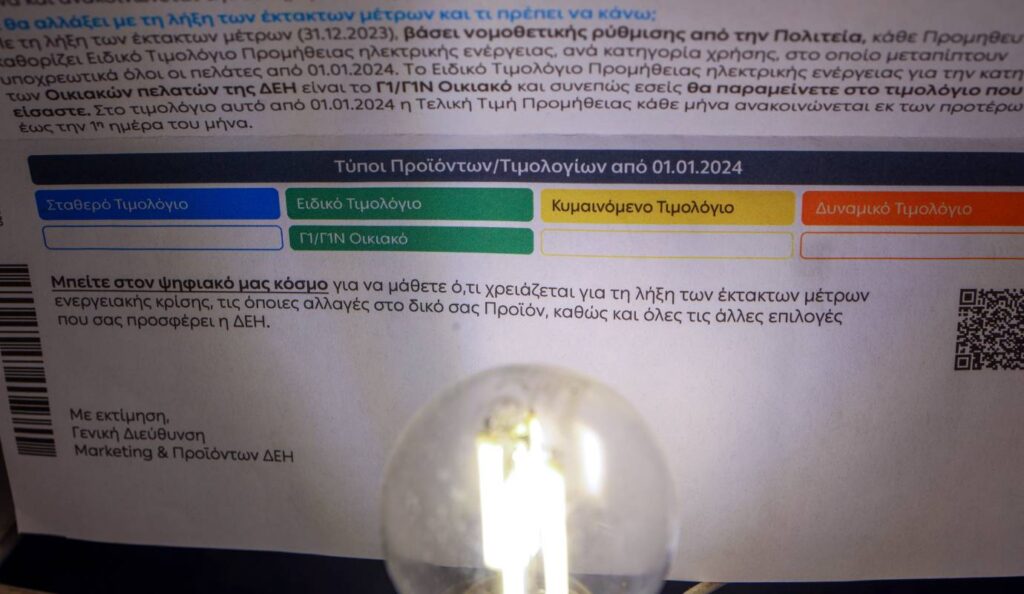
Starting in February for businesses and April for households, the energy market is enriched with dynamic tariffs, also known as orange programs. These innovative programs offer differentiated charges depending on the time of day, creating savings opportunities for those who can adapt their consumption.
Dynamic programs are mainly aimed at consumers who have flexibility in using electrical appliances and can shift significant energy loads to low-demand hours, where charges are reduced. Their introduction is expected to offer additional choices to consumers and contribute to better distribution of demand on the electrical grid.