2025 is being recorded as the year of revelation in tax evasion and the dominance of digital control tools. Electronic books (myDATA), automated controls, and cash restrictions have proven their spectacular effectiveness and superiority in the battle against tax evasion, as they transferred a large portion of the “invisible” economy to “official” economic activity.
With the new data, the state now loses up to 7 billion euros less in VAT revenue each year compared to the recent past, according to a report recently published by the European Commission on the VAT collection “gap” (VAT Gap 2025). The leaps were continuous: within just one year (2024), a single new measure – the universal expansion of card payment acceptance – is estimated to have yielded an additional 400 million euros in state VAT revenue in 2024, based on a new study by IOBE.
The benefit is expected to prove even greater in 2025 (in the 2026 income declarations) as this year was the first where the measure was fully applied to all professionals throughout the entire year, from New Year’s Day onwards. The data speaks for itself: the 2025 tax declarations showed record growth in gross income (turnover) declared by freelancers for 2024.
Entire business sectors automatically showed 10% to 15% higher revenues – especially “nighttime” and construction professions.
For example:
– bar owners (NACE 56.30) recorded a 15.2% turnover increase (average gross income of €43,525 in 2024, compared to €37,777 in 2023),
– taxi operators (NACE 49.32) showed average earnings 14.2% higher than the previous year (€18,595, compared to €16,281)
– electricians (NACE 43.21) had an 11.2% increase in one year (€36,301 from €32,635 in 2023)
– plumbers (NACE 43.22) declared a 9.8% increase (€32,354 instead of €29,463)
– carpenters (NACE 43.32) with an 8.1% increase (€35,593 from €32,913).
POS, IRIS and myDATA: The technology “miracle”
Compared to just one year earlier, the measures and changes are estimated to have yielded an additional €2.7 billion in revenue in 2025, from taxes that were “lost” to the state in previous years due to tax evasion. Compared to the past, however, before all the new digital tools and controls were even conceived and introduced, during the 15-year crisis period (2010-2024) our country lost over 73 billion euros in total, from VAT tax evasion alone.
From the Commission’s data on the VAT “gap” in Greece, it emerges that:
– in 2009, before the Greek crisis erupted, the state lost €7.5 billion from VAT.
– in 2010 the loss decreased to €6.9 billion
– in 2011 it skyrocketed above €9.2 billion
– from 2012-2018 the state lost approximately 5 to 7 billion each year.
– from 2019 losses fall steadily each year, below €5 billion in 2019, below €4 billion in 2020, below €3 billion in 2021, until reaching €2.1 billion in 2024.
The result was bailout programs, wage and pension cuts, greater pressure on law-abiding taxpayers, unfair competition and economic “suffocation” for compliant businesses in the country.
Everything changed after 2019. That’s when the biggest change began, with the activation of myDATA and a coordinated network of measures targeting the heart of tax evasion.
Specifically:
- Electronic books (myDATA): started as a pilot in 2019 and expanded to all businesses in 2020-2021. However, they only became universally mandatory in late 2023. From 2024, they now automatically form the VAT declarations that the state collects from businesses. All invoices and retail receipts are recorded in real-time and automatically cross-referenced. The tax authority no longer waits for annual tax declarations to know professionals’ turnover, as it monitors and calculates it “live” at every moment.
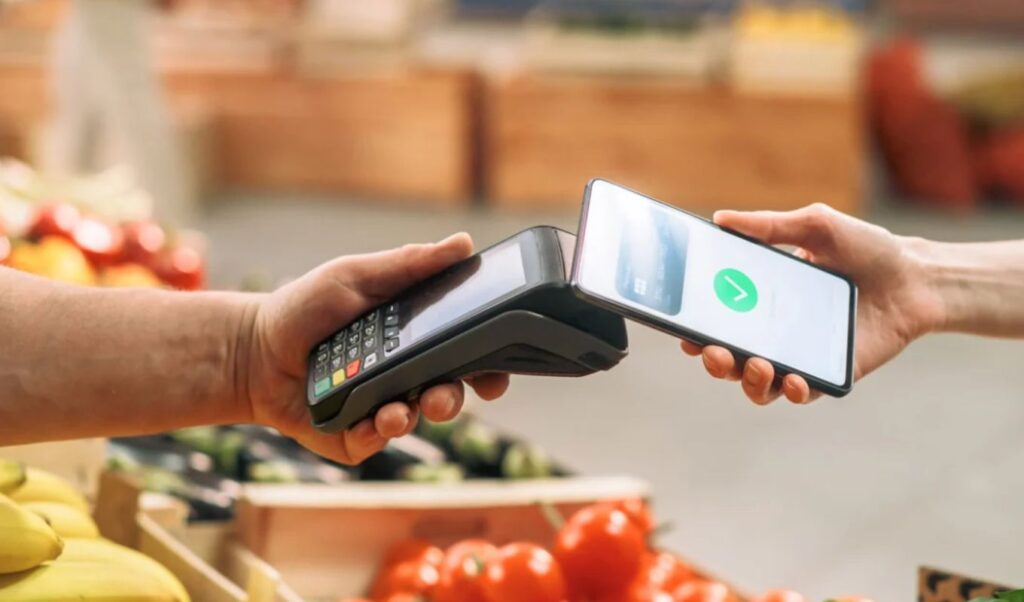
- “POS everywhere”: in 2024, the obligation to install POS payment terminals was extended to all retail and service sectors: from bars and restaurants to technicians (plumbers, electricians, carpenters) as well as taxis. Simultaneously, technical integration of cash registers with POS systems was implemented, and with each payment a receipt is issued that appears “online” to the tax authority and on each customer-consumer’s smartphone. This practically eliminated “gaps” between tax declarations and cash receipts.
- IRIS: in 2024 and 2025, instant bank transfers (IRIS) became dynamically integrated into consumers’ and businesses’ lives. They expanded rapidly, leaving a digital footprint that is automatically recorded in myDATA. From December this year, IRIS is accepted in supermarkets and department stores, while monetary limits change again (doubling) from January 15, 2026. From 2025, measures are already extending to Digital Shipping Documents and from 2026 to Digital Invoicing, while controls are being strengthened with AI and other digital technologies.
The key is… “self-compliance”
Such moves – or others coming from 2026 – increase “self-monitoring” and tax compliance across entire professional sectors, halting the “momentum” that many had gained in previous years. This is reinforced for one additional reason: from 2024, all this digital data led to a new system for determining and limiting tax evasion, which “self-commits” businesses to what they will declare to the tax office.
Each year now, the tax authority calculates and officially announces the average annual turnover shown by each market sector, per Economic Activity Code. This system was officially incorporated into the calculation of deemed income, along with years of activity and payroll. Now, however, businesses and professionals with significantly lower declarations than the national average of their sector know in advance if they have large deviations from what the “electronic books” of their entire sector show and that they might be targeted by the tax authority for future audits.