GEK TERNA S.A. announces that its subsidiary company “NEA EGNATIA ODOS S.A.” proceeded today (December 30) with the financial closing of the transaction and the payment of a lump sum amount of €1.275 billion, within the framework of the concession contract for the financing, operation, maintenance and exploitation of Egnatia Odos highway for a period of 35 years, with counterparties the Greek State and the Hellenic Corporation of Assets and Participations (“Superfund”).
Read: Dimas and Pierrakakis signed the joint ministerial decision for the Egnatia Odos concession
The financial closing of the transaction marks the beginning of the Egnatia Odos concession by the GEK TERNA-Egis Projects consortium, where the GEK TERNA Group’s stake amounts to 90%. It is noted that, as the payment will be directed towards the repayment of public debt, the GEK TERNA Group contributes once again to supporting the Greek economy.
GEK TERNA: modernization and upgrade at all levels
The highway’s construction began in the 1980s. Through the total reconstruction and heavy maintenance investments worth €3.8 billion to be implemented by the concessionaire, the highway will be modernized and upgraded at all levels, in order to significantly enhance its functionality and user service.
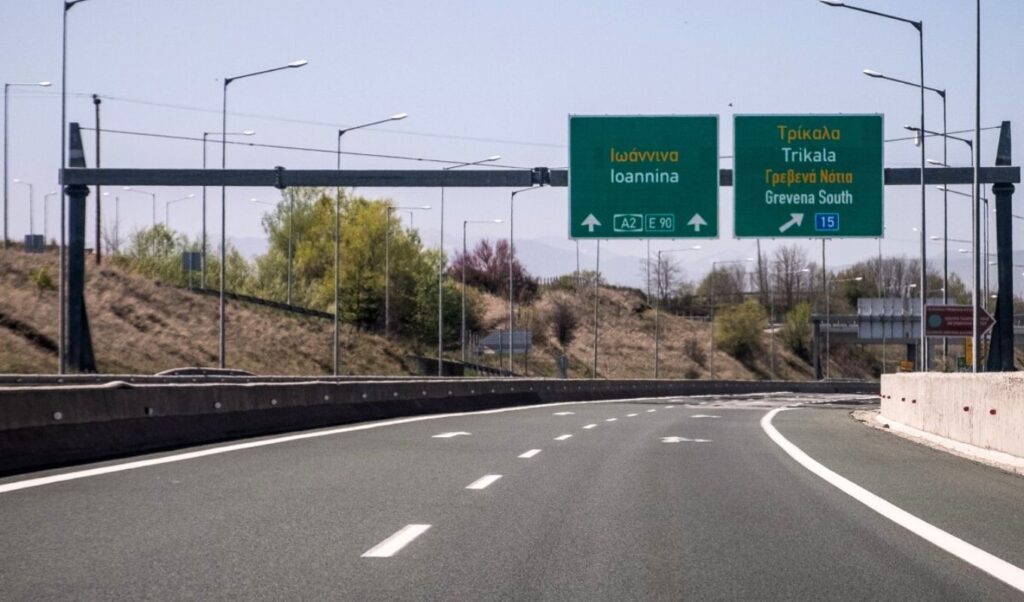
Egnatia Odos is the country’s largest operational highway, with a total length of approximately 900 kilometers, and one of the largest unified highways in Europe. It crosses Northern Greece from East to West, starting from the Port of Igoumenitsa, which connects Greece with Italy, and ending at the Greek-Turkish border.
Catalyst for Northern Greece
It functions as a catalyst for investments in Northern Greece in the sectors of transportation, industry and tourism, connecting 11 cities, 4 ports and 7 airports. It essentially facilitates trade and movement within the country, bringing Epirus and Western Macedonia closer to the metropolitan center of Thessaloniki, Greece’s second largest city, as well as to the rest of Macedonia and Thrace.
Its area of influence concentrates 54% of agricultural production and 41% of total employment in the country’s industry and manufacturing. At the European level, Egnatia Odos connects the major economic and industrial centers of the West with those of the East, creating a strong and lasting commercial link between them. At the same time, it serves as a collector road for the transportation system in the Balkans and Southeast Europe, as the Pan-European Corridors IV (Berlin–Sofia–Thessaloniki), IX (Helsinki–Alexandroupoli) and X (Vienna–Belgrade–Thessaloniki) terminate at its axis. The transaction’s financing was supported by equity capital from the concession consortium, as well as loans from Greek banks.