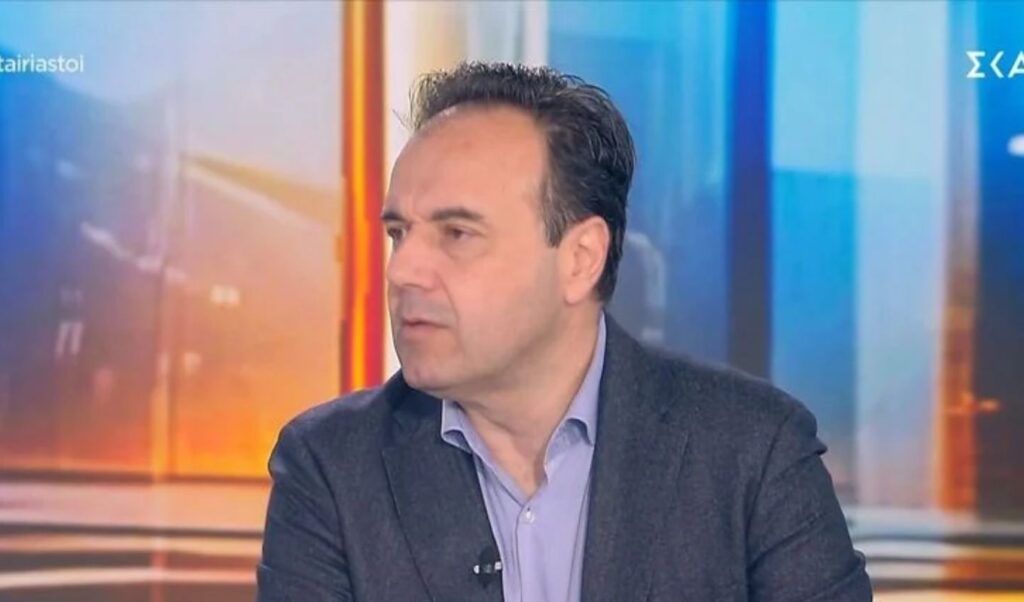
On Friday morning (13/11), Greece’s Minister of Digital Governance and Artificial Intelligence, Dimitris Papastergiou, reassured the public that the Greek government is not facing any serious problems as a result of the Microsoft outage, speaking on SKAI television. He also added that citizens — and especially governments — should remain vigilant. “We don’t have any serious problems, in the sense that our systems are working. What isn’t working? Email — those ministries that use Microsoft servers are currently experiencing issues with email. Outlook. And Copilot, which is Microsoft’s AI application, and Teams. Some issues, but nothing significant enough to affect operations,” Minister Papastergiou stated.
Read also: Microsoft global outage: Warning over surge in online scams — what users need to watch out for
As Minister Papastergiou pointed out, “this is an indication that all governments, in general — and this conversation is already happening at the European level, which is precisely why we are investing in national and European infrastructure — need to have alternative options in place. Right now it’s only email, but we need to keep in mind what we consider truly critical, and therefore build the appropriate national infrastructure accordingly. See DAEDALUS (Greece’s new national supercomputer) and other projects we already have and are building — and of course, we need to start classifying our data.”
What Dimitris Papastergiou said about the Microsoft outage
Dimitris Papastergiou explained that in an increasingly interconnected world where a large number of services are now centralized: “cloud services in the Greek public sector — for some years now we have essentially had a hybrid cloud, meaning we run some services on our own machines, while keeping less critical data on the cloud.”
“We also need to make sure that all the other devices we connect to the internet — or to the Internet of Things — are properly secured. And of course, we need to set passwords and take all those basic precautions. When someone obviously connects a refrigerator to the internet and leaves the factory default password unchanged, sooner or later they’re going to pay for it,” he noted. “As for the rest — the reports about airlines and schools — those were hoaxes. Phone hoaxes, just like the ones we used to have 50 years ago,” he clarified. “So it takes vigilance when it comes to our systems — we need to think every day about what might have slipped through the cracks, because the world is increasingly complex and the number of connected systems grows every day,” he added.
“We truly do everything we can, every single day”
“We truly do everything we can every single day, but so far at least the Greek public sector has not faced any serious problems from cybersecurity attacks,” Minister Papastergiou made clear. When asked whether there is a sense that something could happen in cyberspace capable of causing a massive blackout, the minister replied that such a scenario is theoretically possible.
“We’ve seen it happen in other countries too — not necessarily from cyberattacks. Spain, for example, faced an energy issue that showed what can happen if certain systems or renewable energy sources suddenly fail. That is, if they malfunction. So we need to stay alert, because the world is indeed becoming more interconnected and more dependent on machines and technology,” Minister Papastergiou emphasized.