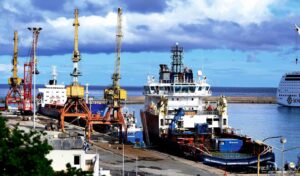
Optimism is also coming from Cyprus’s side regarding the electrical interconnection project, just ahead of the French research vessel Abeille Marengo setting sail from Crete toward Karpathos. Cyprus’s Minister of Energy, Commerce and Industry, Michalis Damianos, expressed his view that implementation of the project, based on the existing plan, is currently feasible — at a time when ADMIE’s reports indicate the project will be completed by the end of 2031. That said, the timeline could change if external factors affect the course of its implementation. Speaking to ERT, Michalis Damianos noted that the issuance of the NAVTEX notice and the launch of the surveys represent important milestones in advancing the project, and he assessed that the necessary conditions are in place for it to continue according to plan. He also confirmed that the target is to complete the electrical interconnection by the end of 2031, as previously stated by ADMIE, while stressing that the schedule will depend on the progress of a complex project that requires time.
Read also: Marinakis on the cable: No permit was requested or will be requested from Turkey — the verbal note is informational in nature and is provided for
Electrical interconnection: “The project itself is moving forward”
Michalis Damianos emphasized that it makes no difference exactly when the vessel set to depart would carry out its measurements — whether today, tomorrow, or the day after. “What matters is that the project itself is moving forward,” he stated, adding that the issuance of the NAVTEX notice and the start of the surveys represent key stages in its implementation. He also praised France’s involvement and the support of the European Union, noting that French participation carries particular significance — both because of French interests in the project and because of its broader European dimension.
He further stated that the European Union has allocated €658 million in funding for the project, underscoring its importance to European energy strategy. He also described France’s increased involvement as a positive development, expressing satisfaction with European statements in support of advancing the interconnection.
No comment on Turkey’s statements
Michalis Damianos went on to say that Athens and Nicosia have reached a level of coordination that allows them to address all possible scenarios. He made this remark after declining to respond to recent statements made by Turkey. What he did maintain is that Nicosia remains focused on the implementation of the project, in accordance with agreed procedures and international law. He recalled that in 2025, a summit-level meeting took place between the President of the Republic of Cyprus and the Greek Prime Minister, during which the next steps for continuing the project were agreed upon. “Difficulties may arise in the future, but we believe that coordination exists and will continue to exist for all contingencies,” he said, adding that the Cypriot side is satisfied with the progress made so far.
Extension toward Israel
Michalis Damianos further argued that the Greece-Cyprus electrical interconnection is, above all, a project of strategic importance for the energy security of the Republic of Cyprus. As he noted, its completion will end Cyprus’s energy isolation, as it will mark the country’s first electrical interconnection with another state. It will also create the conditions for further expansion of the energy network toward Israel and, through it, toward the broader Middle East region.
Speaking to ERT, the minister described the project as highly significant not only for Cyprus and Greece, but also for the European Union, Israel, and France, stressing that its completion serves broader energy interests.
Finally, he referred to the cooperation between Greece, Cyprus, Israel, and the United States within the framework of the “3+1” format, calling it an important pillar of the region’s energy strategy. He noted that this cooperation has the backing of the United States, and expressed satisfaction that all partners share the same understanding of the project’s importance as Athens and Nicosia do.