Inflation is expected to absorb nearly all of the wage increases recorded in Greece by 2026, with real earnings projected to grow by just 0.1% — despite nominal salary rises. The Hellenic Fiscal Council, in its Autumn Report, warns that renewed energy price increases and persistent high living costs are eroding household purchasing power, even as inflation is forecast to reach 3.6%. While the Greek economy continues to grow at positive rates — projected at 1.9% in 2026 and 2% in 2027 — workers continue to face significant pressure on their disposable income. Greece also ranks second-to-last in the European Union for average annual gross wages, adjusted for full-time equivalent employment.
Read also: Eurostat: Greece’s inflation jumps to 5.6% in October — Eurozone hits three-year high
Growth of 1.9% in 2026 and 2% in 2027
According to the report, Greek GDP grew by 2.1% in 2025, while economic activity expanded by 1.9% year-on-year in the first half of 2026. The Fiscal Council forecasts growth of 1.9% for the full year 2026, accelerating marginally to 2% in 2027. These estimates are more conservative than the preliminary state budget, which projects 2% growth in 2026 and 2.3% in 2027. The difference primarily reflects uncertainty over whether investment momentum can be sustained once the Recovery and Resilience Facility concludes.
Investment remains the primary driver of economic growth, rising by 9% in the first half of 2026. Construction activity was particularly strong, with investment in infrastructure and other technical projects surging by 18%. Residential investment rose by 11%, while machinery and defence equipment investment increased by 9%. By contrast, private consumption grew by just 0.9%, down from 1.5% in the same period of 2025, underscoring the financial pressure households are facing.
Inflation at 3.6% for 2026
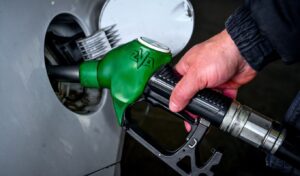
The resurgence of inflation is among the Fiscal Council’s most pressing concerns. A fresh wave of energy price increases has reversed the previous downward trend, raising costs for both households and businesses. According to the report, energy prices in Greece rose by an average of 10.6% year-on-year during the first eight months of 2026, compared to 6.6% in the eurozone. In August alone, the annual increase stood at 15.4%, having reached as high as 21.6% in April. The steepest price rises in August were recorded in the housing, water, electricity, and fuel category, up 9.5%, followed by food services and accommodation at 8.1%, and clothing and footwear at 4.7%.
The Ministry of National Economy and Finance revised its harmonised inflation forecast for 2026 upward to 3.6%, from an earlier estimate of 3.2%, with a projected easing to 2.4% in 2027. The Fiscal Council cautions, however, that persistently high energy prices could trigger broader cost pass-through across the economy, making inflation more entrenched. This inflationary rebound is significantly constraining workers’ purchasing power, with real wages in Greece expected to increase by just 0.1% in 2026 — the same marginal gain as in 2025 — despite nominal pay rises. An improvement is forecast for 2027, with real wages projected to grow by 1.8%, provided inflationary pressures ease as expected.
Beyond the inflation-driven squeeze on real wage growth, the Council highlights the persistent gap between Greek wages and European averages. Citing Eurostat data, it notes that Greece ranks second-to-last in the European Union for average annual gross wages adjusted for full-time equivalent employment — underlining the urgent need to boost productivity and real incomes.
Public debt at 136.7% of GDP
Significant progress is being made on the public debt front. Greece’s debt is expected to fall to 136.7% of GDP in 2026, down from 146.1% in 2025 — a reduction of 9.4 percentage points in a single year. A further decline to 128.8% of GDP is projected for 2027, representing an additional drop of 7.9 percentage points. If these estimates are confirmed, Greek debt will fall below 140% of GDP as early as 2026.
This decline is supported by positive growth rates, high primary surpluses, and the favourable effect of nominal GDP expansion. The Council notes, however, that the gradual shift from official creditor loans to market-based financing makes it essential to maintain fiscal credibility.
Primary surpluses
On the fiscal front, the general government primary surplus is projected to reach €9.5 billion, or 3.6% of GDP, in 2026. For 2027, it is expected to amount to €9.2 billion, equivalent to 3.3% of GDP.
The overall fiscal balance is estimated to remain in surplus, at 0.6% of GDP in 2026 and 0.3% in 2027.
Despite this positive picture, the Fiscal Council urges caution regarding the pace of primary expenditure growth, noting that any flexibility granted for defence and energy spending must be managed in a way that ensures the long-term sustainability of public finances.
A “black hole” in the current account balance
In contrast to the strong fiscal performance, Greece’s current account deficit remains a significant vulnerability. In the first half of 2026, it widened to €9.54 billion, up from €8.50 billion in the same period of 2025 — a deterioration of approximately €1 billion. This occurred despite an improvement of around €2.4 billion in the goods and services balance. Specifically, the trade deficit in goods narrowed by nearly €2 billion, while the services surplus increased by €423 million. Tourism made a positive contribution, with the travel balance improving by €916 million. The overall deterioration is primarily attributed to a sharp decline in secondary income of approximately €3.1 billion.
For the full year 2026, the European Commission projects a current account deficit of 7.1% of GDP, compared to 5.7% in 2025. The Fiscal Council links this chronic external imbalance to Greece’s low private savings rate, estimated at just 6.7% of GDP in 2026, against a eurozone average of 22.9%. The Council identifies this large gap as a structural weakness of the Greek economy, as it limits the ability to fund investment from domestic resources and deepens dependence on foreign capital.
Meanwhile, Greece’s net international investment position stood at approximately -€347.5 billion in the second quarter of 2026, equivalent to -132% of GDP — the most negative position among all European Union member states, highlighting the scale of the country’s accumulated net external liabilities.
Progress in reducing unemployment
The labour market has seen meaningful improvement, with the unemployment rate falling to 7.4% in August 2026, down from 8.8% a year earlier. Nevertheless, it remains above the eurozone average of 6.4%.
Unemployment is forecast to average 8.4% for the full year 2026 and to decline further to 7.9% in 2027, with structural weaknesses and skills mismatches continuing to pose key challenges.
Despite significant progress, Greek unemployment remains above the eurozone average. The Fiscal Council notes that further reductions will require addressing structural issues, including the mismatch between workers’ skills and business needs, limited labour mobility, and the low absorption of workers into high-productivity sectors.
Foreign direct investment inflows double
On a more positive note, foreign direct investment (FDI) inflows into Greece reached €6.9 billion in the first half of 2026, nearly double the €3.4 billion recorded in the same period of 2025.
Additionally, according to Bank of Greece data cited in the report, foreign investor holdings of Greek government bonds and treasury bills increased by €9.1 billion, reflecting sustained investor interest in Greek securities.
Fiscal discipline is essential
The report places particular emphasis on the need to maintain fiscal discipline, stressing that Greece’s positive economic performance should not lead to complacency. The Council underlines that prudent management of public finances and keeping net primary expenditure growth within the bounds of the European fiscal framework are essential conditions for preserving investor confidence, sustaining growth momentum, and ensuring the long-term viability of public debt.
The Council flags the trajectory of public spending as a concern, with annual expenditure growth forecast to reach 8% in 2026 and 3.6% in 2027, against recommended ceilings of 3.6% and 3.1% respectively. On a cumulative basis for the period 2024–2027, the increase is estimated at 14.9%, exceeding the 13.7% limit. While the projected overshoot is largely covered by the fiscal flexibility granted for defence spending and energy security, the Council stresses that this room for manoeuvre must be used carefully to avoid creating additional fiscal pressures in the years ahead.
The Council also warns that the expiry of European Recovery Fund resources, ongoing geopolitical tensions, and the potential persistence of high energy prices are increasing risks to the economy. In this context, it deems it necessary to continue a prudent fiscal policy course — one that ensures continued debt reduction without crowding out productive investment or limiting the capacity for targeted support to vulnerable households and businesses.