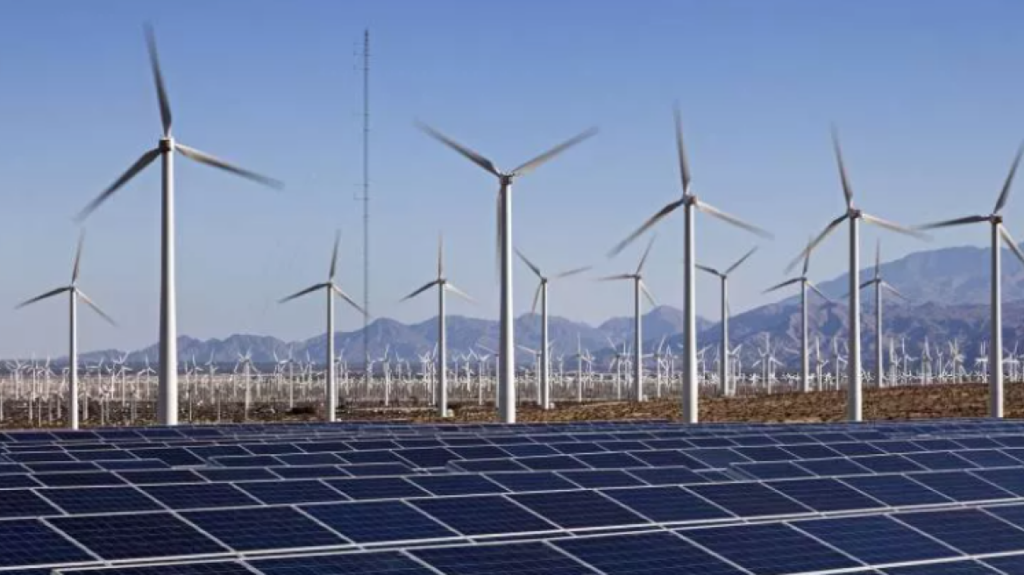
“Our goal is to produce more Greek energy from the sun and wind, strengthening our energy autonomy and securing more affordable prices for households and businesses.” With this policy objective, Minister of Environment and Energy, Stavros Papastayrou, outlines the philosophy behind the new Special Spatial Framework for Renewable Energy Sources — a framework that attempts to answer one of the most complex equations of the energy transition: more renewables, but with clearer boundaries on where and under what conditions they can be installed, alongside meaningful environmental protection.
The new Special Spatial Framework for Renewables (SSF-RES), approved by ministerial decree and published in the Government Gazette on August 19, 2026, effectively replaces the framework established in 2008 — a time when renewable energy sources played a far smaller role in Greece’s energy system.
Eighteen years later, the landscape has changed dramatically. The rollout of wind and solar installations has accelerated significantly, energy storage has taken on a central role, and the country is simultaneously tasked with meeting the ambitious targets set out in the National Energy and Climate Plan (NECP). The NECP targets a renewable energy share of at least 43% in gross final energy consumption and 75.7% in gross final electricity consumption by 2030.
The new framework therefore seeks to shift renewable energy development into a new phase: from rapid expansion to organized spatial planning. As Minister Papastayrou emphasizes, harnessing the sun and wind “requires planning, rules, and respect for land and the environment,” with a core objective of more clearly defining both the areas where projects can be developed and those that must be protected.
A new “red line” for solar farms
One of the most significant changes concerns solar photovoltaic installations, for which a unified set of restrictions is now established across the entire country.
New photovoltaic plants are prohibited from being installed in, among other areas: Natura 2000 protected areas, forests and forest lands, Ramsar wetlands and small island wetlands, national parks, designated natural monuments and aesthetic forests, Areas of Outstanding Natural Beauty, protected cultural heritage sites, Roadless Areas, and swimming beaches.
Following public consultation, the list was expanded to include historic sites, ancient and other protected monuments, as well as areas containing drinking water intake sources. For floating photovoltaic installations, additional restrictions apply in relation to diving parks, modern shipwrecks, anchorage zones, and artificial underwater attractions.
Of particular significance is the introduction of a cap on total land coverage. The “carrying capacity” of photovoltaic installations is now calculated at the level of each Regional Unit as a percentage of its total area, with the aim of controlling the concentration of installations and the pressure on land use. The maximum limit for new installations is set at 1.5% of the area of each Regional Unit.
This cap carries particular weight for areas where large concentrations of solar farms developed in recent years, sparking reactions over pressure on agricultural land and the landscape.
New rules for wind energy
The framework for new wind farms is equally stringent. Among the areas where installation is prohibited are the Attica region and the Metropolitan Area of Thessaloniki, areas at elevations above 1,200 metres, Ramsar wetlands and small island wetlands, Areas of Outstanding Natural Beauty, national park core zones, and specific nature conservation zones.
Additional restrictions apply to islands with an area of less than 300 square kilometres — with specific exceptions — as well as to out-of-plan areas designated for tourism and recreational use, Roadless Areas, and swimming beaches.
Special provisions are made for Natura 2000 Special Protection Areas relating to bird species. In these zones, wind farm development may only proceed on an exceptional basis, provided it is explicitly included in an approved Special Environmental Study and the wind potential at the site exceeds 7.5 metres per second.
Following consultation, the link between the renewables spatial framework and the new Special Spatial Framework for Tourism was also strengthened: new wind farms are prohibited in areas classified under Categories A and B of the Tourism Spatial Framework.
Special provisions for the islands
The island landscape constitutes a distinct chapter in the framework. For new wind farms on islands, a dedicated landscape study is required at the environmental licensing stage, examining the scale of the installation, the character of the landscape, and the visual impact on views.
In mountainous island areas, assessments will be conducted on a case-by-case basis, taking into account morphological, ecological, and landscape characteristics. The maximum permitted land coverage by wind installations remains at 4% per Municipal Unit.
A “safety valve” provision is also introduced for areas where average wind speeds are low but specific sites with high wind potential exist. In Municipal Units with average wind potential below 4 m/s, a wind farm may exceptionally be permitted, provided that a potential exceeding 7.5 m/s is certified at the specific site and the installations do not exceed 1% of the carrying capacity of the Municipal Unit.
Energy storage and new technologies
The new spatial framework goes beyond the two dominant technologies. It integrates biogas, biomethane, biomass, geothermal energy, and small hydroelectric plants into its planning scope, while recognizing the now-pivotal role of energy storage.
The Government Gazette text itself notes that the development of storage units is essential to balance the variability of wind and solar output, reduce the curtailment of surplus green energy, and lower prices during periods of low renewable energy production.
At the same time, the planning framework looks toward new forms of energy generation, including offshore energy and offshore wind, in coordination with maritime spatial planning.
From “green growth” to social acceptance
The real challenge of the new framework, however, is not purely an energy issue — it is also a social one. The rapid expansion of renewables over the past decade was accompanied in many areas by conflicts over land use, landscape, tourism, and nature conservation.
For this reason, the SSF-RES seeks to provide greater predictability for both local communities and investors. The framework document itself sets as a goal a “clear and transparent framework” for licensing authorities and businesses, so that investments are directed from the outset toward spatially appropriate areas — reducing uncertainty while simultaneously strengthening the social acceptance of renewables in local communities.
The exclusion zones now constitute a firm “red line”: Regional and Maritime Spatial Frameworks may further specify priority areas, but they may not modify the exclusion zones established by the SSF-RES.
According to the Ministry of Environment and Energy, the new era for renewables seeks to rest on a different balance — not on the dilemma of “energy versus environment,” but on the effort to define in advance where green energy can be developed and where the protection of land must take precedence.
As the Minister of Environment and Energy summarizes, the ambition is “development with a plan, meaningful environmental protection, and clear rules for everyone.”