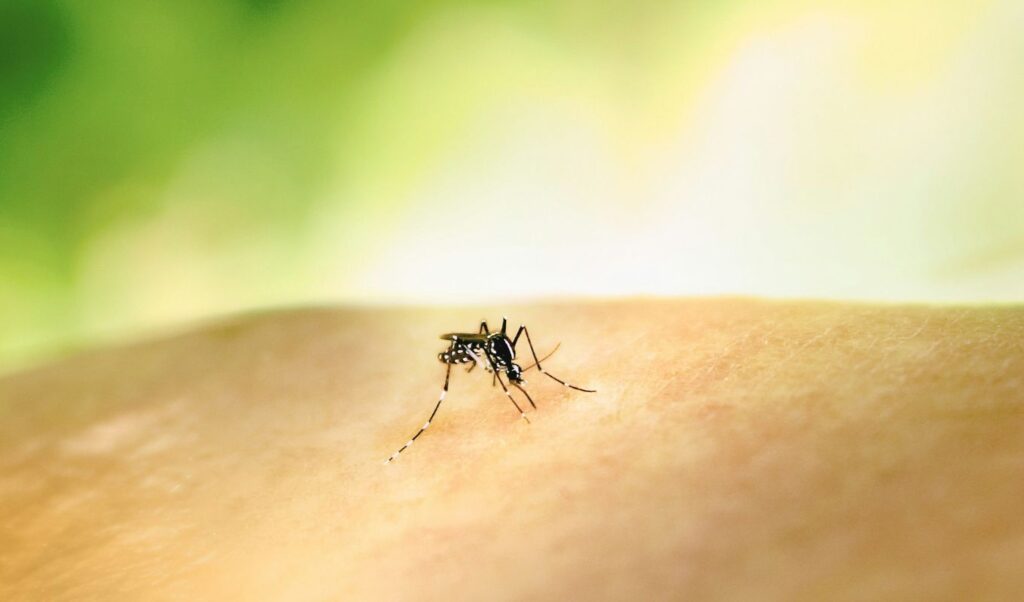
Cases of West Nile virus are on the rise in Greece, particularly in the Attica region. Theodoros Vasilakopolous, President of the National Public Health Organization (EODY) and Professor of Pulmonology and Intensive Care, has weighed in on the issue, noting that the virus has been endemic in Greece since 2010 and is transmitted through common mosquitoes that become infected by wild birds.
West Nile Virus: Why cases are rising in Attica
Speaking on the television program “Koinonia Ora MEGA,” Professor Vasilakopolous explained that the surge in cases in Attica is primarily due to weather conditions — specifically increased humidity and standing water — which have created ideal conditions for mosquito population growth. He stated:
“We need to remain alert, but not overly alarmed. This is not the first time we’ve seen West Nile virus cases in Greece. Since 2010, this infection has become endemic. The West Nile virus is transmitted through the common mosquito, and mosquitoes contract it from wild birds. As a result, there is no way to completely eliminate it — unless, theoretically, we were to eradicate all mosquitoes entirely. That is impossible, because even in spring when mosquitoes are in their larval stage and we carry out spraying to limit their development, we cannot use massive doses of insecticides. If we did, we would kill not only mosquitoes but many other organisms as well — affecting both flora and fauna. There is therefore a specific dosage protocol in place, and the subsequent growth of mosquito populations depends partly on the weather and prevailing climatic conditions.”
When asked why Attica is at the epicenter of the outbreak, Professor Vasilakopolous said: “Because the meteorological conditions that prevailed in Attica clearly favored greater mosquito population growth in the region. There is no other particular reason.”
According to him, those conditions are: “Mainly the presence of higher humidity, standing water, and slightly more rainfall. These factors cause mosquitoes to multiply more rapidly. Now that we’ve reached this point, I should mention that a response protocol is in place. Every time a case is recorded in an area, spraying is carried out around that area, and when there is a cluster of cases, spraying is extended to the broader region — again, within a specific protocol. We cannot spray with unreasonably large doses. So, beyond the spraying carried out by the state through municipalities and regional authorities — such as the spraying you may have seen from the Municipality of Glyfada — this is happening in all municipalities where cases have been reported.”
He added: “The authorities are doing what they should. But we also need to be a little more careful ourselves. When we are outdoors, especially in the evening, we should use strong insect repellent sprays or lotions, and use indoor mosquito repellent devices — whether that’s electric diffusers, ultrasonic devices, or other gadgets that release substances to keep mosquitoes away. Even a simple fan directed at our legs can help repel them with the airflow it creates. And one simple solution is to wear, let’s say, slightly more covering clothing.”
“Asymptomatic” infection
In closing, Professor Vasilakopolous said: “The vast majority of West Nile virus infections are completely asymptomatic — we don’t even realize we’re infected. Around 20% of people develop a mild fever, and only a very small percentage — less than 1% — particularly those with serious underlying health conditions, advanced age, or immunosuppression, can develop severe disease affecting the central nervous system. This can manifest as encephalitis, meningitis, or both, with symptoms such as headache, dizziness, and disorientation in time and place. If someone has a fever along with these symptoms, they should immediately consult a doctor so that the diagnosis can be considered and the necessary tests carried out. This doesn’t mean that everyone with such symptoms will have West Nile virus, but it is a possibility that needs to be ruled out.”