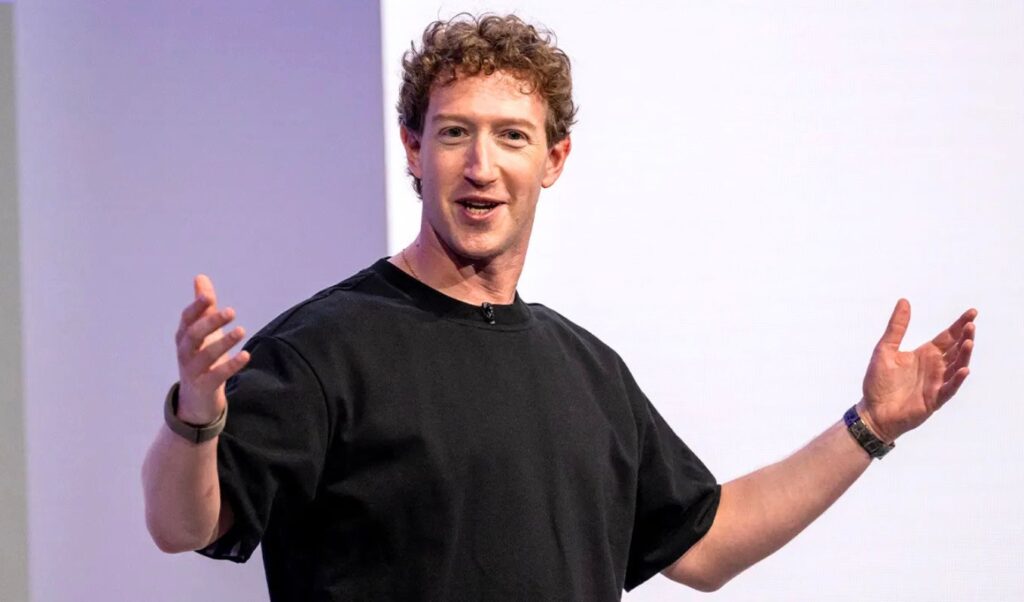
In a lengthy 6,500-word post on Meta’s website, founder Mark Zuckerberg defends his new strategy, which combines open-source artificial intelligence models with investments in cities that host data centers. Zuckerberg’s goal is to promote a positive vision of AI and its potential benefits, at a time when opposition in the United States is growing increasingly fierce — particularly against the expansion of data centers. The text, titled “The future is for everyone,” accompanies Meta’s announcement today of a new series of open-source AI models (whose base code is accessible to everyone), called Muse Glimmer, which can run on laptops. The company also plans to move its most powerful model, Muse Spark 1.2, toward open source — a notable shift after years of defending closed models.
Read also: Class action lawsuit against Meta: Company accused of using AI to fire employees with medical conditions
Zuckerberg: “Concentrating AI power in the hands of a few is dangerous”
According to Zuckerberg, there is no doubt that “people will have access to superintelligence in the coming years — intelligence that surpasses human capabilities” — and the challenge is ensuring that access to it is as widespread as possible. However, the billionaire rejects the notion of an artificial intelligence that “would destroy most jobs and humanity’s very sense of purpose.” “The idea that AI is so dangerous that the only safe solution is an extreme concentration of power seems inherently problematic,“ he added. Faced with the security risks he acknowledges, he proposes that companies “developing advanced AI contribute significant technical resources to help the government protect critical infrastructure.”
While the heads of rivals Anthropic and OpenAI have already advocated for an international regulatory framework led by the United States, Zuckerberg proposes instead giving the American government “early access to the most powerful models and an army of engineers to address safety concerns.” He also calls for stronger privacy protections when using AI — protections “to which neither Meta nor any other service provider has access” — and advocates for “stronger collaboration” between businesses and government “for law enforcement and security purposes.”
More broadly, Meta’s CEO defended the company’s strategy of providing the widest possible access to its AI models through open-source software, arguing that “their goal, since Meta’s founding, has been to empower users.” At the same time, Zuckerberg announced the creation of a fund for the cities that host the company’s data centers, in order to “enable sustainable development across the country.” According to the Wall Street Journal, this fund is expected to reach one billion dollars.
Meta has announced its intention to invest $145 billion in building data centers this year — an amount expected to reach $600 billion by 2028. Zuckerberg also urged the federal government to work with companies on testing new AI models. Finally, he defended the expansion of data centers, arguing that they represent investments in local communities and that by 2030, “we will be restoring more water than we consume.”