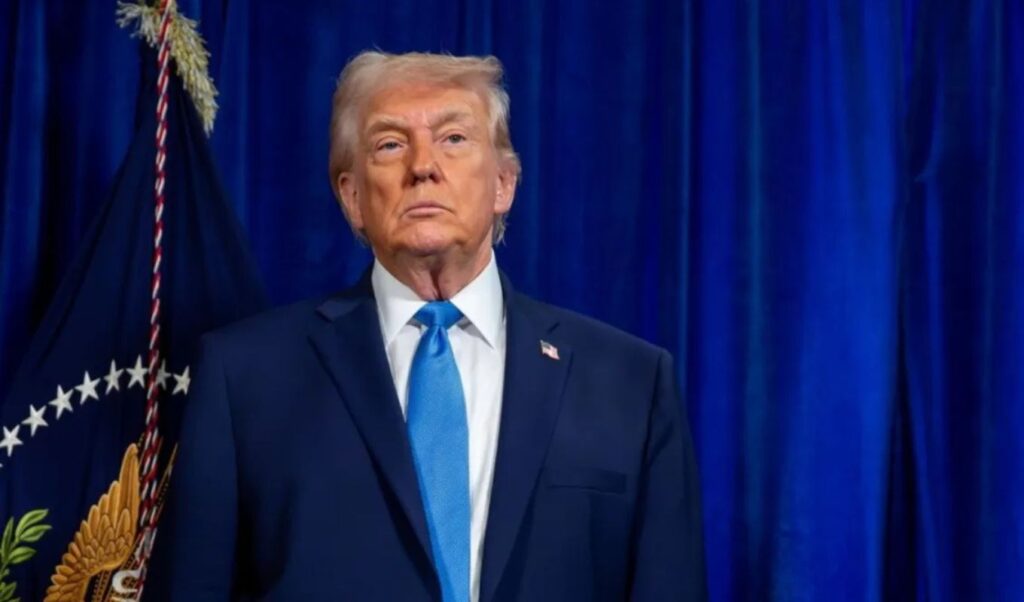
US President Donald Trump is reportedly considering expanding American military operations against Iran, following briefings from senior advisers, according to US officials cited by the Wall Street Journal.
Read also: Trump issues new warning to Iran: “I don’t like giving deadlines, but they know how it goes”
The options Trump is considering against Iran
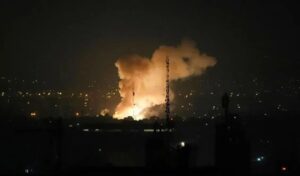
According to the newspaper, the options under consideration include intensifying airstrikes, deploying ground forces to seize Iranian islands near the Strait of Hormuz, and bombing a heavily fortified site potentially being used for clandestine nuclear activities. On Tuesday evening (July 14), the US president convened a meeting in the White House Situation Room to discuss the possible seizure of Kharg Island and other territories along the Strait of Hormuz using American troops, as well as the potential bombing of a tunnel complex at Mount Pickaxe — a site linked to Iran’s nuclear program that has not yet been targeted by the US. The option of expanding airstrikes to additional targets inside Iran, including energy infrastructure, also remains on the table.
That meeting, according to the same sources, was one of several formal and informal discussions Trump held in recent days with senior officials, including Vice President JD Vance, Defense Secretary Pete Hegseth, Secretary of State Marco Rubio, and General Dan Caine, Chairman of the Joint Chiefs of Staff. The US military announced that on Wednesday (July 15) it launched two waves of airstrikes against Iran, targeting Tehran’s ability to threaten vessels transiting the strait. “We’ll see if we end up making a deal with them or whether we just finish it,” Trump said at a business event shortly after the second wave of strikes began.
At the same time, US Armed Forces are enforcing a naval blockade of Iranian ports, turning away several vessels from the coastline on Wednesday. In one instance, the military announced it fired Hellfire missiles at the smokestack of a Curaçao-flagged vessel attempting to approach Kharg Island. According to the official statement, the ship ignored warnings to change course and was consequently disabled.
Preference for a diplomatic solution and pressure to de-escalate
Although the US president has not made a final decision on next steps in the conflict, officials note that both privately and publicly he insists he would prefer a diplomatic resolution to the dispute with Iran. However, Tehran has not yielded to Trump’s demands to surrender its nuclear stockpile, despite weeks of military strikes and an interim agreement that would have allowed Iran to earn billions of dollars from selling oil on the open market.
This diplomatic deadlock has pushed Trump to ask his advisers for new escalation options that could force Iran to capitulate or, at the very least, commit to halting attacks on commercial shipping in the strait. Some US officials note that Trump appears reluctant to commit ground forces. In the past, he has repeatedly backed away from his most aggressive public threats, including the seizure of Kharg Island and taking control of Iran’s oil industry. Nevertheless, if Trump ultimately approves these plans, it would mark the most dangerous phase yet of a war now nearly five months old, drawing the US deeper into an escalating Middle East conflict. Such a development would likely drive up fuel prices and complicate Republican planning for the midterm elections.
The new military options
It is worth noting that Donald Trump has made unambiguous statements about the war in recent days, confirming that he is exploring new military options. While officials say he is leaning toward broadening operations, he could still change his mind. Moreover, publicly discussing these options may itself serve as a pressure tactic, intended to intimidate Iran into returning to the negotiating table. “We will neutralize Mount Pickaxe,” Trump said in a radio interview this week. On Tuesday, shortly before the Situation Room meeting, Trump told Fox News that seizing Kharg Island was unlikely but could not be ruled out. “If we weaken them enough and deeply enough, I would do that,” he added.
Wednesday’s strikes marked the fifth consecutive day of attacks against Iran, following the collapse of an interim peace agreement that had lifted the American blockade on Iranian ports and suspended sanctions on Tehran’s oil sales. Trump declared the ceasefire over after Iran attacked vessels in the Strait of Hormuz, reinstating the blockade and authorizing new strikes. In an interview aired on Wednesday, Vance said in a podcast that the strikes were aimed at forcing Iran back to the negotiating table. “We’re not just going to bomb indefinitely. We’re going to try to use our military power as one of many tools we have available to solve the problem,” Vance said.
The risks of operations at Pickaxe and Kharg Island
Greenlighting an operation at either Mount Pickaxe or Kharg Island would represent Trump’s riskiest bet yet in this conflict, analysts emphasize. Regarding the Pickaxe site, it is described as a heavily fortified underground facility consisting of tunnels carved into granite, at depths ranging from 90 to 145 meters below a mountaintop — far deeper than Iran’s uranium enrichment facilities at Natanz and Fordow, which were bombed by the US and Israel last summer. The site is believed to be not yet operational.
On the other hand, the sheer depth of the Pickaxe tunnels means they may not be vulnerable to direct hits from the US military’s bunker-buster bombs. While the 2025 American strikes on Fordow targeted ventilation shafts leading directly into the facility’s chambers, publicly available satellite imagery has not revealed the precise locations of any ventilation systems at Pickaxe.
That said, this does not mean the facility has no weaknesses. Its ongoing construction means it depends on external power supplies, equipment deliveries, and technical personnel — all factors that could be relatively easy sabotage targets. “If they make any move” to turn Pickaxe into a functioning nuclear facility, “we will immediately intervene and do what needs to be done, but they haven’t done that,” Trump told Fox News on Tuesday. “Nobody even knows if they’re doing anything at Pickaxe — it’s just a topic that comes up.” Trump added, however, that American bunker-buster bombs “can go very deep.”
As for Kharg Island, an attempt to seize it — Iran’s main oil export hub — would deal a severe blow to the country’s oil industry, but would simultaneously place American forces in direct danger. Troops would become easy targets for Iranian missiles and drones, according to US officials and analysts. Despite these risks, retired Marine General Frank McKenzie said the US should consider such an operation. “It is something we should think about doing, as controlling Iranian territory would be a significant bargaining chip in future talks with Iran,” he said Sunday on CBS News’ Face the Nation.
Finally, the US president is also exploring ideas for seizing other islands along the Strait of Hormuz, with the aim of facilitating navigation and neutralizing heavily militarized territories. Analysts point to the islands of Abu Musa, Greater Tunb, and Lesser Tunb as the most likely targets. However, American soldiers would be extremely vulnerable at those locations as well, according to officials and analysts.