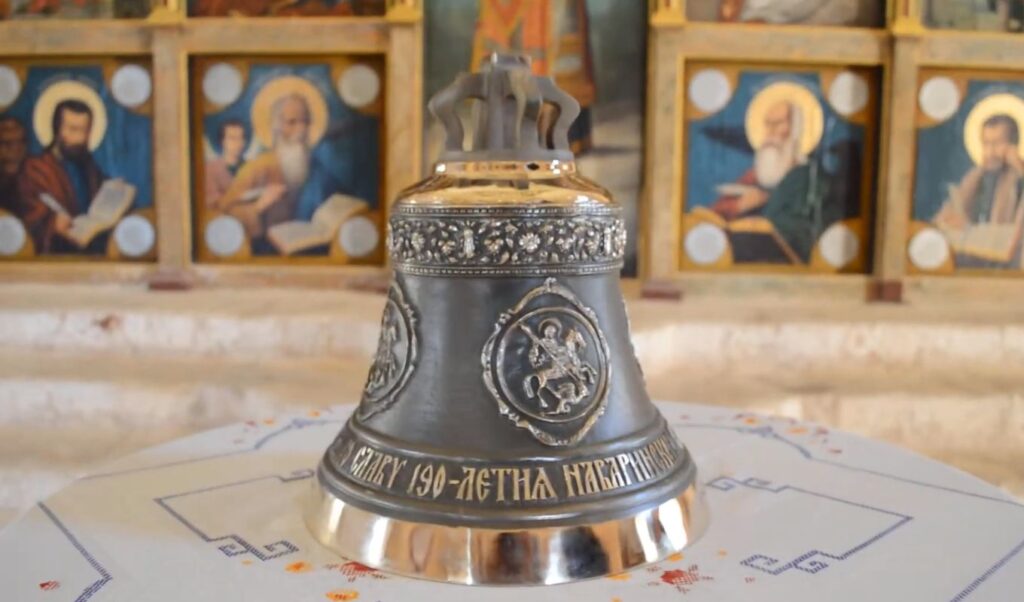
Alarm bells have sounded in Messenia following the mysterious disappearance of a historic commemorative bell from the Protected Holy Church of the Transfiguration of the Savior, located within the fortress of Pylos, known as Niokastro. The valuable relic is directly connected to the memory of the Battle of Navarino and represents a gift from Russian philhellenes. According to information broadcast by ERT radio station, the historic artifact appears to have been removed from its position under unclear circumstances, with competent authorities investigating all possibilities.
Read also: Larissa: Bell stolen from village chapel – Second theft attempt discovered
Pylos: Historic Battle of Navarino bell vanishes from Niokastro castle
As reported by the same source, the bell was in its normal position where it had been placed at least until May 29, 2026, a fact confirmed by related photographic evidence. However, on Saturday morning, June 6, visitors to the castle discovered with surprise that the historic object had vanished. It remains unknown whether this was theft, or if the bell’s removal was carried out as part of some other procedure that has not yet been clarified.
The case has mobilized local authorities and competent cultural bodies, who are attempting to determine exactly what happened and where this important relic is located today.
Niokastro bell: Symbol of historical significance
The 12-kilogram bell holds particular historical and symbolic value. It was transported to Greece on October 19, 2017, aboard the Russian warship “Azov,” as part of commemorative events marking 190 years since the Battle of Navarino, one of the most significant moments of the Greek Revolution.
The donation was made by Russian philhellenes to the Holy Church of Niokastro and had been characterized as a “bridge of memory,” capturing the historical bonds of friendship and cooperation between the Greek and Russian peoples.
The bell’s disappearance has caused intense concern in the local Pylos community, as it represents not only a religious object, but a piece of recent history connected to one of the most important events in Greece’s journey toward independence.