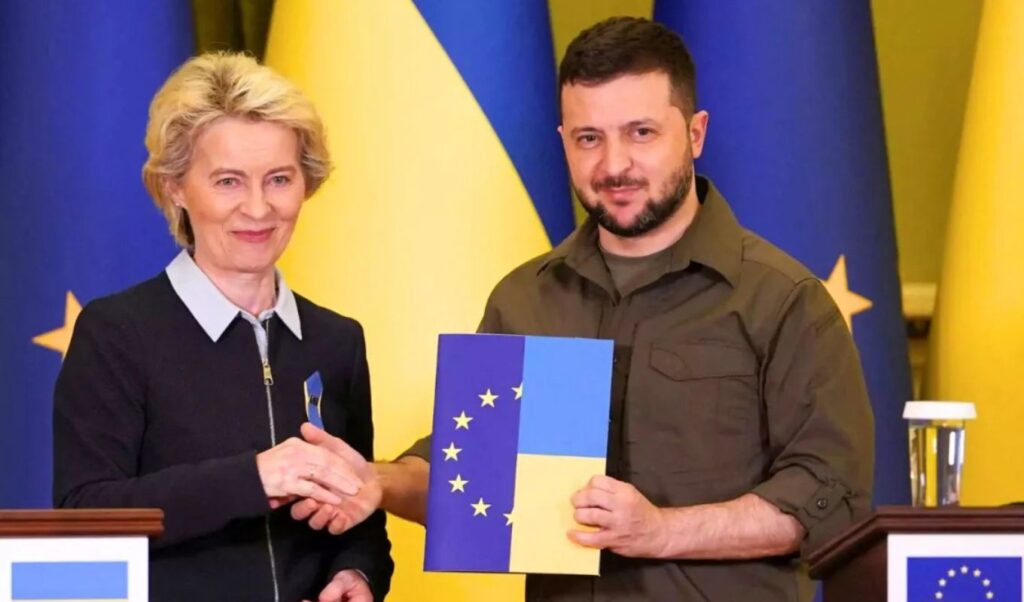
Ukraine’s Prime Minister Yulia Svyrydenko described the start of preparations for her country’s integration, along with Moldova, into the European Union as “fantastic news” in a social media post. This followed an earlier announcement on Wednesday evening (3/6) by the Cypriot EU presidency.
The first chapters to be discussed for Ukraine and Moldova’s EU integration
In a social media post on Thursday morning (4/6), Ukraine’s Prime Minister said that all European Union member states agreed to begin accession negotiations with Ukraine and Moldova, examining their first cluster of chapters. She described the news as fantastic, noting that “we are one step closer to EU membership: steadily moving towards our goal.”
🇪🇺🇺🇦 Fantastic news — all EU member states have given the green light to open Cluster 1 in accession talks with Ukraine and Moldova.
We are one step closer to the EU membership: steadily moving towards our goal.
Thank you to @CY2026EU and all EU members for keeping pace and…
— Yulia Svyrydenko (@Svyrydenko_Y) June 3, 2026
Cyprus EU presidency announcement on Ukraine and the Budapest-Kyiv agreement
On Wednesday evening (3/6), the Cypriot EU presidency announced via X that preparations began for the official start of accession negotiations, focusing on the first cluster of chapters (rule of law, democratic standards) with both countries. This represents “a significant milestone in their journey toward European integration” and “sends a strong message about EU unity and determination.” Meanwhile, Cyprus emphasized it is working toward “finalizing the talks” and officially beginning accession negotiations.
On Wednesday, Hungarian Prime Minister Péter Magyar announced that Budapest and Kyiv reached an agreement regarding the rights of approximately 100,000 Hungarian minorities living in Ukrainian territory. He emphasized that resolving this long-standing dispute was a necessary precondition for Hungary’s government to consent to Ukraine’s EU integration. Until now, progress on negotiations was blocked by his predecessor Viktor Orbán, who imposed a veto.
Finally, it’s worth noting that the Ukrainian and Moldovan governments are pushing to accelerate the European Union’s enlargement process, against the backdrop of Russia’s war with Ukraine, which has been raging for over four years.