Greece is drafting a new Medium-term Structural Plan with scenarios for the Greek economy featuring lower growth, higher inflation and limited investment performance, to be sent to the Commission at the end of April. With the effects of the Middle East war now visible across all global economies, the economic team is “rewriting” the 2026 budget, acknowledging that external shocks are now directly affecting prospects.
In this context, forecasts for the Greek economy’s trajectory are being revised downward, with the bar set at 2%, possibly even lower at 1.9%. This forecast falls short of the original budget estimate, which projected GDP growth of 2.4% for this year. This revision is not isolated, as the Bank of Greece has already lowered its 2026 estimate to 1.9% from 2.1%, the International Monetary Fund to 1.8% from 2%, and the State Budget Office in Parliament to 2% from 2.1%.
Greek economy: inflation forecast to rise
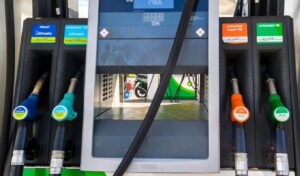
Inflation will follow the opposite trajectory to growth, expected to move upward, exceeding 3%, compared to the initial forecast of deceleration to 2.2% from 2.6% in 2025. This development is directly linked to increased energy costs and the broader wave of price increases sweeping product prices. Rising prices create additional challenges for households, limiting disposable income and affecting consumer spending.
Meanwhile, investments show signs of deceleration, as the unstable international environment acts as a deterrent to new business initiatives. Uncertainty arising from geopolitical developments and energy price fluctuations leads to more cautious moves by businesses and investors. Thus, the original estimate for an investment “leap” of 10.2% this year, compared to a 5.7% increase in 2025, is characterized as overly optimistic.
Stournaras sounds alarm over resource losses
Meanwhile, the risk of losing resources from the Recovery Fund is intensifying, as noted by Bank of Greece Governor Yannis Stournaras. “Full absorption of available resources presupposes timely fulfillment of a large number of milestones and targets within 2026, making the relevant timeline particularly ambitious. Any delays in receiving European grants for completing contracted projects could lead to their inclusion in the national Public Investment Program and their financing from national resources, burdening fiscal aggregates,” the report emphasizes.
Greece still has to receive 11.3 billion euros from the Recovery Fund, of which 5.3 billion euros are grants and 6 billion euros are loans. To claim them, 164 reforms and projects must be implemented by September when the final request will be submitted, with the stakes remaining particularly high.
Specifically, according to the Bank of Greece, after the disbursement of the 6th installment of grants from the Commission in November 2025, Greece has received a total of 23.4 billion euros (65% of available resources compared to 59% on average in the EU), of which:
-12 billion euros in grants (66% of total grants) and
-11.4 billion euros in loans (64% of total loans), having completed 46% of agreed targets/milestones (compared to 45% on average in the EU).
In December 2025, Greece submitted a double payment request from the Fund amounting to 1.17 billion euros, concerning the 7th grant request (883.9 million euros) and the 6th loan request (293.8 million euros), which was approved in March 2026 by the European Commission after successful completion of 26 milestones and targets. After receiving this amount, Greece will have absorbed 68.3% of available resources, having completed 53% of agreed targets/milestones.