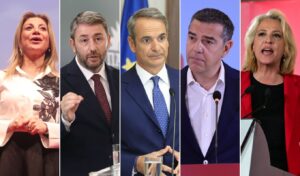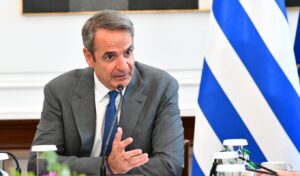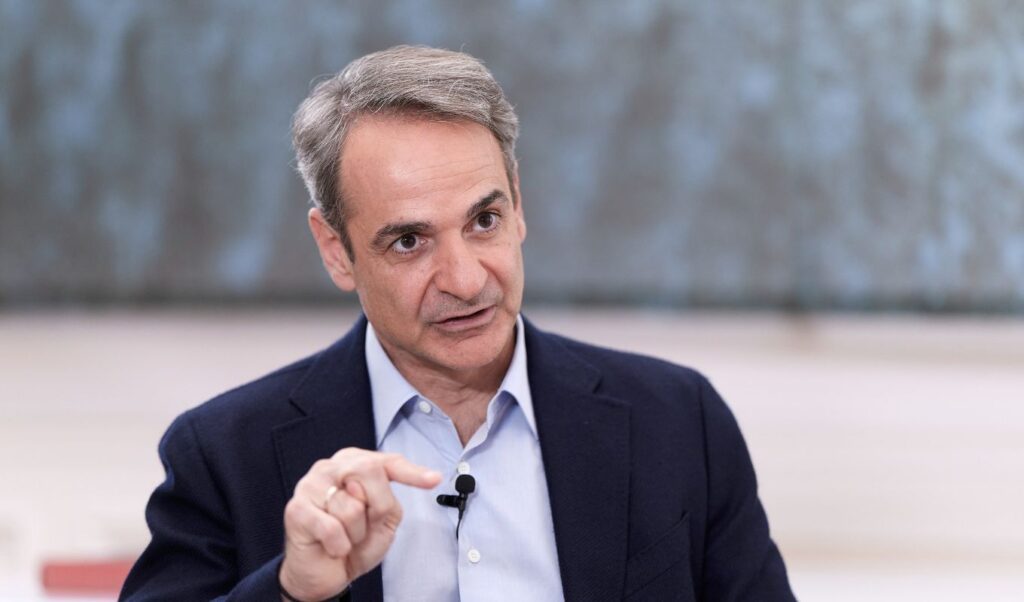
Prime Minister Kyriakos Mitsotakis is in Chania for the Good Friday procession, Resurrection, and Easter celebrations, a period during which he will distance himself from current affairs and plan the so-called “forward escape” for the government, amid pressure from the opposition over both OPEKEPE and surveillance scandals. On Easter Thursday, parliament is scheduled to hold the rule of law debate requested by Nikos Androulakis, with the wiretapping case taking center stage. Meanwhile, the request for lifting immunity for eleven New Democracy MPs (and two others included in the third case file) approved by the ethics committee will come up for discussion in Parliament’s Plenary, while the opposition will likely follow with a request to establish a preliminary investigation committee for former rural development and food minister Spyros Livanos and former deputy minister Fotini Arabatzis. At the same time, dissatisfaction is increasingly brewing within New Democracy’s parliamentary group over the so-called “lumping together” of all MPs whose names appear in the case files.
In the first phase of the politically difficult battle the government must fight, the Prime Minister already outlined the defense strategy days ago with his televised message, while during the discussion at the Infrastructure and Transport Ministry event in Glyfada on road safety, he made reference to the battle against the deep state and clientelism and the government’s achievements.
“We are now at a stage where there’s much talk about clientelism and favors, about political patronage. Now, canceling a traffic ticket with a phone call – let’s forget about that definitively and irrevocably. I think we provide very good service overall to the country with this policy,” Kyriakos Mitsotakis noted, referring to traffic violations.
In the second phase, Pavlos Marinakis acknowledged there is intense dissatisfaction both from politicians who see their names involved in cases and from society. As he said, many MPs have been “hung out to dry,” while in several cases the actual facts differ from the initial impression. However, he also emphasized (on Ertnews) that there is a broader social feeling of indignation, with citizens wondering “how much longer they need connections to achieve something.”
Speaking on SKAI, the government spokesperson noted that “immunity lifting after 2019 has become the rule in practice, unless a case falls under parliamentary duties, and anyway, the MPs themselves requested immunity lifting to be accountable to justice, declaring their position and, as each expressed it, their innocence. So, whoever talks about lifting immunity for our MPs is ‘preaching to the choir.’ Case-by-case examination involves political evaluation of each situation.”
Several MPs, however, appear determined to vote against lifting their colleagues’ immunity, at least in cases they judge show nothing reprehensible from the conversations. “I’ll see, I’m thinking about it. There are no party lines. There’s no party line on how each person should handle a criminal case according to their conscience,” said Makis Voridis when asked about it in his interview on Parapolitika 90.1.
We recall that in his televised message, Kyriakos Mitsotakis had emphasized that none of the MPs is accused of gaining financial benefit, while he had asked the European Public Prosecutor’s Office “after lifting our MPs’ immunity, to proceed swiftly with all investigative actions and determine if, how many, and which ones it intends to prosecute,” without however exercising any further criticism, with other government and party officials being more critical toward Laura Kövesi and the prosecutor’s office’s methods of action and operation.