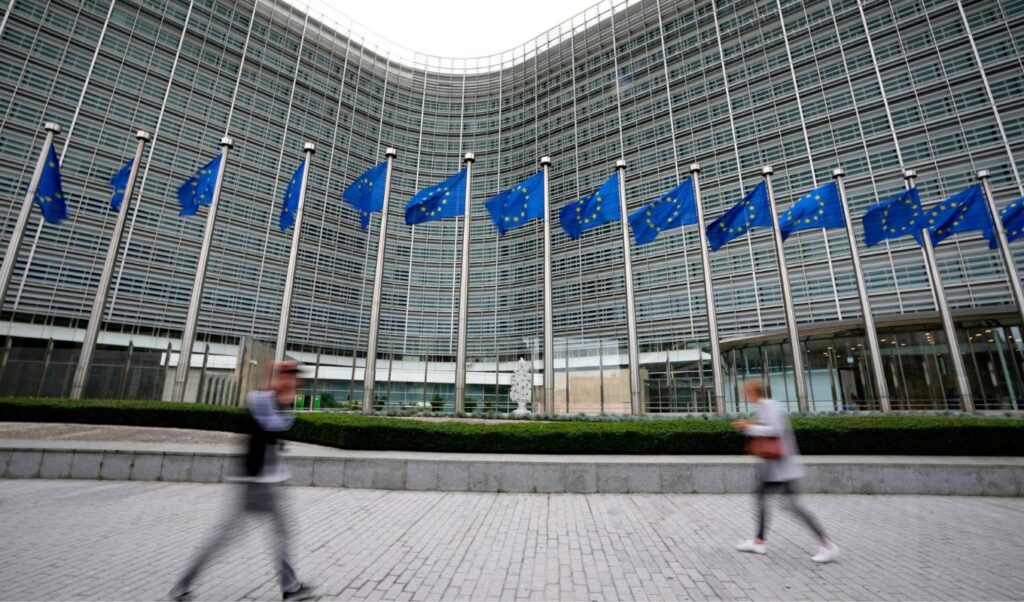
The European Commission confirmed today that it received the letter from Greek Prime Minister Kyriakos Mitsotakis to President Ursula von der Leyen, requesting EU-level action to protect children on the internet. Commission spokesperson Thomas Regnier emphasized that the EU supports member states when they set age limits for social media platforms, like Greece, which has already implemented age verification procedures and is considered a pioneer in this field. He also stressed the need for coordinated action at the European level to ensure uniform implementation of rules.
However, he notes that no additional obligations can be imposed on platforms beyond those provided by the Digital Services Act (DSA), in order to maintain the coherence of the single digital market. As the spokesperson pointed out, “when there is a draft law, we expect to be notified, as it could affect the functioning of the single market.” So far, however, no such notification has been made by any member state.
In this context, as Thomas Regnier explained, a special expert panel is operating that will develop a uniform framework at EU level. This group met recently for the first time and will convene again in April, with their recommendations expected in summer, which will guide the Commission on any additional measures.
The two main approaches the European Commission wants to combine
The Commission will evaluate major platforms’ compliance through age verification implementation, which serves as a benchmark. Platforms must ensure their measures are at least equally effective, otherwise sanctions may be imposed.
This way, the EU seeks to combine two basic objectives: protecting children and avoiding fragmentation of the single digital market, while ensuring regulations are applicable and effective for platforms and aligned with member states’ priorities.
Meanwhile, the discussion about the digital “age bar” is now extending beyond Europe, with France seeking to take a leading role in promoting an international standard for banning social media use below a specific age limit. The issue is expected to be raised at the G7 summit in mid-June, while similar initiatives are already being considered by Spain, Italy, Denmark, the Netherlands, the United Kingdom and Australia.