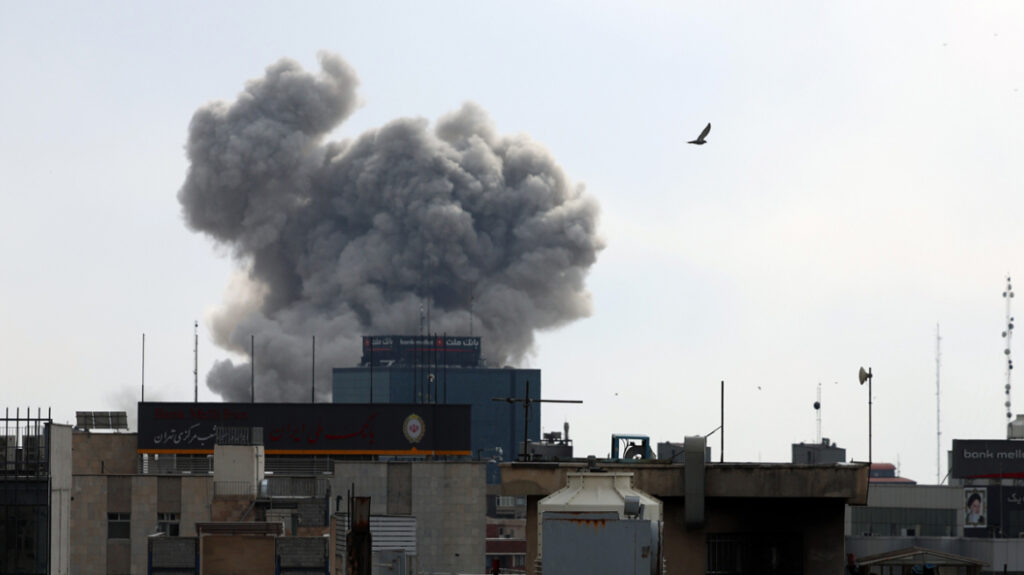
American and Iranian officials have engaged in delicate diplomatic balancing acts and sophisticated political maneuvering in recent hours through indirect negotiations, with Pakistan serving as mediator. The ceasefire agreement for a two-week period, facilitated by Islamabad’s intervention, averted the scenario of a severe American strike that the US President had warned about when his ultimatum to Iran expired. In recent hours, it has become known that Tehran is examining the American administration’s 15-point plan while the US is working on opening the Strait of Hormuz and blocking any potential nuclear weapon development by Iran. Despite the fact that some analysts see clear progress toward achieving a ceasefire, others reading behind the latest developments speak of a clearly fragile truce that risks collapsing even in the coming hours, potentially opening a new cycle of strikes.
Alarms were raised in the United Arab Emirates following attacks just hours after the ceasefire agreement, with interceptions and heightened alert levels dispelling the initial sense of relief that prevailed with the announcement of the US-Iran ceasefire. Emergency warnings early Wednesday morning, along with reports of a fire at a natural gas facility in Abu Dhabi just one hour after the ceasefire announcement, maintained the generalized climate of tension in the Middle East. It should be noted that the UAE Defense Ministry confirmed that 17 ballistic missiles and 35 drones were launched toward the region, which does not align with a ceasefire regime.
Meanwhile, according to international media, crowds of people in the Gulf region are sending messages of distress by every means possible. The diplomatic thermometer rose sharply during Tuesday evening hours when an American strike was expected, the sense of terror subsided in the morning but later returned due to aggressive moves in the Middle East.
US & Iran ceasefire agreement: Washington’s latest messages
Despite the fact that it remains unclear exactly what conditions could lead to a resumption of American strikes on Iran, US Defense Secretary Pete Hegseth stated that American forces will “remain on standby.”
American officials have also insisted that Iran’s government has already undergone a form of “regime change” and now appears more willing to negotiate.
Although Iran has indeed sent positive messages regarding bilateral negotiations, the regime does not appear to have been transformed or ceased to pose a threat to American interests in the region. Many analysts estimate that those in power may ultimately adopt an even harder line.
Meanwhile, exact details about how precisely the US will ensure uranium levels do not pose a danger have not been disclosed.
It’s also worth noting that Pakistan’s announcement implied that the ceasefire agreement includes a halt to Israeli operations in Lebanon, however attacks continue.
Iran’s veto and Lebanon
Earlier, when the US Defense Secretary was asked whether today’s regime in Tehran differs from that of the previous 47 years, he again referenced a list of high-ranking officials killed during the campaign.
“This is a new group of people,” he said, adding that today’s leadership has “a new understanding of what negotiation means” with the United States. He also argued that Iran accepted the ceasefire agreement “under overwhelming pressure” because it “no longer had options or time.”
In a Truth Social post, Trump stated that the US will “work closely” with Iran, and that “there will be no uranium enrichment.”
In a subsequent message, Trump spoke of punitive tariffs of 50% on any country that supplies weapons to Iran, while Tehran threatens to withdraw from the peace talks table if attacks on Lebanon continue, though Israel signals it will continue striking the region.