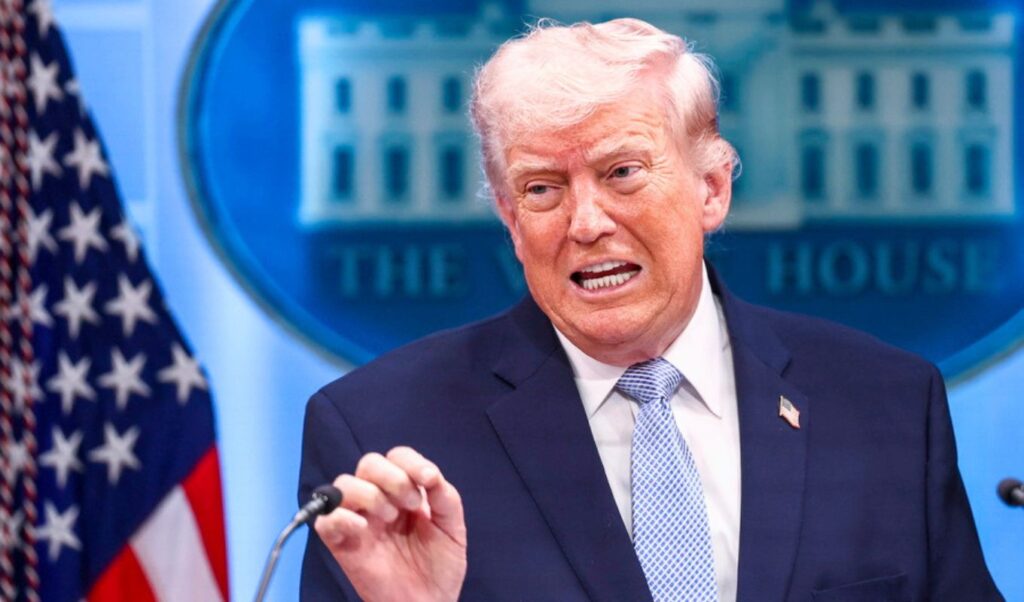
The expansion of US global energy dominance through Iranian oil appears to be under consideration by Donald Trump with the goal of gaining negotiating advantage against China, according to Bloomberg. The American president has repeatedly referenced this scenario recently, presenting it as something positive for the US, despite the fact that further involvement in the Middle East carries political risks, as he himself has acknowledged.
Why Trump targets Iranian oil – negotiating power against China
Trump has already spoken about his belief that controlling oil flows offers power on the international stage: the US overthrew Venezuela’s Nicolás Maduro and struck a deal with the remaining government to exploit the country’s crude oil reserves. However, interest in Iranian crude is also fueled by various factors, including Trump’s belief that bringing Tehran’s energy flows under US influence could strengthen his negotiating power against his Chinese counterpart Xi Jinping, according to the report.
Officials in the Trump administration have discussed what they view as Beijing’s diminished influence as a result of American operations in both Venezuela and the Middle East. China is a major crude oil importer and the effective closure of the Strait of Hormuz due to the war in Iran has restricted supplies, causing oil and natural gas prices to surge dramatically.
Exercising long-term control over Iran’s energy represents a massive undertaking that would likely require much more significant US investment of money and personnel in the conflict and would raise additional questions about international law. Polls show that the majority of Americans want a quick end to the war, as they also face higher gasoline prices in the domestic market.
How China views the consequences of war in Iran
Beijing likely views the consequences of war in Iran differently, as Trump struggles to secure support from US allies in the conflict and transfers military resources from Asia to the Middle East. Unlike other Asian leaders, Xi has not yet directly commented on the war, but China has spent years preparing for such a possibility — creating large reserves, strengthening domestic hydrocarbon production and promoting a massive renewable energy industry.
China and its refining sector will be hurt if oil remains at current levels — but the country also has significant capacity to withstand economic pain, something the Trump administration had already underestimated when it imposed punitive tariffs in 2025.
Where Trump focuses
Trump has often expressed regret that the US did not seize control of Iraq’s oil after the 2003 American invasion, characterizing it as a strategic mistake to overlook the crude oil reserves that, he said, could have covered the cost of military operations.
For now, Trump appears to be focusing more on addressing the near-complete paralysis of oil, natural gas and fertilizer transport through the Strait of Hormuz — wavering between demanding that Iran open it and insisting that other countries, including China, must police the shipping lane.
Trump has stated that if Iran doesn’t open the Strait for “free passage,” the US will attack the country’s bridges and power plants. When asked if he could tolerate Iran imposing tolls on tankers, Trump implied that the US could instead charge ships for passage. Separately, he suggested that the US could seize Kharg Island, a key Iranian oil hub.
Trump’s geopolitical moves are already affecting China. Before Maduro’s capture, China’s independent refiners were major buyers of Venezuelan crude, exploiting discounts on sanctioned oil supplies and effectively financing the Caracas government. While China can still buy crude from Venezuela, energy analysts argue that costs are higher and Beijing’s influence in the region has diminished.
Similarly, China was a top customer for cheap sanctioned Iranian crude before the US-Israel war. However, the conflict has reduced the discount on Iranian crude.
Even the American exemption allowing the purchase of previously sanctioned Russian crude has put pressure on Beijing. After the US government ordered sanctions relaxation, tankers carrying crude bound for China quickly changed course to India. Meanwhile, other Asian buyers emerged, driving prices higher.
The crisis raises questions for China’s massive independent refining sector, which faces unprecedented pressure — a crisis that will cause problems, but may also help eliminate some of the significant oversupply.
The possibility of repeating the Venezuela scenario
The Trump administration has encouraged Western oil companies to return to Venezuela, has spoken positively about exports from the country which has seen its crude production rise, reaching a five-month high of 788,000 barrels in February.
While this is far from Venezuela’s production peak of about 3 million barrels, it means more barrels from the Americas generally and aligns with the framework of the so-called Donroe Doctrine (a combination of the Monroe Doctrine and the name Donald) that seeks maximum dominance in the Western Hemisphere and more US influence globally.
Clayton Siegel, a senior researcher at the Center for Strategic and International Studies in Washington, sees an opportunity for the US to apply the Venezuela scenario to Iran through aggressive enforcement of sanctions on Iranian crude in the Arabian Sea, beyond the reach of most of the country’s weaponry. Seized oil shipments could be sold by commodity companies on the global market, ensuring Tehran doesn’t benefit.
“Destroying Kharg Island is not the right solution and seizing the island is not the right solution,” Siegel told Bloomberg. “Instead, just repeat the Venezuela scenario — simply seize their oil shipments outside the range of Iranian weapons systems.”