
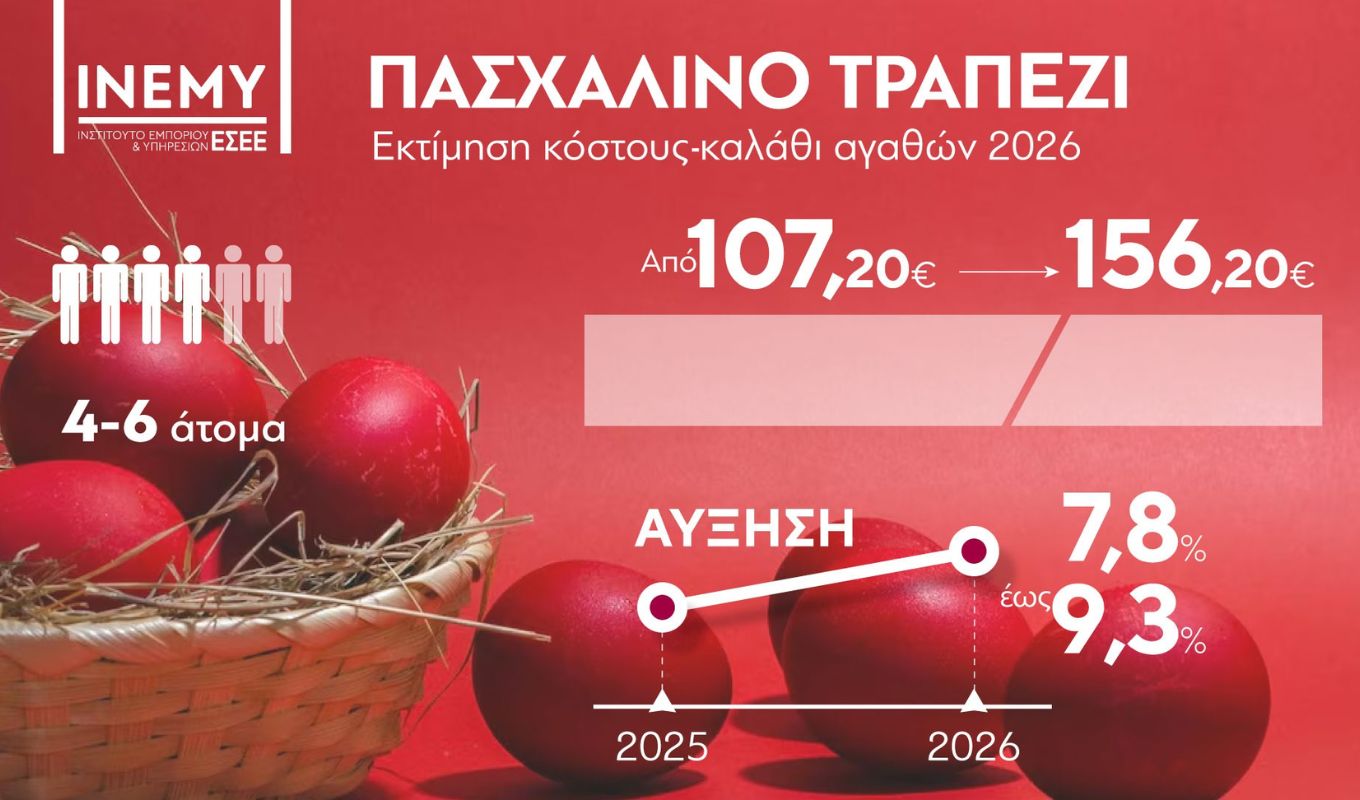
The Easter dinner of 2026 is expected to be more expensive for Greek households, according to the ESEE’s INEMY institute. The total cost for 4 to 6 people is estimated between €107.20 and €156.20, recording an increase of 7.8% to 9.3% compared to last year. The price increases are mainly due to increased energy and transport costs, diseases affecting livestock, and the short time gap between Orthodox and Catholic Easter, which boosted demand.
For basic products, prices are set as follows: lamb approximately €13.80/kg (€69 for 5kg), goat €14.80/kg (€74 for 5kg), chicken €5/kg, potatoes €1.25/kg, tomatoes €2.17/kg, feta cheese 400g €6.55, and olive oil 1 liter €8.20.
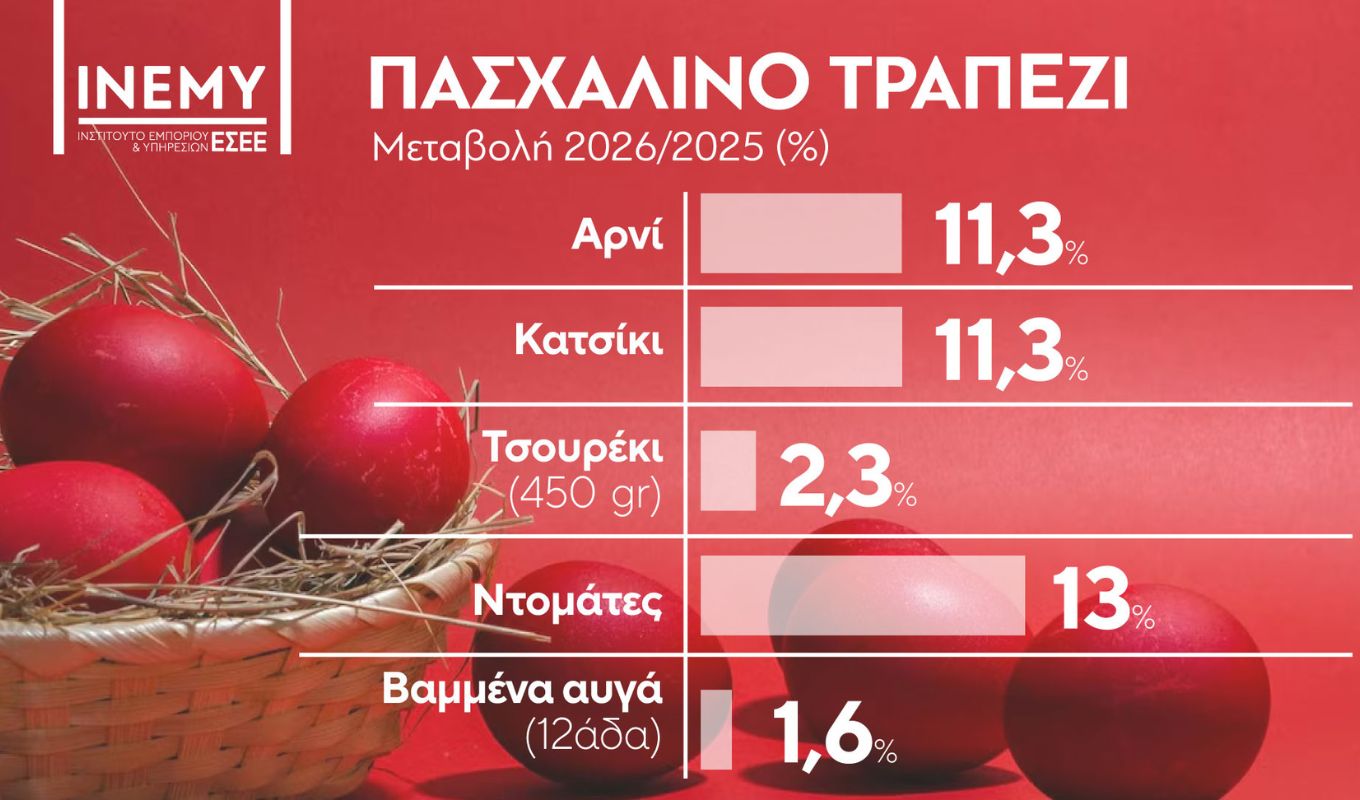
Other items include: tsoureki (Easter bread) 450g €4.45, chocolate egg 240g €13.36, dyed eggs 12-pack €6.30, soft drinks 1.5 liter €1.55, and beers approximately €1.40/bottle.
The survey covers prices from various shopping points, such as Varvakeios Market, supermarkets, or specialized stores. Lamb ranges from €11.99 to €18.50/kg, goat from €12.99 to €19.70/kg, while tsoureki can reach up to €12.50 and chocolate eggs up to €20.36. Despite relative stability in some items, the overall picture shows this year’s Easter dinner remains an expensive affair, with households limiting other expenses to cover the basics.
INEMY clarifies that the product prices shown in Tables (1 & 2) are indicative and attempt to map the general price distribution and market picture.
ESEE Institute’s Administrative Director, Charalambos Arachovas, stated: “ESEE’s Institute captures this year’s Easter dinner product prices amid intense international uncertainty. Food prices for Easter dinner are moving upward for another year, burdening households and limiting their spending on other goods. This year’s significant Easter dinner increase is due to: a) Inflated production and transport costs from rising energy prices, b) diseases affecting livestock, and c) the fact that Orthodox and Catholic Easter differ by only one week this year, boosting demand in a specific timeframe. Chocolate egg prices remained roughly at last year’s levels, while we recall that 2025 saw a strong increase due to cocoa price inflation.
In any case, reduced disposable income is directed more toward covering essential goods for Easter dinner, reducing spontaneous purchases during a period when prolonged geopolitical tensions cause market concern, although beyond food and fuel, no price increases have been recorded so far in other products.”