Behind-the-scenes negotiations appear to be underway for a possible 45-day ceasefire between the USA and Iran, with the participation of regional mediators.
According to information, the chances of achieving even a temporary agreement within the next 48 hours remain limited, while Tehran expresses concern about repeating ceasefire models that were applied in Gaza and Lebanon.
Negotiations through regional mediators
According to Axios, the United States, Iran and a group of regional mediators are discussing the possibility of a 45-day ceasefire, which could serve as a basis for permanently ending the war.
The American media outlet cites four sources from the US, Israel and the broader region who have knowledge of the talks.
According to the same information, the negotiations are being conducted through Pakistan, Egypt and Turkey, while direct communication is also being used through written messages between Donald Trump’s special envoy, Steve Witkoff, and Iran’s Foreign Minister, Abbas Araghchi.
“Small chances of agreement within 48 hours”
Sources cited by Axios estimate that the chances of achieving even a partial agreement within the next 48 hours are characterized as limited.
Iranian officials are reported to have made it clear to mediators that they do not want to find themselves in a situation similar to that of Gaza or Lebanon, where ceasefire agreements exist at a formal level, but – as they argue – attacks can be repeated at any time.
No confirmation from independent sources
According to Reuters, immediate independent confirmation of the information about the talks was not possible, highlighting the fluidity of the situation and uncertainty around possible de-escalation.
The diplomatic moves are being recorded during a period of intense escalation in the Middle East, with threats from both sides and military operations increasing the risk of broader conflict.
Trump’s deadline and message for agreement
Donald Trump issued a warning to Iran, giving a deadline until early Wednesday morning (03:00) for opening the Strait of Hormuz.
In case Tehran does not comply, Trump threatened to destroy power plants and bridges in the country.
Despite what he wrote on Truth Social, Donald Trump stated on Fox News that he still believes an agreement is feasible by Tuesday. At the same time, he did not hide that the US sent weapons to Iranian protesters, through the Kurds.
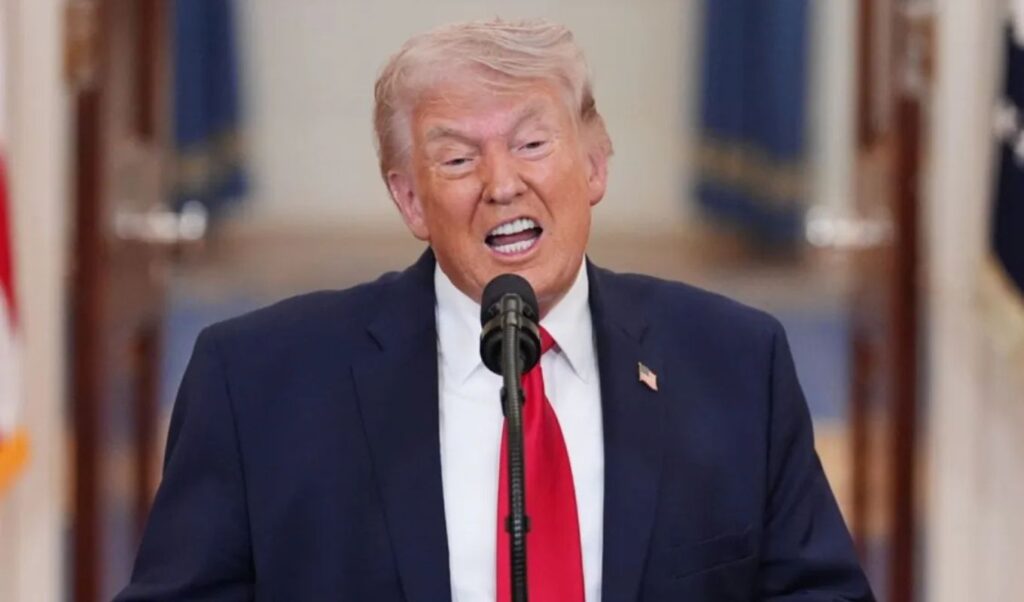
The American president’s threats were accompanied by angry expressions, while he has already changed the deadline several times, before settling on early Wednesday morning. In his Truth Social post, Trump characteristically stated: “Open the Strait, you crazy people, or you will experience hell – JUST WATCH!”
Earlier, in a post full of insults toward the Iranian regime and irony toward Allah, Trump had said that if the Straits have not been opened in the meantime, energy production units and bridges will be hit “as a package.”
Iran: warns US of “living hell” and strikes on maritime energy corridors beyond Strait of Hormuz
Iran’s parliament speaker, Mohammad Bagher Ghalibaf, responded harshly, characterizing US moves as “reckless” and warning that the entire region risks being “burned.” He emphasized that military violence will bring no results, while the only solution is respect for the rights of the Iranian people.
Iran issued a clear warning about possible disruption to key international maritime energy corridors, emphasizing that any escalation by the US or Israel could have serious consequences for international trade.
Ali Akbar Velayati, advisor to supreme leader Ali Khamenei, stated that a wrong step by the United States or Israel could significantly disrupt global energy flows. According to him, the “unified resistance command” considers the Bab el-Mandeb Strait equally strategic with the Strait of Hormuz.
At the same time, Iran has acknowledged the exchange of messages with the US through third countries, such as Pakistan, but denies any official peace negotiations, while also fearing possible attacks against negotiators.
Tehran is sending clear messages to the United States, warning that unilateral actions could lead the country into “living hell.” Parliament speaker Mohammad Bagher Ghalibaf called on Trump not to follow the instructions of Israeli Prime Minister Benjamin Netanyahu.
Meanwhile, Seyed Mehdi Tabatabai emphasized that the Strait of Hormuz will remain closed to passages if there is no compensation for previous war damages, placing the issue under a new legal framework.
The Islamic Revolutionary Guard Corps Navy announced it is preparing for a “new order” in the Persian Gulf, emphasizing that the region will not return to its previous state regarding US and Israeli presence. The strategic importance of the Strait of Hormuz is enormous, as approximately 20% of global oil production passes through it.
Tehran appears determined to maintain control in the region, sending a message that any intervention will have serious geopolitical and economic consequences.