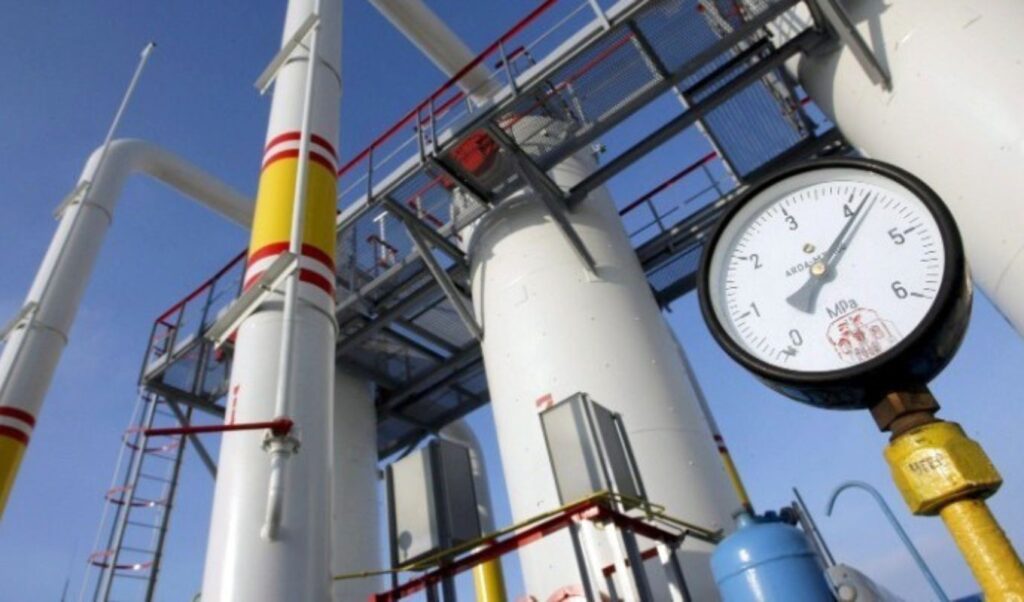
An agreement between the Transmission System Operators (TSOs) from the Vertical Corridor countries and the European Commission was reached today, the Ministry of Environment and Energy announced. The agreement, according to sources, vindicates Greek positions and efforts for regulatory certainty in the operation of this alternative supply source for Southeast and Central Europe, achieved through excellent cooperation between the Ministry, the Operator (DESFA) and the Regulator (RAAEY).
Papastaurou: “Vertical Corridor member states must cooperate to make the product much more commercially attractive”
It is noted that Environment and Energy Minister Stavros Papastaurou highlighted this issue during his recent appearance at the leading energy event CERAWeek in Houston, United States, on a joint panel with EU Energy Director-General Ms. Jorgensen, emphasizing that “Vertical Corridor member states need to cooperate to make the product much more commercially attractive. However, all European Union member states also need to support the project. The European Commission also has the responsibility to eliminate any form of regulatory uncertainty, so that the market has a reliable, secure and stable regulatory environment.”
As DESFA announced:
The participating Transmission System Operators – DESFA (Greece), BULGARTRANSGAZ (Bulgaria), TRANSGAZ (Romania), VESTMOLDTRANSGAZ (Moldova), GTSOU (Ukraine), as well as the independent operator ICGB, reached a mutually acceptable proposal with the European Commission today in Athens for the commercial promotion of the Trans-Balkan Pipeline of the Vertical Corridor, following intensive cooperation and multiple consultations. In a rapidly evolving energy landscape, today’s agreement marks a milestone for regional energy integration, creating a resilient, competitive and reliable energy corridor in Southeast and Central Europe.
The new methodology, agreed during a teleconference with the European Commission in the presence of ACER and the respective National Regulatory Authorities, is fully aligned with EU legislation. The agreement signals the transition to a long-term solution, fully compatible with EU Regulations, with a transparent pricing framework throughout the Corridor, in accordance with EU Regulation 2017/460. The agreed commercial approach introduces new tariffs that make the Vertical Corridor an extremely competitive and strategic energy artery for Southeast and Central Europe at a particularly critical time for the continent’s energy security.
Specifically, the Operators will offer for the first time the full range of capacity products on daily, monthly, quarterly and annual basis, starting from gas year 2026-2027 (October 2026) at extremely competitive pricing. This pricing approach significantly increases the attractiveness of offered products, while providing users with improved cost visibility and long-term energy planning capabilities. In this way, the Vertical Corridor is established as a critical energy supply route for the region and as a vital tool for enhancing Europe’s diversification and energy security.
For the transition period until full implementation of the new products, the Operators are submitting requests to competent national regulatory authorities for extending the availability of existing products until October 2026, in order to support Ukraine’s supply security during the transition period.