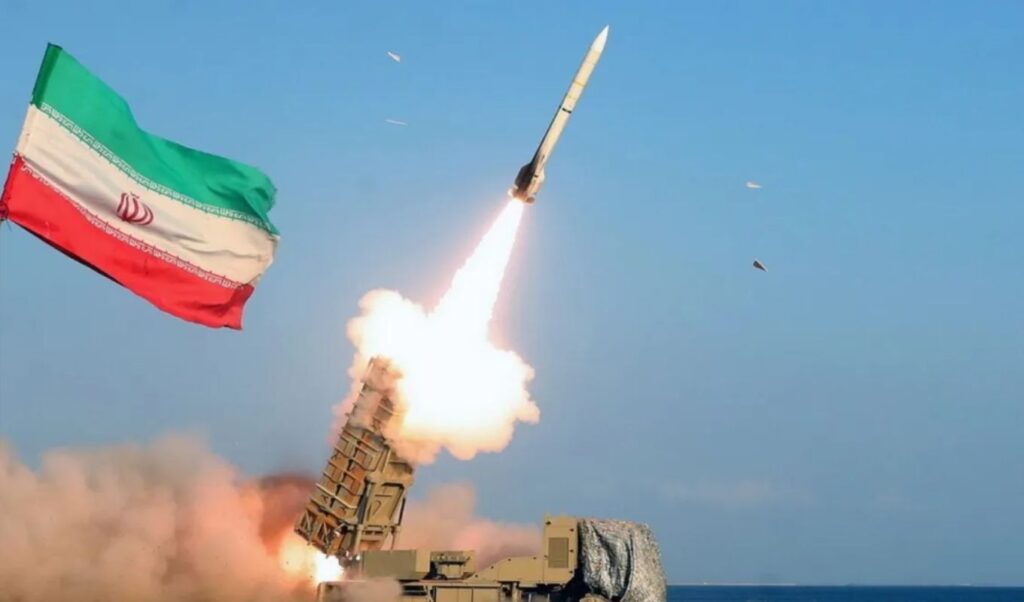
The war between the United States and Israel against Iran has reached approximately one month, with American intelligence services confirming that about one-third of Tehran’s missile arsenal has been destroyed. Sources familiar with the intelligence stated that many missiles have likely been damaged or buried in underground tunnels and shelters, indicating that Iran still retains significant reserve capacity. Similarly, a comparable assessment applies to the country’s unmanned aircraft, with approximately one-third of them destroyed.
“Even a small percentage of Iran’s remaining missiles poses a serious threat”
American sources emphasize that while a large portion of Iran’s missile capability has either been destroyed or is temporarily inaccessible, Tehran may be able to recover certain weapons once hostilities end. This information contrasts with public statements by President Donald Trump, who mentioned that Iran has “very few missiles,” Reuters reports. However, as he noted, even a small percentage of remaining missiles constitutes a serious threat to American ships and the security of the Strait of Hormuz.
The US strategy focuses on weakening Iran’s military capabilities, including attacks against the country’s missile systems, drones, and naval power. The official operation, known as “Epic Fury,” according to the US Central Command, is proceeding on schedule or even faster, with more than 10,000 Iranian targets struck so far, while 92% of the Iranian navy’s major vessels have been sunk.
Although images released by the US military show attacks on weapons factories and missile production facilities, the precise assessment of Iran’s destroyed missile and drone capabilities remains unclear. Some experts, such as Democratic Representative Seth Moulton, question Trump’s statements, emphasizing that Iran likely retains part of its capabilities and is waiting for the right moment to use them.
High economic and strategic cost
The concentration of American forces along the Strait of Hormuz underscores the region’s importance for global shipping and energy flows, making Iran’s remaining missile capabilities particularly critical. Even if the US destroys most of the missile stockpiles, the survival of a small percentage of weapons could cause serious damage to American ships, with high economic and strategic costs.