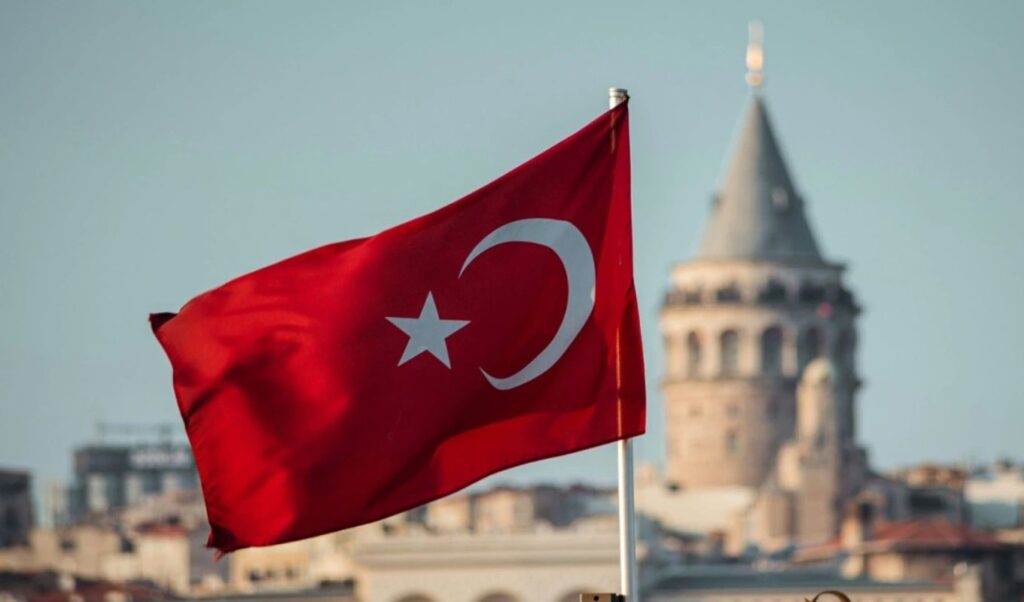
The aggressive rhetoric of Turkey against Greece is characterized by a continuous attempt to invent new causes for disputes, with Turkish “radar” remaining steadily focused on our country. Recently, this rhetoric has been fueled by imaginary scenarios of Turkey being “encircled” by Greece and Israel, which are reproduced in the Turkish press.
This time, the Turkish side is making incredible claims that Israel aims to rent 40 Greek islands and islets in the Aegean for 50 years, in order to convert them into “refuges”. The publication cites a plan by Israel’s Defense Minister, Israel Katz, which, as it notes, would be funded by the Jewish National Fund. The reports have caused intense discussions within Turkey, cultivating a climate of concern that extends to scenarios of military confrontation between Greece and Turkey, with Israel’s participation. For its part, Israel has categorically rejected such scenarios, as it had done in the past (in 2012), when the Israeli newspaper Haaretz had brought them to public attention. However, Turkey persists — as it has become accustomed to recently — in placing at the center of its aggressiveness the strategic relationship between Greece, Cyprus and Israel, which Ankara systematically attempts to present as a threat to its interests.
Konstantinos Lambropoulos to parapolitika.gr: Turkey considers the Greece – Cyprus – Israel alliance as an exclusion alliance – It creates narratives, aiming at rallying support
Strategic analyst at the Geneva Centre for Security Policy, Konstantinos Lambropoulos, argues to parapolitika.gr that the scenario of renting Greek islands to Israel is Turkish-inspired and aims to rally Turkish society around the government. As he characteristically says: “Turkey sees security architectures being created in the broader region that leave it out. It also considers the Greece – Cyprus – Israel alliance as an exclusion alliance that is directed against Turkey’s ambitions to become a regional hegemonic power. That’s why it maintains or creates narratives. One could say that this is a piece of hybrid warfare, in order to rally large masses and justify its own actions, future or existing”.
According to the strategic analyst, Turkey’s almost daily aggressive rhetoric against Greece and Cyprus demonstrates the tension that exists within the Turkish leadership regarding the evolution of the war in Iran, but also more generally with the dynamics developing in the Near East periphery and mainly in Cyprus. “Cyprus has become a part of potential European Defense, a part of the new American Security Architecture and mainly a basic component of IMEC that concerns both Israel and India”, he characteristically argues.
At the same time, while in Cyprus the discussion about the British Bases in Akrotiri and Dhekelia has opened, in Turkey they are celebrating the defense cooperation they are developing with the United Kingdom, following the signing of an agreement for the purchase of 20 Eurofighter Typhoon. An agreement worth 8 billion pounds. Britain’s cooperation with Turkey has caused intense annoyance on the Greek Cypriot side, as it is interpreted as an aggressive act by a guarantor country, such as the United Kingdom, to arm an occupying state that has illegally invaded the northern part of the island.
“Britain stands opposed to the creation of IMEC – The Turks are the vehicle for implementing the security architecture they promote”
The analysis of the United Kingdom’s strategic moves in relation to Turkey, as mapped out to parapolitika.gr by strategic analyst Konstantinos Lambropoulos, is of particular interest. As Mr. Lambropoulos argues: “Britain’s move is a move that fits into the new security architecture that the British are promoting for the Near East and includes Turkey as its crowning achievement. That is, the British are trying to gain footholds and create an alternative security architecture, with them as protagonists and the Turks as the vehicle for implementing this architecture. At the same time, with the Turks they wish to include in their plan the Saudis, Pakistan, the Egyptians and Jordan. Britain stands opposed to the creation of IMEC. It is opposed to the cooperation of Greece, Cyprus, Israel and India. Together with Turkey it is trying to create an alternative chessboard, an alternative framework, in which they will be the masterminds and the levers of pressure will be Turkey and countries like Jordan and those of the Arab world, which are not positively aligned with Israel’s expansion in the region”.
The reshuffling of the geopolitical chessboard in the Southeastern Mediterranean ultimately has many manifestations and its beginning may ultimately prove to be unfolding in the days we are living.