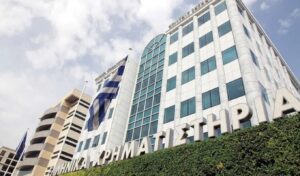
The five-week closure of the Greek stock exchange in 2015, amid capital controls and intense pressure on the banking system due to the debt crisis, had significantly distanced the country’s prospects of returning to the developed markets category, Bloomberg notes, writing about Greece’s example – from economic crisis to major comeback. Ten years later, it observes, the picture has changed considerably, with the country gradually attempting to return to the “map” of developed economies.
The probability of an upgrade by MSCI, which is examining Greece’s reclassification from an emerging to a developed market, is now considered increased, with the decision expected by March 31. It should be noted that the firm had downgraded the country in 2013, at the height of the fiscal crisis, in an unprecedented move for a developed economy. In fact, at certain phases, there was even the possibility of Greece being included in the “standalone” category, which concerns markets with limited accessibility.
Today, the Greek economy is presented as one of the strongest recovery stories in the eurozone, with businesses estimating that a potential upgrade would significantly enhance the attraction of international capital. As Jason Kepaptsoglou, head of investor relations at Alpha Bank, notes, the country’s growth exceeds the European average, while the banking sector shows greater concentration and increased profitability, despite the relatively small size of the market on a global scale.
Bloomberg: Greece in developed markets
The role of MSCI indices is crucial, as they are followed by funds worth approximately $18.3 trillion, significantly influencing international investment flows. Already, other major index providers, such as FTSE Russell and S&P Global Ratings, classify Greece among developed markets.
For listed companies with international presence, such as Lamda Development, such a development is expected to significantly broaden the investor base. The company, which is implementing the development project of Athens’ former airport at Hellinikon, sees upgrade prospects for attracting larger and higher-quality institutional capital.
Despite the benefits, reservations remain. Some analysts point out that the transition to developed market status may initially lead to capital outflows from specialized funds that invest in emerging markets. Although these may be offset in the medium term by inflows, the effects will not be uniform, with smaller companies considered likely to face greater pressure.
Currently, Greece represents about 0.5% of the MSCI Emerging Markets index, with eight companies participating. In case of an upgrade, its weight in developed market indices is expected to be significantly smaller, while it is estimated that net flows from passive funds may be slightly negative, with possible outflows calculated at around $300 million.