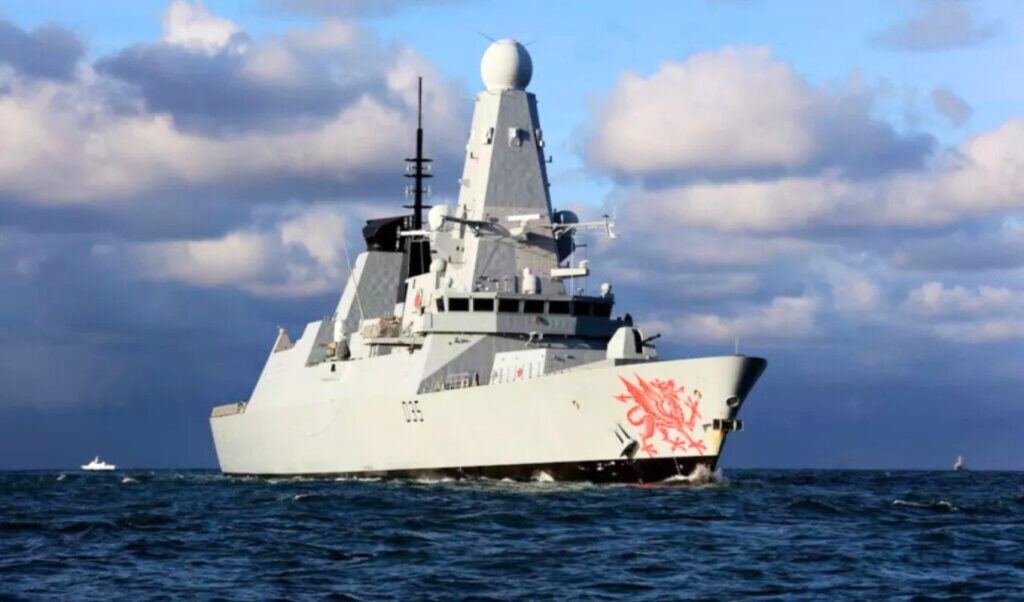
The British destroyer “Dragon” arrived in Cyprus on Monday evening (23/3), having departed from Portsmouth in southern England on March 10 to strengthen the island’s defense following drone attacks that occurred in early March on the British Bases in Akrotiri. It took nearly two weeks to reach its destination, and if we add the seven days from when the deployment was decided until its departure, a total of 21 days passed.
British destroyer “Dragon” arrives in Cyprus
“I can confirm that HMS Dragon has arrived in the eastern Mediterranean and tonight begins operational integration into Cyprus’s defense alongside our allies,” British Defense Secretary John Healey declared yesterday in the British Parliament. In his statement regarding the war in Iran and the Middle East, the British Defense Secretary also noted that “all UK personnel have been accounted for and are safe” in the region. He added that “RAF and Navy pilots have now completed nearly 900 flight hours defending Cyprus, Jordan, Bahrain, Qatar, and the United Arab Emirates. We have more aircraft in the region than at any time in the past 15 years… There are 500 additional air defense personnel in Cyprus and, as more military capabilities are deployed in the eastern Mediterranean, we are working closely with the Republic of Cyprus to coordinate allied contributions, including from the US, France, and Greece, to enhance Cyprus’s security.”
Dragon’s capabilities
Three weeks have passed since an Iranian drone struck the RAF British Base in Akrotiri. The “Dragon” is considered one of Europe’s most advanced anti-aircraft and anti-missile defense ships. Its primary mission is protection against aerial threats such as fighter aircraft, drones, ballistic missiles, etc.
It features the Sea Viper anti-aircraft system with Aster 15 and Aster 30 missiles, as well as the advanced SAMPSON radar, which enables simultaneous tracking and engagement of multiple targets. It is also equipped with a 114mm gun, close-in defense systems, and the capability to carry a helicopter (Wildcat) for surveillance missions and anti-submarine warfare.
It has repeatedly been deployed in the Mediterranean, Black Sea, and Persian Gulf, participating in both British and NATO operations. It is frequently used for aircraft carrier escort duties.
Source: CYPA