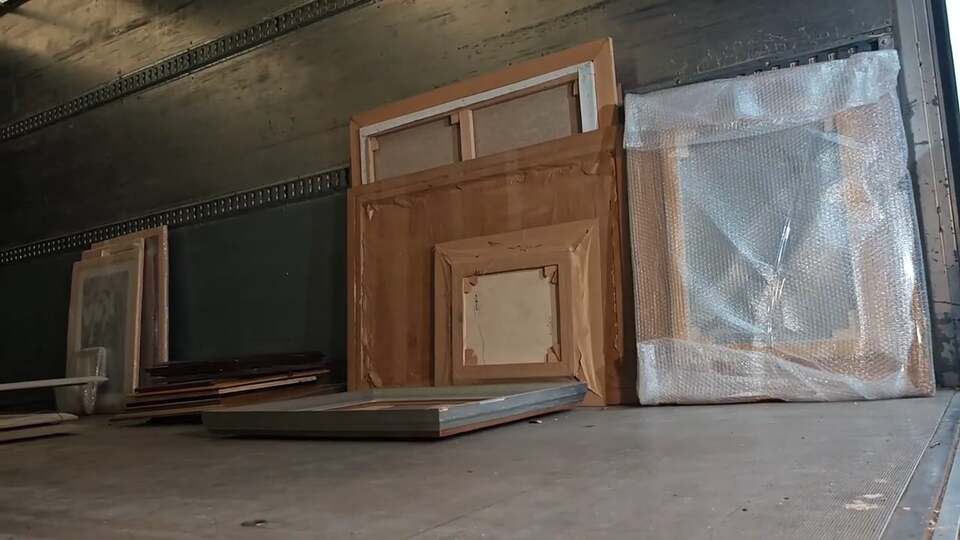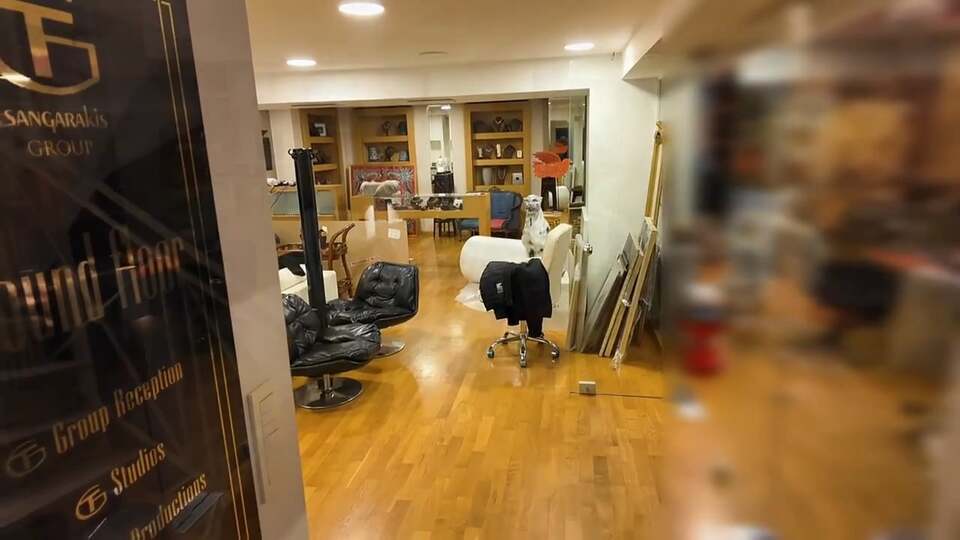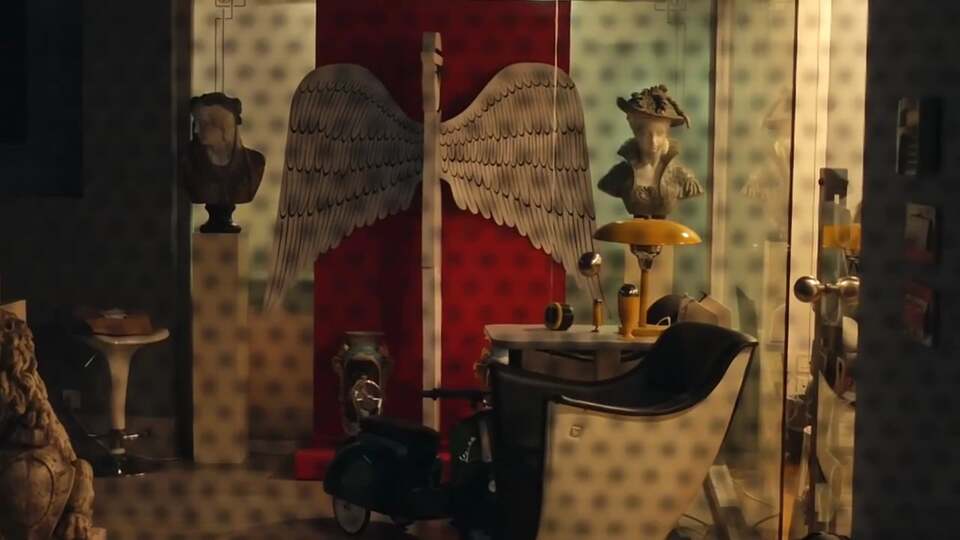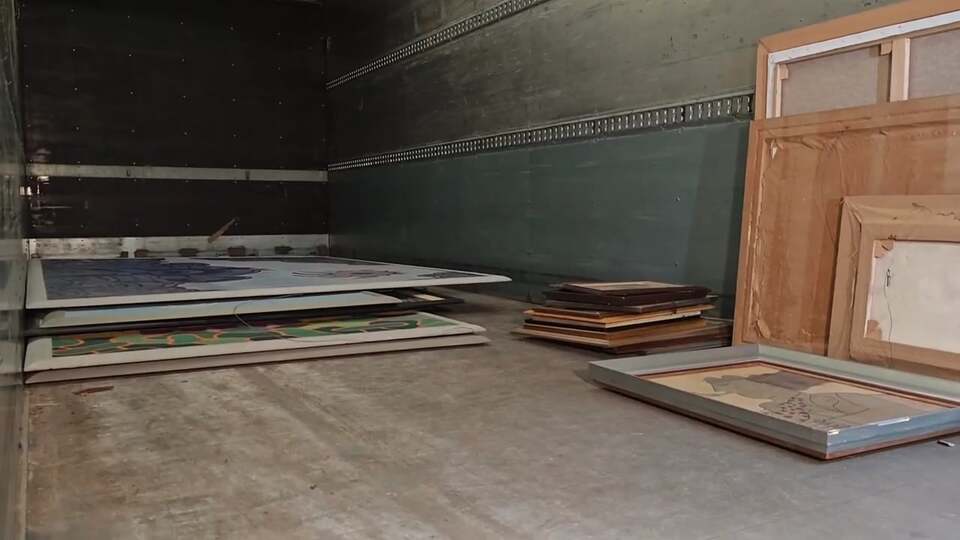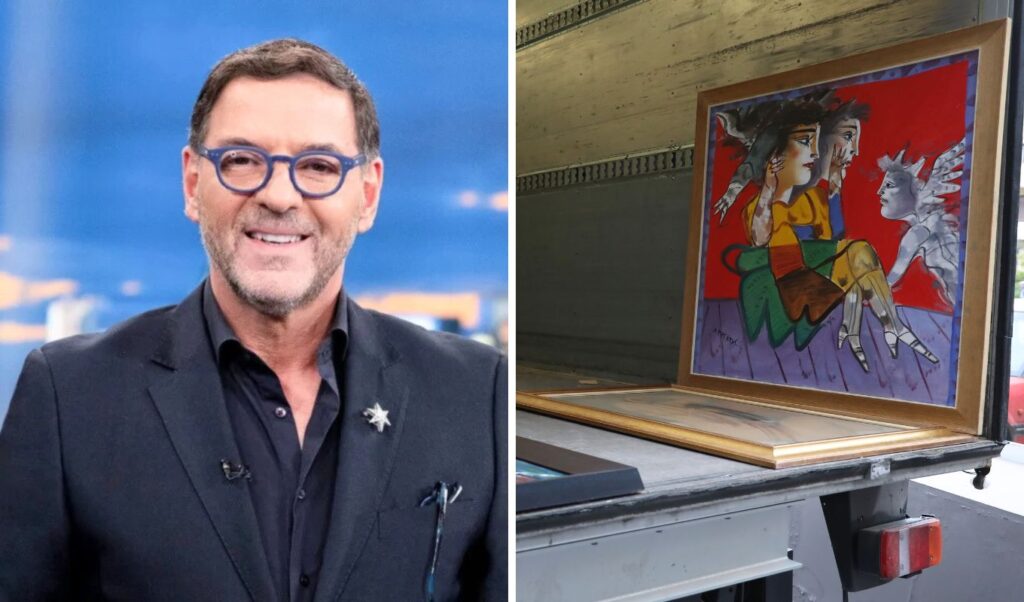
The person making headlines is expected to appear before the prosecutor shortly after noon. We’re talking about art gallery owner Giorgos Tsagarakis, who found himself in hot water following successive raids by Greece’s elite crime unit on two of his business premises, as well as a warehouse. Kolonaki, Elliniko and Glyfada became the backdrop for the dramatic fall of an empire he had built himself, being essentially self-made. The well-known art appraiser and gemologist, who certainly left his mark through auction shows and his participation in the STAR television show “Cash or Trash,” is expected to face charges of violating antiquities law as well as other related offenses. The reason, clearly, is that over 300 art paintings of questionable authenticity and possibly illegal copies of famous artworks were discovered, mainly in his warehouse on Iasonidou Street in Elliniko. As if all this wasn’t enough, a significant amount of cash was also found, of unknown amount so far (sources report over 200,000 euros), which is not known whether it has been declared or comes from legal activities.
The cause of trouble for the famous gemologist was none other than the auction of a Gospel published in Venice in 1745. This edition was presented by him on the auction show just on March 18. According to him, it’s a museum masterpiece, a luxury edition with high-quality engravings and corresponding typography, coated with brass and gold-plated in places with embossed hammering. He claimed that with the help of specialists he determined its commercial value ranges between 8,000 and 12,000 euros, however he maintained that its real value is priceless. This masterpiece became the element that sparked police interest, specifically from the Cultural Heritage and Antiquities Protection Department, which immediately began investigation and then proceeded directly at operational level as the Organized Crime Unit deemed necessary. Through expedited procedures, the elite crime unit team, with support from special police forces, carried out raids in Kolonaki, Elliniko and finally Glyfada, loading the controversial merchandise onto trucks. All confiscated items will be examined by specialist scientists to determine their authenticity.
Meanwhile, authorities’ investigations now focus on both the origin and circulation of the artworks as well as the legality of the monetary amounts discovered, while the gallery owner’s transactions with his clients are also under scrutiny.
The statement that was withdrawn
Particularly interesting is the fact that while Giorgos Tsagarakis’ company issued an announcement late Friday afternoon (20/3), it withdrew it shortly after. Before this written statement was withdrawn, however, an announcement appeared online for quite some time claiming that the paintings found belong to personal and broader family property.
Tsagarakis Gallery Ltd, in its announcement, claimed that “it does not trade the specific paintings found in the company’s warehouses, as they constitute personal property and personal collection of Mr. Tsagarakis and come from inheritance from his deceased parents. Possession of these specific and most artworks dates back over forty years, as personal and collectible items of Mr. Tsagarakis’ family. Regarding the Gospel posted online, the company has already taken appropriate action to hand it over to competent authorities so they can evaluate its authenticity, dating and possibility of purchase by the Greek state, as the company does not have an expert knowledgeable in religious and other similar objects.” As we mentioned earlier, however, the announcement was withdrawn early Friday evening for unknown reasons.
Raid in Elliniko:
Raid on the gallery in Glyfada: