The February 16th letter that Turkey sent to the UN, repeating its positions regarding the delimitation of maritime zones in the Mediterranean, did not surprise Athens. According to senior diplomatic sources, it constitutes a “repetition of legally unfounded claims that hold no value and produce no legal effects,” categorically rejecting Turkey’s claims for reduced or non-existent influence of islands in maritime zone delimitation.
In an effort to maintain the positive approach noted between the two countries at the High-Level Cooperation Council, Ankara balances between claims and negotiations with Athens, keeping communication channels open. While presenting its maximalist demands, Turkey appears through this letter ready to discuss with Greece and other coastal states the issue of maritime zone delimitation. Particularly significant is the reference to the spirit and intentions of the Athens Declaration of December 7, 2023.
Diplomatic sources tell parapolitika.gr about this parameter, as recorded in Turkey’s letter to the UN, estimating that Turkey shows a – albeit small – change from its previously rigid stance. As they say, it shows “a mild approach.” Meanwhile, according to the same sources, using legal language, Turkey reintroduces all its claims in the Mediterranean.
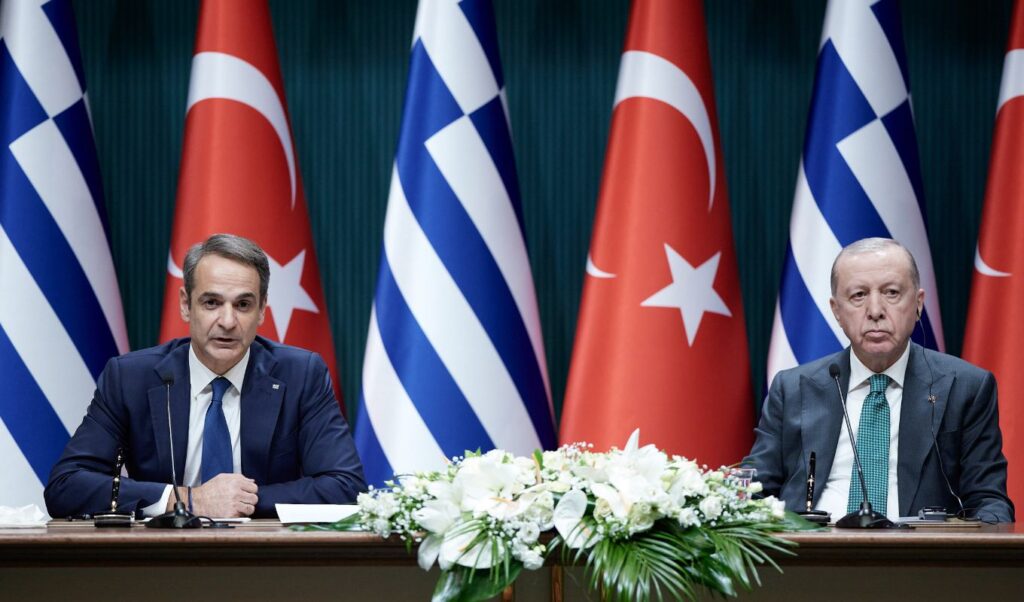
Professor Emeritus of European Studies at the University of Athens Panagiotis Ioakimidis points out another parameter to parapolitika.gr. As he says, it is particularly interesting that in this letter Ankara uses the language of international law to dress its demands. International law had been invoked for resolving bilateral disputes by Tayyip Erdogan in his meeting with Kyriakos Mitsotakis, causing a sensation with his change of stance. Mr. Ioakimidis specifically argues that “the letter, in its entirety, with two marginal exceptions I think, is based on international law, according to Turkey’s understanding. That is, how Turkey interprets international law. But in any case, it has international law as its basis.” According to Mr. Ioakimidis, what Turkey seeks with its UN letter is “to reformulate its positions after the Ankara meeting.”
The real test for the “positive agenda” between the two countries is expected when Turkey decides to implement its energy ambitions, such as the agreements with Libya for drilling. As analysts point out, sending vessels to the area will be the decisive factor showing the real intentions of Turkish policy. Everything indicates, however, that Greek-Turkish relations are again going through a period of delicate balance. Turkey attempts to legitimize its claims through the UN while Greece remains committed to defending its sovereign rights, simultaneously keeping communication channels open to avoid tensions in the field. Following established diplomatic practice, Athens is expected to respond to Turkish allegations with a corresponding letter to the UN.