Greece and Turkey are now attempting to write the next chapter of a difficult and complex relationship, following a High-Level Cooperation Council that succeeded in placing several low-politics issues on the agenda, but failed to achieve substantial progress on the matter of EEZ and continental shelf delimitation. At the same time, Political Dialogue will proceed (under Deputy Foreign Minister Alexandra Papadopoulou) along with talks on the Positive Agenda (under Deputy Foreign Minister Haris Theoharis) and Confidence Building Measures.
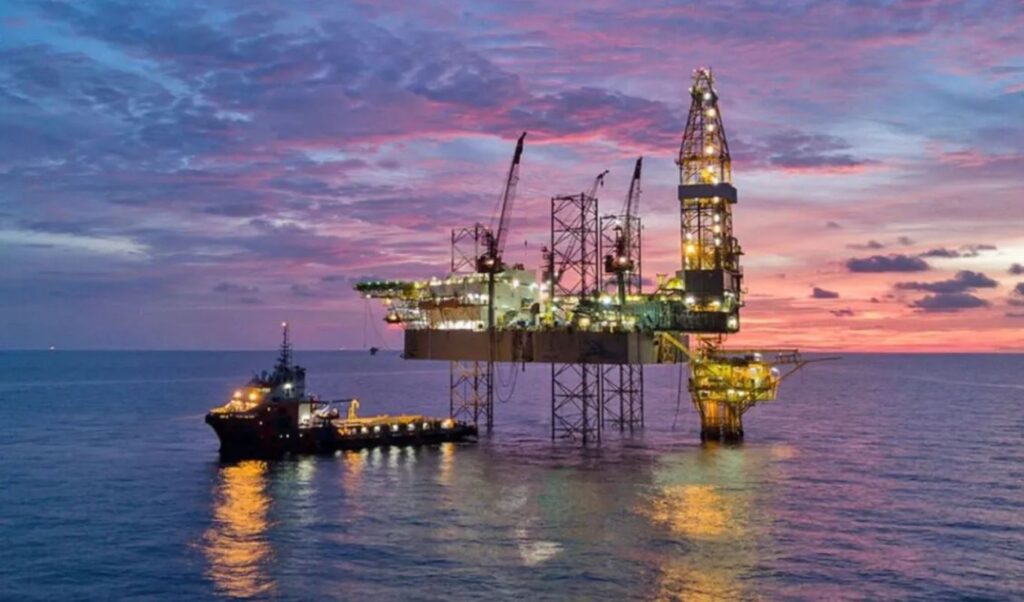
Meanwhile, the government is proceeding at a relatively fast pace with the process of future exploitation of natural gas deposits in maritime blocks that coincide with areas included in the illegal Turkish-Libyan memorandum. At 11:00 AM, lease agreements between the Greek state and the Chevron-Helleniq Energy consortium will be signed at the Maximos Mansion in the presence of Kyriakos Mitsotakis and Environment and Energy Minister Stavros Papastavrou. These agreements concern the granting of exclusive rights for hydrocarbon exploration and exploitation in maritime areas south of the Peloponnese and Crete. “I was in Ankara for the 6th Summit of the Greece-Turkey High-Level Cooperation Council,” the Prime Minister wrote in his customary Sunday Facebook post. “President Erdogan and I had a frank and substantial discussion about what brings us closer together, but also about what divides us. Our disagreements are real and significant. We do not underestimate them. Today, however, we can highlight them without tensions, with open communication channels, confidence and steady reference to International Law,” noted Mr. Mitsotakis, who also emphasized that “Greece seeks neither tension nor inaction.” As he said, “we want a normal, functional relationship with Turkey, with the national interest as our constant guide. Geography makes us neighbors. In a fluid international environment, we choose stability.”
At the same time, the government is leveraging the results of last Wednesday’s meeting in the field of domestic political confrontation. “I saw a Prime Minister who served the national interest once again, without grandstanding, without the logic of ‘cheap patriotism.’ He raised all issues, for example, the threat of war, and I don’t think there was any reaction,” government spokesman Pavlos Marinakis characteristically stated. “He clearly raised everything that needs to be said about Cyprus, the national position of Greece and Cyprus. He spoke without beating around the bush about the Muslim minority and not, as historically inaccurately heard, the Turkish minority in Thrace,” he added.
Progress was made on the so-called “low politics” issues, which is expected to become clearer in practice in the coming months. Migration and refugee issues are a field where both sides seek closer cooperation to reduce flows in the Eastern Aegean. It’s worth noting that according to information, Tayyip Erdogan, during the High-Level Cooperation Council session, after he and Mr. Mitsotakis spoke, as well as both Foreign Ministers Mr. Gerapetritis and Fidan, gave the floor himself to Thanos Plevris, asking to learn how the Greek migration minister evaluates the cooperation between the two countries. Already, flows have been decreasing in recent years, and the assessment expressed by the Turkish side is that they will decrease even further this year, as they claimed to have increased operations on land, on Turkish coasts, to stop boats before they start and arrest smugglers.
The Turkish government seems to understand that not only for Athens, but for many European capitals, migration management is a major issue and is interested in showing the European Union that its main problem is gradually North Africa and not Turkey, which more effectively handles migration flows from the Middle East and broadly from Asia. In practice, there are quite a few projects and initiatives in the near future that – if implemented – will show that the so-called calm waters policy is bearing fruit in specific sectors. Such examples include the scheduling of ferry connections between the ports of Thessaloniki and Izmir, as well as the start of direct flights between Athens and Ankara, and increasing the frequency of commercial airline routes between the two countries, along with the study for the railway that will connect Thessaloniki with Constantinople. There’s also the launch of the bilateral cooperation program in research and technology. This is a joint funding program for innovative ideas in sectors such as life sciences, pharmaceuticals, the agri-food chain, circular industry and sustainable energy. There’s also the conduct of two business forums, one in Constantinople and one in Athens, under the auspices of both Finance Ministries and the general strengthening of commercial ties, targeting 10 billion dollars in bilateral trade volume by 2030.