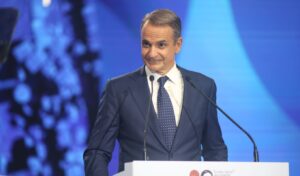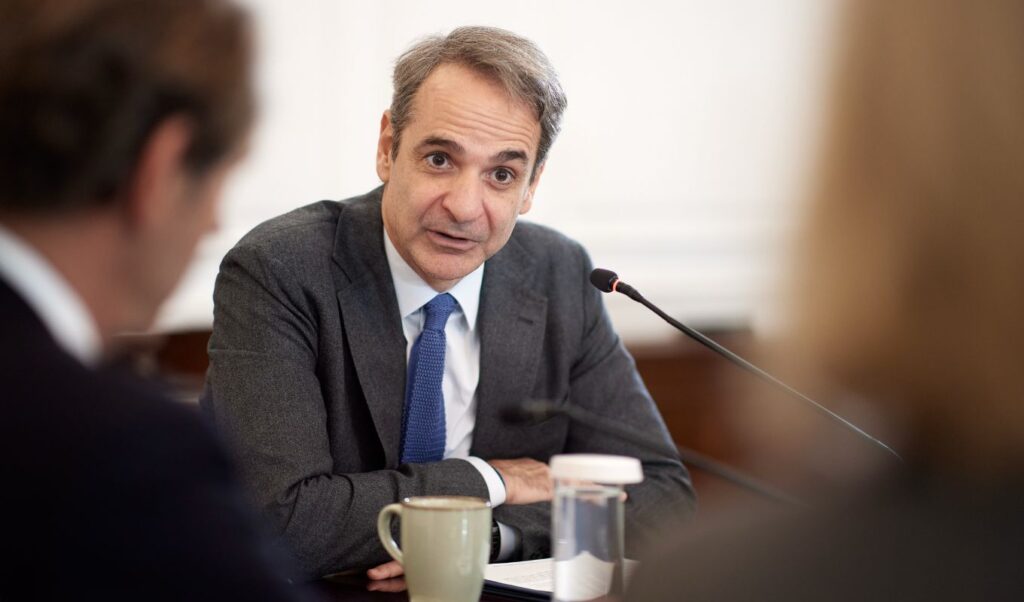
“With President Erdogan we had a sincere and substantial discussion, about what brings us closer together, but also about what divides us. Our disagreements are real and significant. We do not underestimate them. Today, however, we can highlight them without tensions, with open channels of communication, confidence and steady reference to International Law. Greece seeks neither tension nor inaction. We want a normal, functional relationship with Turkey, with our national interest as our steady guide. Geography makes us neighbors. In a fluid international environment, we choose stability. We continue the structured dialogue we have started over the past two and a half years, which has produced specific tangible results, and we expand the fields of cooperation,” emphasized Prime Minister Kyriakos Mitsotakis in his customary weekly post, commenting on the week’s developments.
The Prime Minister’s complete weekly review:
«Good morning. This week was mainly dedicated to our international presence, with important meetings and decisions.
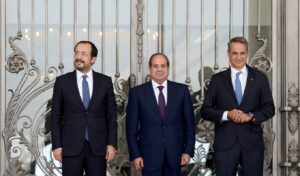
I traveled to Ankara for the 6th Summit of the High Level Cooperation Council between Greece and Turkey. With President Erdogan we had a sincere and substantial discussion, about what brings us closer together, but also about what divides us. Our disagreements are real and significant. We do not underestimate them. Today, however, we can highlight them without tensions, with open channels of communication, confidence and steady reference to International Law. Greece seeks neither tension nor inaction. We want a normal, functional relationship with Turkey, with our national interest as our steady guide. Geography makes us neighbors. In a fluid international environment, we choose stability. We continue the structured dialogue we have started over the past two and a half years, which has produced specific tangible results, and we expand the fields of cooperation.
We continue on the path of responsibility. This is what the majority of citizens desire: a Greece of national confidence, not national hysteria.
Let me turn to the review of domestic government activity and begin with the historic Social Agreement for strengthening Collective Labor Agreements, which is now officially the law of the land. Yes, this is happening for the first time in our country and is being implemented by a center-right government. The Agreement facilitates the conclusion and extension of collective agreements to cover a larger part of the labor market. This means more security and better wages for workers, but also a stable and predictable environment for businesses. This Agreement also proved something else: that social partners can achieve the necessary consensus, showing the way to political forces as well. Unfortunately, in a distinctly pro-labor bill, hypocrisy from opposition parties was excessive. I don’t want to make opposition comments in the Sunday review, but I cannot fail to note PASOK’s paradoxical stance of voting for all the basic articles of the bill while simultaneously voting against it in principle. I wish and hope that we can someday manage as a political system to approach with more sincerity what can truly unite us, without inventing artificial differences just to pretend we’re doing opposition politics.
At the same time, progress is reflected in the field of major projects.
An important milestone for Athens Metro Line 4 was the emergence of the tunnel boring machine “Athena” at the Evangelismos shaft, having completed excavation of 5.1 kilometers from Katechaki. It was no coincidence that its emergence was accompanied by “Break on Through,” a symbolic reminder that Athens is literally “breaking through to the other side.” From Goudi and Ilisia to Kaisariani, the project advances with steady steps beneath the city, building its new daily reality. Meanwhile, “Nike,” the second tunnel boring machine, advances from Alsos Veikou towards Kolonaki, crossing Galatsi, Kypseli, the Courts, Alexandras Avenue, Exarchia and Akademias. Two fronts simultaneously, one of the largest infrastructure projects currently being implemented in Greece that will provide great traffic relief to the Athens basin.
On another infrastructure project now: the tender for the Aviation Systems of the under-construction Heraklion International Airport in Crete was announced during the week, just 10 days after signing the relevant agreement. The installation of these systems – among the most advanced available – is a basic prerequisite for certification and safe operation of the new airport. Progress on construction of building facilities is impressive, and if it continues at these rates, by 2028 Crete will have the most modern airport in Greece, and one of the most modern in Europe. The total investment in the new airport, with all aviation and commercial facilities and systems, will reach 1 billion euros and will have created a total of 7,000 permanent and stable jobs, inside and outside the airport.
Let me change fields to mention that, in record time, within just 90 days from application submission, evaluation of investment plans and appeals for the Development Law schemes “Manufacturing & Supply Chain-3rd Cycle” and “Special Enhancement Areas” was completed. This is the fastest process ever conducted. 112 investment plans totaling 553 million euros were included, with provision for at least 1,500 new jobs. Public support, through grants and tax exemptions, amounts to 289.5 million euros. And something else important: these investments are not concentrated in one sector alone. They concern manufacturing, metallurgy, chemical industry, food, technology and tourism infrastructure, with broad geographical distribution. Half are implemented in Northern Greece – mainly in Macedonia and Thrace, as well as in North Aegean islands, strengthening regional cohesion and balanced development. Faster procedures, more investments, new jobs throughout the country.
So, from strengthening Collective Labor Agreements, to major infrastructure projects that change daily life and investments that create new jobs throughout the country, the direction is clear: we support the worker. We give stability to business. We accelerate projects. We unlock productive forces in the periphery. With institutional reforms, with tangible results and with speed that would have seemed inconceivable just a few years ago, we move forward.
Next and particularly important topic: the major success of the Independent Authority for Public Revenue (IAPR) in dismantling a network that used “straw men” as apparent managers of 380 catering and electronics businesses, leaving debts of 43 million euros to the state. The 11 arrested (10 Greeks and one foreigner) continuously created new businesses with new tax numbers every time a state audit occurred. This represents a systematic attempt to circumvent rules, at the expense of compliant businesses and taxpayers. Lawlessness and impunity undermine the sense of justice and trust in institutions. For years, such practices were favored by weak control mechanisms and a distorted compliance culture. This is changing. The battle for strengthening the rule of law is ongoing and fought daily.
And this isn’t the only example: the Directorate for Combating Organized Crime recently arrested 26 people who participated since 2018 in a criminal organization producing counterfeit cigarettes, with circulation of over 17 million pieces and tax evasion of 1.8 million euros. Within just one and a half years of operation, DCOC has solved 958 cases, has brought charges against 3,094 perpetrators, of whom 2,159 were brought to justice and 598 were remanded in custody. The message is clear: illegality is not tolerated. The state strengthens its mechanisms and protects law-abiding citizens and businesses.
I continue with a first assessment of the major change we brought to the will publication process, where since last November we established a comprehensive electronic registry, seventy-two years after the original legislation of the “Registry of Unpublished Wills.” According to statistics from the Athens-Piraeus-Aegean and Dodecanese Notarial Association, 11,839 cases were processed through the digital platform within four months. Before the Electronic Registry’s operation, 330 days were required at Athens First Instance Court and 450 days at Piraeus First Instance Court to publish a will. It’s clear that the reform significantly reduces administrative and judicial burden, allowing judges and staff to focus on their core jurisdictional duties and expands notaries’ professional scope.
On the occasion of World Greek Language Day celebrated on Monday, I want to repeat something self-evident: supporting and internationally promoting the Greek language is a national priority. Our language is not only cultural heritage. It is a tool of thought, a bridge to the world, an identity element for the Greek diaspora and a source of international interest. Today 81 chairs of Greek studies operate in foreign academic institutions, while the contribution of the Center for the Greek Language, based in Thessaloniki, is decisive in promoting Greek language learning within and outside Greece. Results are encouraging: within a decade, from 2015 to 2025, the number of those participating in Greek language proficiency certificate exams nearly tripled, from 4,128 reaching 12,001. This is not just statistics. It’s proof that the Greek language is gaining ground. And I believe establishing February 9th as World Greek Language Day will further enhance international interest, especially now that technology opens new paths for teaching, dissemination and connection.
And I close with Tatoi, where restoration works of almost all building facilities and Palace Gardens have been completed, while those still in progress will be finished by September 2026. The renovated spaces will function as museums and event venues, while visitor service infrastructure is planned, such as ticket offices, shops and refreshment areas. Additionally, a Police Department and Fire Station will be housed there, ensuring permanent protection of the area. By October, restoration work on remaining buildings and landscaping of the surrounding area will be completed. The goal of development is for the former royal estate to emerge as a unified cultural park, as a living space of history, walking and knowledge, a pole of attraction for Greek and foreign visitors. Until then – I remind you – you can visit the “digital” museum we created at https://tatoicollections.culture.gov.gr/el/home.
That’s all for this week. We continue the work, and we’ll talk next time. Goodbye!».