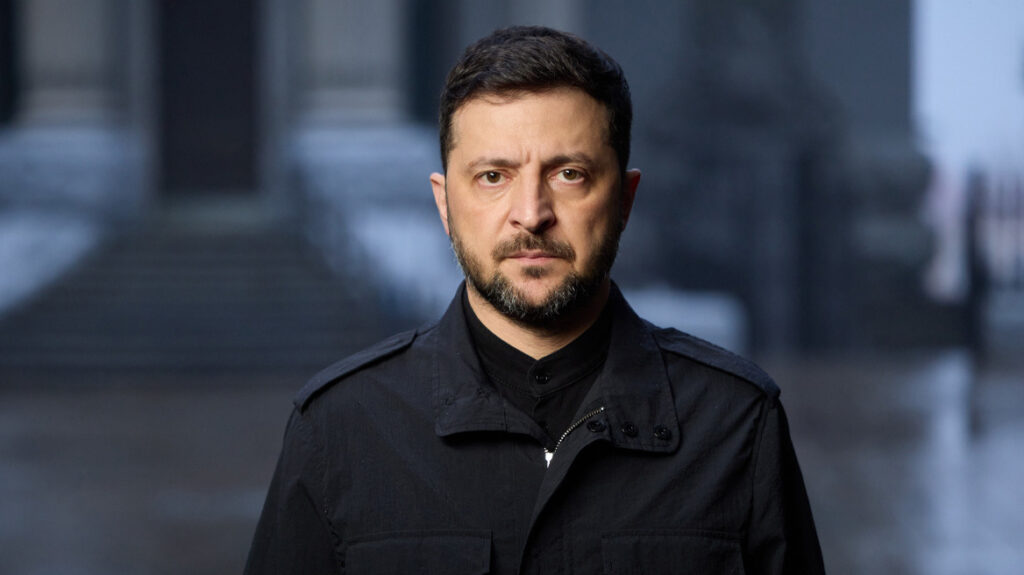
During his speech at the Munich Security Conference, thanking all those who “stand by our side, not only with words… with feelings, but with real actions,” Ukrainian President Volodymyr Zelensky emphasized that unity in Europe and the transatlantic community constitutes the best “defense” against Russia’s aggressive plans.
The Ukrainian president particularly highlighted the importance of PURL, the mechanism through which Ukraine procures American-made weapons to continue its fight against Russian aggression, noting that one of the worst things a leader can hear is that air defense systems have run empty and cannot repel Russian attacks.
He also made special reference to the expertise Ukraine has developed in the field of drones and their catalytic role in the war’s evolution, characteristically noting that Ukraine has “more experience than anyone in the world” in how to defend against them.
Zelensky: As the war continues, the risks evolve
He then referred to Moscow’s divisive strategy, characteristically noting that “while we invest in interception and protection systems, Russia invests in breaking our unity – our unity with you, unity in Europe, unity in the transatlantic community – they want to dissolve it. Why? Because our unity is the best bulwark against Russia’s aggressive plans – the best – and it still holds.”
He added, however, that Russia also has its “partners,” including North Korea and Chinese companies that provide components for Russian weapons and missiles, adding that the longer the war lasts, the more resources Russia secures.
The Ukrainian president even warned that as the war continues, the risks evolve, explaining how Shahed-type drones have changed during the war: they now have jet engines, fly at different altitudes, and are guided by operators in real time.
“The longer the war lasts, the more resources the aggressor receives, the more dangerous the consequences become, the more dangerous the evolution of weapons and the war itself becomes – and Putin’s own evolution,” he noted characteristically.
He naturally did not fail to express his dissatisfaction with how slow Ukraine’s allies’ response has been at times, saying he waited “months” or “years” for vital supplies.
“Anyone who seeks security and peace must understand this: every day counts,” he noted characteristically, while behind him screens displayed images from the consequences of Russian attacks on Ukraine, warning about the threat that Kremlin aggression poses to Europe more broadly.
“I want you to understand the real scale of these attacks on Ukraine. As you see, in just one month, this January, we had to… defend against attacks with 6,000 offensive drones, most of which were Shahed drones, and over 150 Russian missiles of various types, as well as more than 5,000 guided glide bombs. And this happens every month. Imagine this over your own city: streets destroyed, homes demolished, schools built underground,” he noted, adding that he wants Ukraine’s allies to “ask yourselves: are you ready not only for the challenges that Russian aggression brings, the challenges of modern warfare, but also for the constant effort to convince the world, every day, to fight for support to defend your country’s interests – as Ukraine must do.”