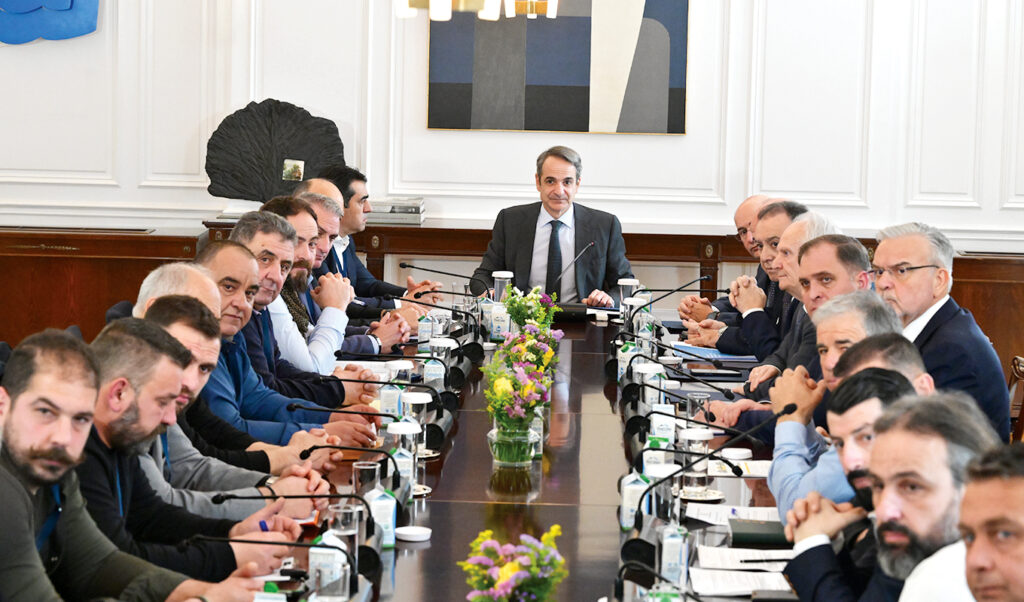
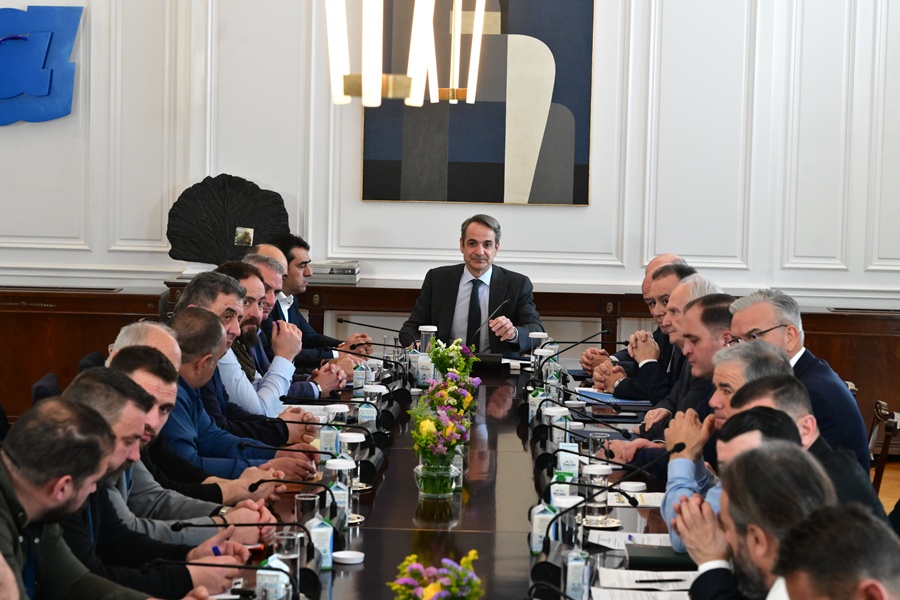
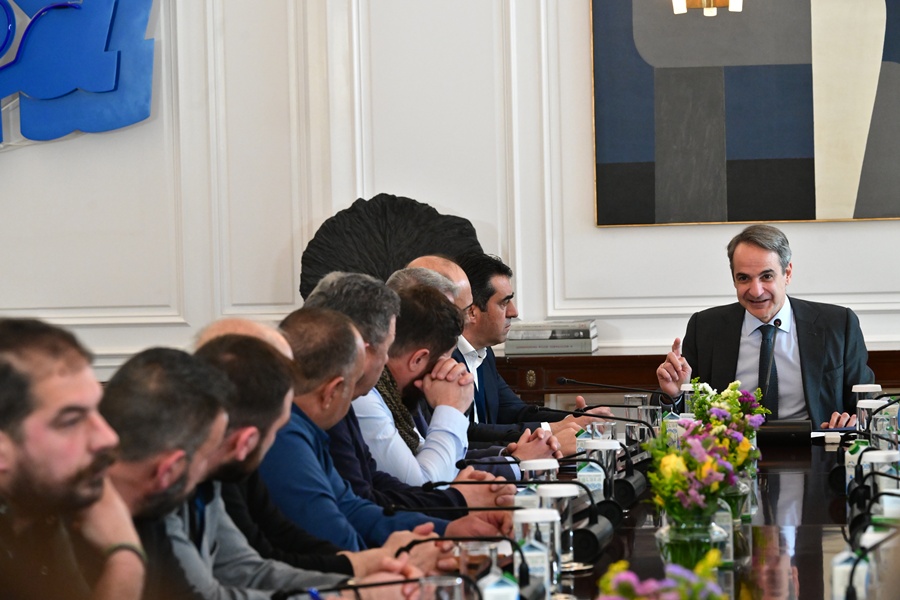
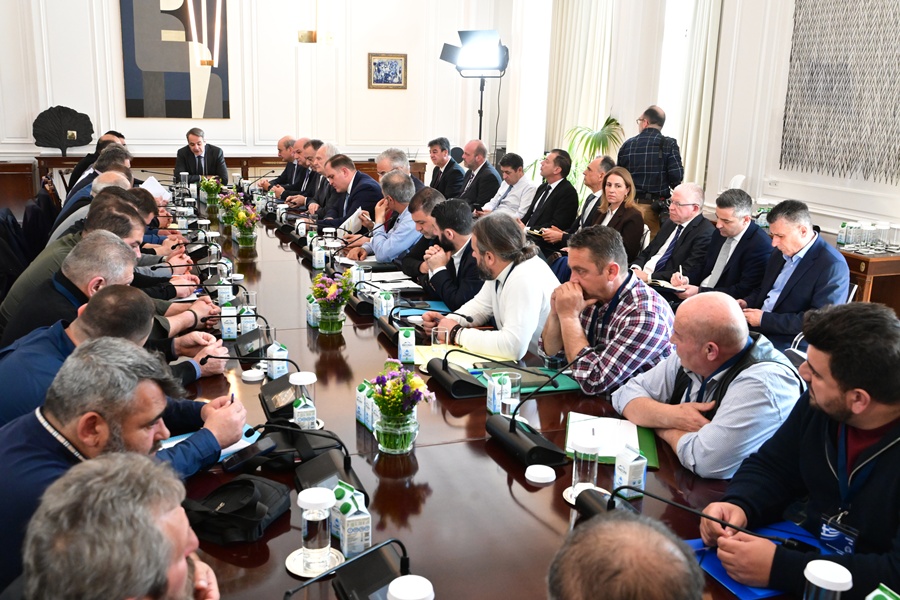
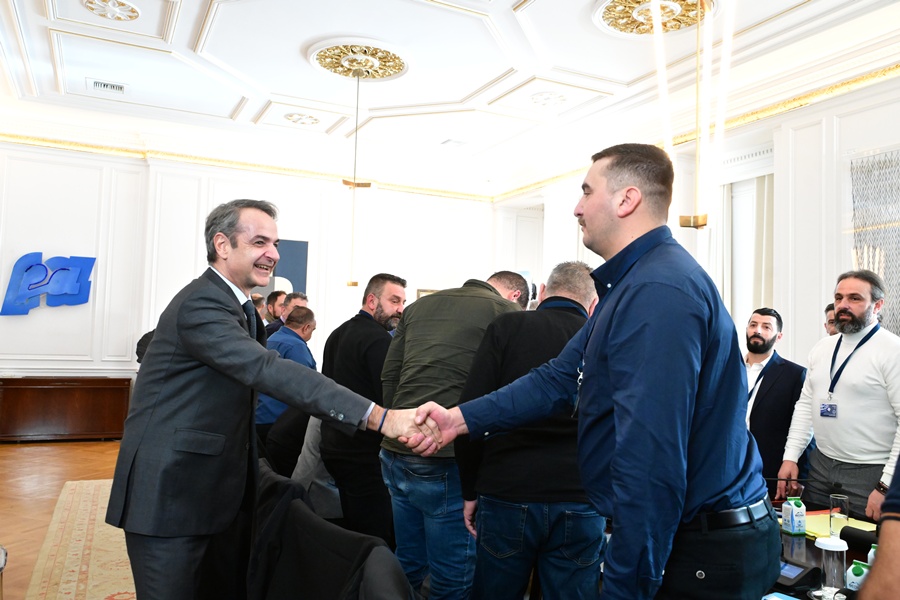
Prime Minister Kyriakos Mitsotakis held a meeting with livestock farmer representatives at Maximos Mansion on Tuesday afternoon, February 9th, continuing the government’s institutional dialogue with producers. The goal is to resolve issues facing the primary sector, focusing on planning its future to ensure outward-looking development, certification and competitiveness of Greek products, as well as the resilience of Greek production.
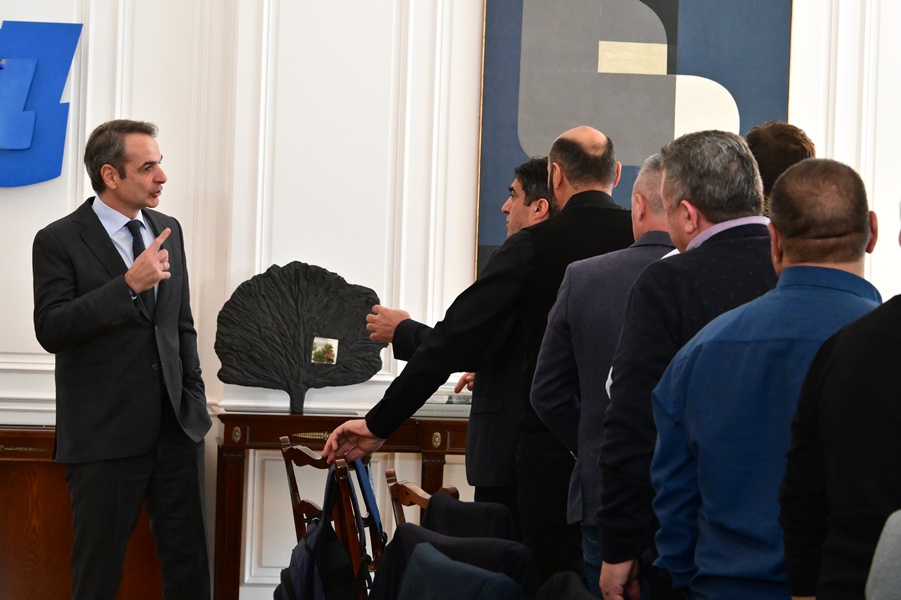
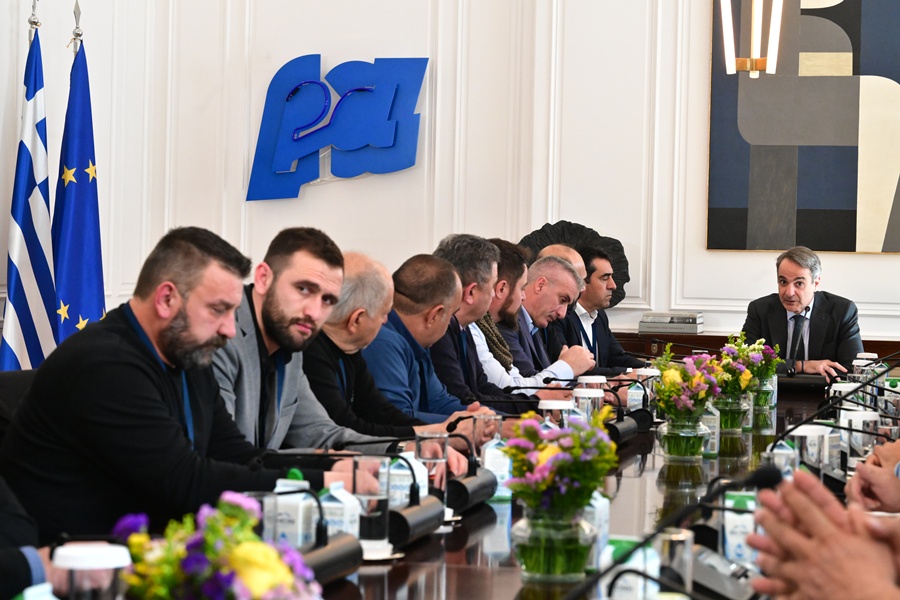
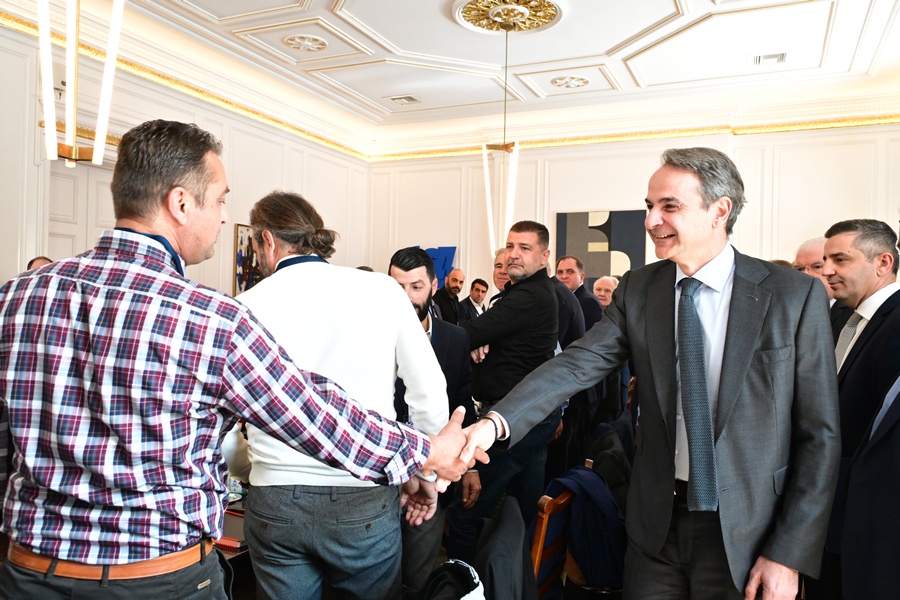
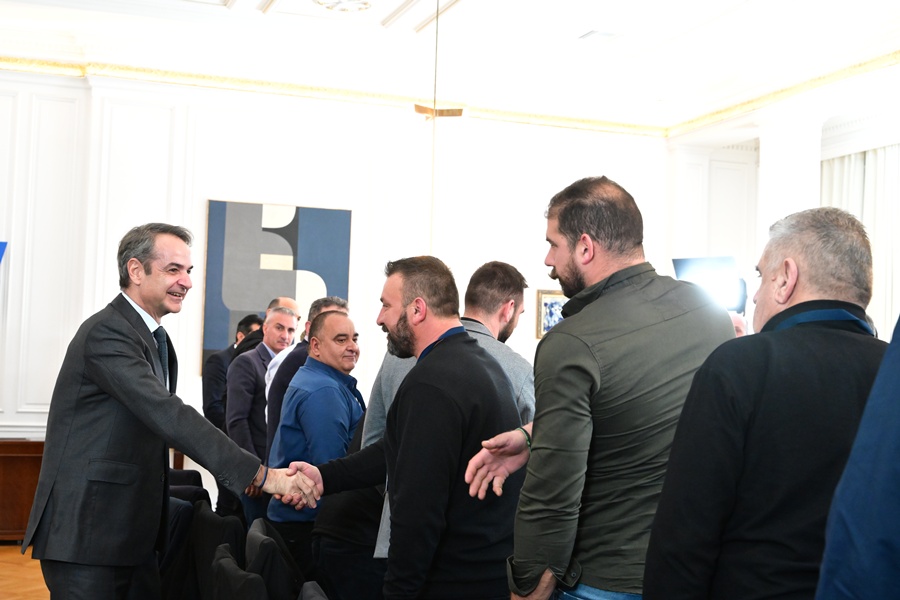
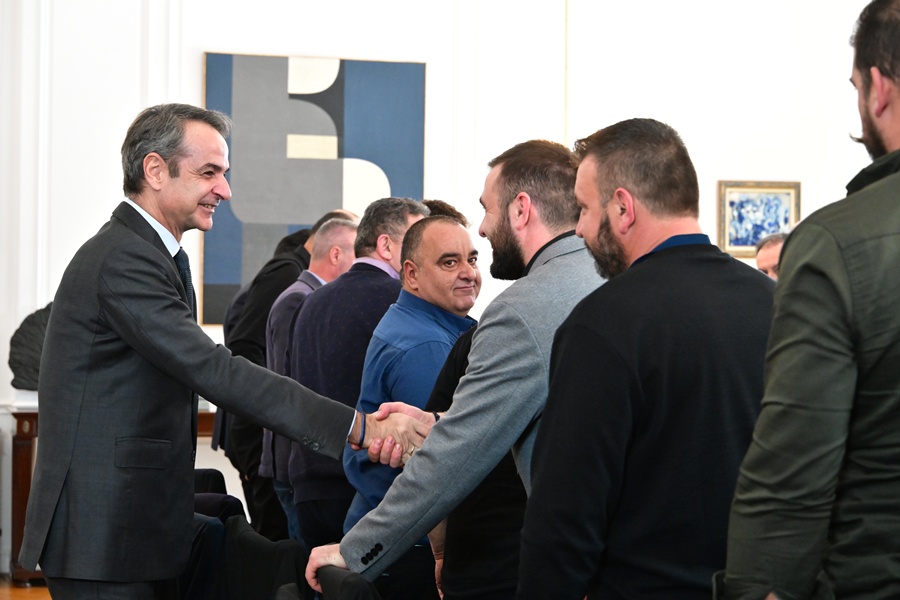
Kyriakos Mitsotakis: Supporting Greek livestock farming and its products is a non-negotiable priority
At the start of the meeting, the prime minister made the following statement: “Welcome to Maximos Mansion, and I’m particularly pleased that we’ll have the opportunity today to hold this discussion about the present and future of Greek livestock farming. We had undertaken this commitment to hold a separate discussion to examine the challenges and opportunities in the livestock sector. I would like, first of all, to reiterate that from the government’s side, supporting Greek livestock farming and the products it produces constitutes a non-negotiable priority, both for the government and, I would say, for me personally.”
“I believe we focused on the sector’s problems as they emerged after the outbreak of the foot-and-mouth disease epidemic – we’ll address this issue further – and we responded, I believe, to your justified requests, most significantly covering income replacement for livestock farmers and producers who lost their animals. I want you to know that as long as this ordeal continues, we will stand by Greek livestock farming. But obviously, at this moment our priority – and I want to be absolutely clear about this, government officials will speak further on this – and the only plan we insist on is the complete eradication of foot-and-mouth disease. We have two months ahead of us until Easter to achieve this goal. As I’ve been informed by the Ministry, cases are already extremely low and we must persist strongly in this direction,” he added.
“We need your full cooperation to achieve this goal, which is a national goal for protecting Greek livestock farming overall. Adherence to biosafety measures, strictest policing regarding illegal animal movements, effective handling of illegal vaccination, which is a problem we know is unfortunately happening at this time. Together we will achieve this goal. And I want to emphasize that from the Ministry and government’s side, there is no other plan, nor is there a plan B, and I think the discussion about vaccination at this time is rather misleading. Because, in any case, biosafety measures must be observed – experts will explain this further. So I believe I must ask for everyone’s cooperation so we can address this crisis and close the foot-and-mouth disease cycle with as few consequences as possible for Greek livestock farming. Beyond that, I want to discuss issues concerning the reconstruction of livestock capital. We have Mr. Megalou from Piraeus Bank with us because I believe you’ll hear some interesting ideas about how the banking sector can help, beyond what you’ll hear about improvement plans and support with state and European funding.”
“Our purpose and vision is to move into a new era of livestock farming, with products that will be certified, high-quality, and able to command the prices they truly deserve. And this obviously requires a network of interventions at many levels to reach this goal. In closing, I want to remind those present that before the 2019 elections – I think you remember too, Pavlos – I had undertaken a commitment then that we would help by limiting illegal ‘Hellenizations’ to increase overall milk prices. Remember where milk prices were then, where they are today. And I think this was an achievement because livestock farming couldn’t have been competitive with the milk prices of 2018 and 2019. Steps have been taken in the right direction, and we’re here to see what we need to do for immediate handling of the foot-and-mouth crisis and what we can do medium to long-term to support Greek livestock farming. And mainly so the new generation of livestock farmers can realize that there is a real future in livestock farming and that Greek livestock farming and its products will always be a sector – whether we’re talking about meat, milk, or dairy products – where our country can and must be globally competitive,” he concluded.