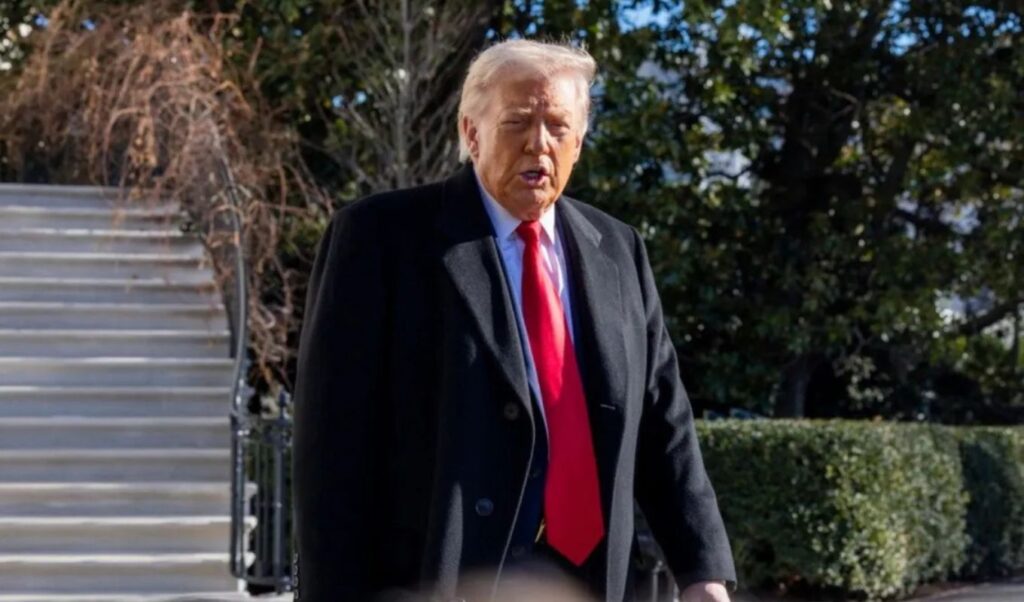
A major surprise, at least based on what’s typical for Trump, were the messages sent by the American president to Iran stating that based on information he received “the killings have stopped,” indicating that the 24-hour strike warning would likely not materialize. This surprise was reportedly shared by Trump’s top security advisors, who—according to CNN—were relatively certain after a White House Situation Room meeting on Tuesday that military action was imminent. The president appeared “moved” by videos from Iran showing past executions, “horrific scenes” likely to repeat amid the regime’s violent crackdown on protesters, a source familiar with the meeting told the American outlet. He was specifically informed about Erfan Soltani, the 26-year-old facing potential execution for participating in demonstrations, though no final decision was made on what action to take.
One day later, however, the situation changed and Trump sent word that he had received notification from Tehran that executions would not proceed, suggesting the strike probability was receding at least temporarily. At that moment, U.S. intelligence reports didn’t show Iran had stopped killing protesters, according to CNN. Many still believed military strikes were possible as preventive measures had been taken to evacuate non-essential personnel from America’s largest air base in the region, Al Udeid in Qatar.
Some officials even wondered if the president’s statements were a deception attempt, similar to his vague public declarations last June, just before ordering strikes on Iranian nuclear facilities. The White House stated Thursday that all options—including military—remained on the table.
“The president and his team have communicated to the Iranian regime that if the killings continue, there will be serious consequences,” said Press Secretary Caroline Leavitt during a briefing. She added that Trump keeps his thinking “secret.” “The truth is only President Trump knows what he’s going to do, and a very small team of advisors is aware of his thinking on this,” she said.
Diplomatic efforts to prevent Trump from striking Iran – The Netanyahu conversation
Behind the scenes, however, some of America’s top allies made strenuous efforts to prevent military action. And Trump, cautious about taking measures with uncertain outcomes that could endanger U.S. armed forces members, appeared receptive to the arguments, according to multiple U.S. officials cited by the American outlet.
“Key” to this, as reported by the New York Times, was that Wednesday afternoon (U.S. time), Trump spoke by phone with Israeli Prime Minister Benjamin Netanyahu, who encouraged the president to postpone attack plans. Israelis didn’t believe the regime would fall quickly without a prolonged campaign, and there were concerns about the country’s missile defense systems’ condition, which were used extensively during the Israel-Iran conflict last year, according to a source familiar with the conversation.
A U.S. source, cited by Axios, said Israel’s message to the Trump administration was “we will follow your lead, but we’re not pushing for an attack.” A second source told the same outlet: “Benjamin Netanyahu didn’t tell Trump not to do it, but he’s not pushing him to do it either.”
The message apparently carried special weight for the American president, given Netanyahu’s previous calls for Trump to join Israeli military action against Iran.
Similarly, U.S. Gulf partners—including Saudi Arabia and Qatar—already knew their efforts to de-escalate, even temporarily, appeared to be bearing fruit. Trump officials reportedly told some of these Gulf partners that the primary goal was forcing Iran to stop the killings and that the president was seeking a sign they intended to do so, according to a source familiar with the discussions.
In Saudi Arabia, Foreign Minister Adel al-Jubeir told CNN Wednesday that “everyone is watching the situation very carefully.” “Everyone hopes the situation will be resolved in a way that minimizes any kind of damage,” he said.
Ultimately, Tehran’s message about Soltani played its own role, with Trump noting in a Thursday post that postponing his execution “was good news.”
Witkoff on Iran: Washington prefers diplomatic solution
Meanwhile, U.S. special envoy Steve Witkoff suggested Washington prefers a diplomatic solution. “I’m really hoping for a diplomatic resolution,” he stated, noting that an agreement with Iran should cover four key areas: limiting nuclear enrichment, the missile program, nuclear material stockpiles, and Tehran’s network of regional allies and proxies.
Witkoff argued that Iran’s poor economic situation might push the regime toward compromises. “If they want to return to the international community, these issues can be resolved diplomatically. The alternative is bad,” he said characteristically, while sending a message of support to the Iranian people, whom he called “incredibly brave.”
Fear of retaliation
Concerns about how Iran would react also remain a factor in the administration’s calculations, as do questions about whether the military options available to Trump are likely to achieve the results he seeks, according to officials cited by CNN.
Recent U.S. intelligence reports show Iran is preparing options to target American bases in the Middle East, including those in Iraq and Syria, if Trump proceeds with military strikes, according to the same source. This retaliation threat has been factored into the Trump administration’s calculations, along with questions about the viability of military options presented to the president so far.
Trump had indicated he prefers options for a more limited attack, rather than more intensive operations that could lead the U.S. into a larger conflict, according to multiple sources. However, national security officials have varying levels of confidence about whether the limited strike options available to Trump would dramatically change the situation on the ground, shifting the balance in favor of the opposition, according to sources.
Readiness for strikes against Iran – The Abraham Lincoln approaches
In any case, this doesn’t mean Washington isn’t sending messages that it could strike Tehran. American media outlets, as well as the South China Morning Post (among others), reported that at least one aircraft carrier, likely the USS Abraham Lincoln with its strike group, is heading from the South China Sea toward the Middle East and is expected to arrive within about a week. According to the same information, additional weapons systems and defensive equipment will follow, emphasizing air defense elements and fighter aircraft.
Fox News, citing sources within the Trump administration, described a “preventive move” aimed at both protecting American forces and maintaining credible military threats against Iran. The news website Axios confirmed the same information, while the Pentagon has so far avoided officially confirming the carrier’s deployment to the Central Command (CENTCOM) area of responsibility.
Meanwhile, pressure increases through other means on Tehran’s regime: The U.S. Treasury Department announced Thursday new sanctions against Iran’s Supreme National Security Council Secretary General Ali Larijani, a close associate of Supreme Leader Ali Khamenei. Sanctions were also imposed on several commanders of Iran’s internal security forces and Revolutionary Guard Corps involved in protester killings, as well as entities connected to Iran’s “shadow banking” network.
Tension at the UN Security Council
The tension was reflected in the UN Security Council session, where the U.S. again warned Iran that “all options are on the table.” American Ambassador Mike Waltz emphasized that “President Trump is a man of action” and that no one should doubt his determination “to stop the slaughter.”
The session was marked by interventions from Iranian dissidents, with journalist Masih Alinejad publicly denouncing assassination attempts against her, addressing the Iranian representative directly. Meanwhile, Tehran attempts to portray the demonstrations as the work of “terrorists” and foreign instigators, while the question remains whether suspending certain executions represents real course change or simply a tactical maneuver to avoid American intervention.
As everything indicates, the U.S. continues pressuring Iran, always keeping the military option on the table, without closing the window for diplomacy for now.