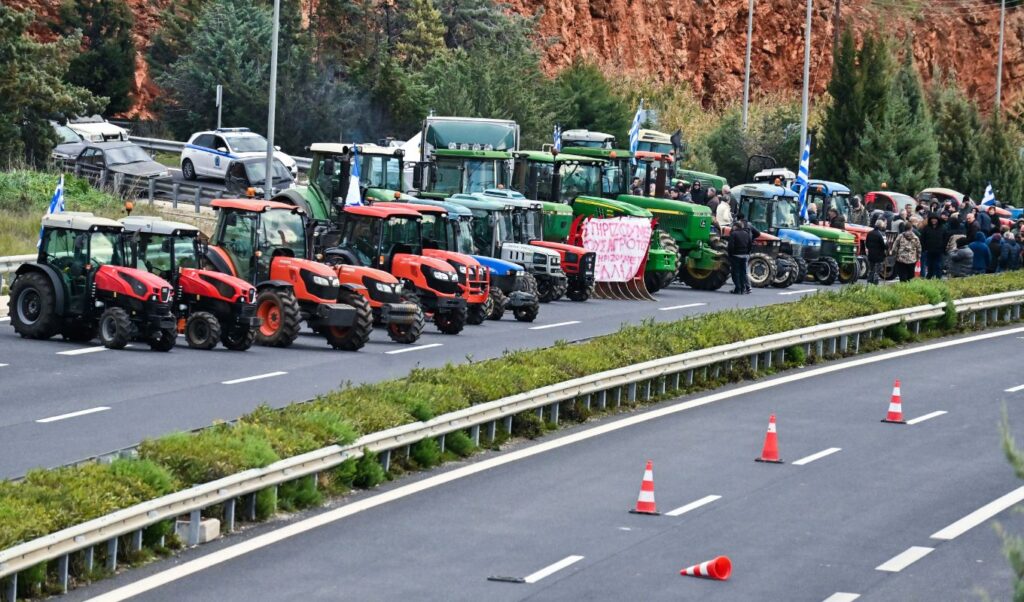
Beyond presenting all the positives that the European Union and Mercosur agreement holds for Greek producers, sources from the Development Ministry left their… barb for Greek MEPs, particularly those from PASOK. Emphasizing that they were the only ones among the Socialists who didn’t vote, they lamented the populism they displayed that led them to this decision. According to sources, only the Left and the Patriots voted against. However, it was noted that the agreement framework existed while SYRIZA was in government, and it was recalled that they showed a relatively celebratory attitude at the time.
The SKAI report, however, provides, through statements from Development Ministry sources, data-backed information on how Greek producers will benefit from this agreement. Additionally, it has already been mentioned that Greece benefits from both increased tariffs on imports to the country and their reduction regarding exports to Latin America. They explain precisely how Greek producers, the PDO products and their derivatives will be protected. It should be noted that there has been no information about any objections after the agreement.
Mercosur agreement with European Union: What Development Ministry sources report
The EU-Mercosur agreement creates new opportunities for Greek export companies in all sectors, protects 21 domestic agricultural products with geographical indications from “imitations” while establishing strong safety valves in favor of producers in cases of sudden import increases. Greece’s positive vote took into account all these elements that secure Greek farmers and provide new prospects for our products, while the agreement would pass regardless of our country’s stance as it required a qualified majority, which had already been achieved by the remaining member states. Moreover, the framework for the EU-Mercosur agreement already existed since 2019, under the SYRIZA government, which was actually celebrating it.
Furthermore, on Tuesday, December 16, the European Parliament approved a package of measures to ensure that the Mercosur trade agreement is accompanied by effective protection mechanisms for the Union’s most sensitive agricultural sectors. It’s indicative that the farmer protection measures were voted by an overwhelming majority of the European Parliament (421 in favor against 161 against). All political groups voted in favor (European People’s Party, Socialists, Liberals, Greens, Conservatives and Reformists) except for the Left and the Patriots (the Le Pen-Orban faction) who voted against.
For populist reasons
Among Greek MEPs, the protection measures were voted by New Democracy MEPs while the other Greek MEPs voted against, for purely populist reasons. It’s characteristic that PASOK MEPs are the only ones from the Socialist group who didn’t vote. So their socialist colleagues from Spain, France, Romania, Italy, Poland, countries with strong agricultural production that are widely exposed to competition, don’t care about farmers and the only ones who cared were PASOK MEPs?
Also, the ECR group to which Mr. Velopoulos’s MEPs belong supported it and even argued in favor of the Agreement and the measures. We note that Greek agricultural and food product exports to Mercosur are small, amounting to only 34.3 million euros, and with the agreement they can increase significantly as our products will enter a new market of 270 million citizens in Brazil, Argentina, Uruguay, Paraguay, etc.
Product protection
The agreement protects 344 distinct food and beverage products from imitations across the EU, of which 21 are Greek. Specifically, among others, products such as feta cheese, olive oil and Kalamata olives, Corinthian raisins, Kozani saffron, manouri, kefalotyri, Chios mastic, Sitia and Lygourio olive oil, wines from Mantinia, Naoussa, Nemea, Santorini, Samos, Amyntaio, retsina, tsipouro, etc. are protected.
This protection will help sell more Greek products at higher prices, as the selling price of products protected by Geographical Indication is 2 to 3 times higher than that of regular products.
Clauses and safety valves
In case of market disruptions, significant measures will be taken to protect the interests of Greek farmers. Specifically, the agreement includes a safeguard clause to protect EU farmers from any sudden increase in imports. This is the first time such a measure is included in an EU agreement, even for products already subject to quotas. Additionally, a maximum limit (quota) will be set on the quantity of agri-food products imported from Mercosur that benefit from lower tariffs for beef, pork and poultry.
Regarding food safety, the EU’s high standards that protect EU citizens will not be compromised in any way: All Mercosur products must comply with the EU’s strict food safety regulations.
European Parliament measures
Responding to concerns from Greek and European farmers about the potential impact of the agreement on agricultural markets, the European Parliament established clear procedures, strict timelines, objective criteria and a strong operational framework that ensure market stability and provide reliable protection against sudden disruptions.
The producer protection measures voted by the European Parliament are as follows:
* Reciprocity obligation, meaning that imported products must meet European environmental, health and phytosanitary standards to be imported into the EU. The EU is already proceeding with a complete overhaul of Customs to conduct stricter controls on what is imported into Europe.
* Strong legal protection was voted for all Geographical Indication products, such as feta. Wines like Santorini, Nemea, Naoussa and spirits (Ouzo, Tsipouro) cease to be “generic names” and acquire legal protection. The Agreement provides for the reduction or elimination of high tariffs on products that now become more competitive in large markets
* There is a list of 14 products sensitive for the EU agri-food products (citrus fruits, olive oil, cheeses, kiwis, peaches, eggs, meat, rice, honey among them) for which special protection is provided. Producers will be protected from unfair competition, market disruptions and sudden import increases, through quotas and controls. Specifically, safeguard mechanisms are provided if an increase in import volume above 5% annually or a decrease above 5% annually in the average import price of a given product is detected. Such mechanisms include the restoration of tariffs and the limitation or suspension of imports.
Immediate resources of 45 billion to the primary sector
We also note that, as announced by the President of the European Commission, 45 billion euros in resources are immediately mobilized for the primary sector, within the framework of the new Multiannual Financial Framework. This is, as Prime Minister Kyriakos Mitsotakis has characteristically stated, a substantial step in supporting Greek and European farmers. A proposal that shows that Greece’s voice in Europe is heard louder and clearer.
Greece and Mercosur countries export many services to each other. Greek service exports to Mercosur amount to 1.6 billion euros annually. In 2023, the main service exports included: transport: 1.5 billion euros, tourism 67 million euros and culture 2 million euros. The EU-Mercosur agreement will further expand the Mercosur services market in sectors such as financial and postal services, courier services, telecommunications, transport, digital commerce and environment
97% of all Greek exporters are small companies. These companies often struggle to export outside the EU, as this involves additional costs and administrative procedures. The EU-Mercosur agreement will change this by offering more opportunities for small businesses as it will, among other things, reduce costs by eliminating tariffs and simplifying customs procedures while easing the administrative burden by facilitating product certification for local sales.