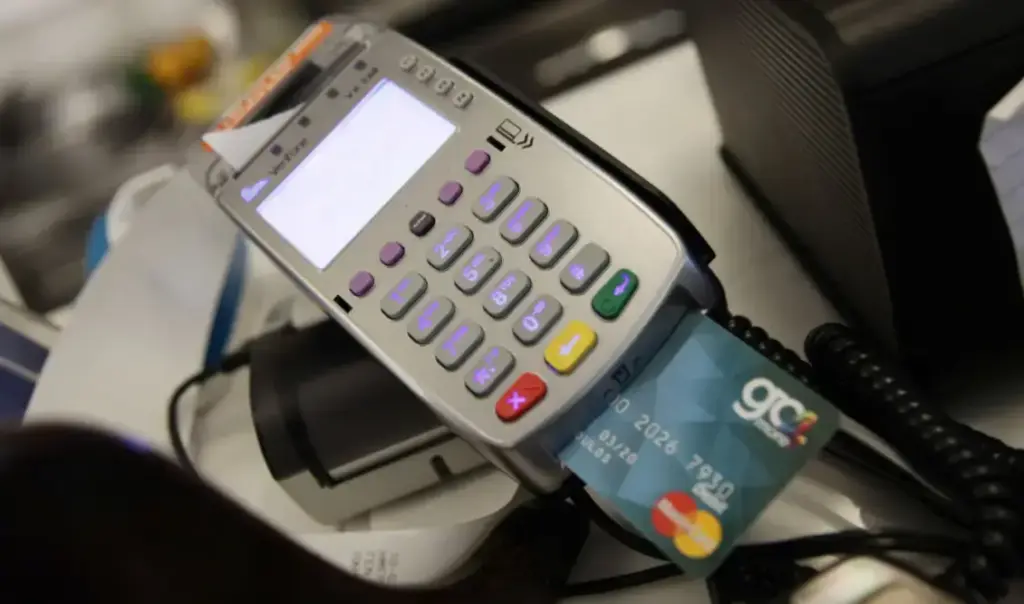
Taxpayers face the risk of paying an extra 22% tax penalty if they fail to cover 30% of this year’s income with electronic receipts by Wednesday, December 31st. Deadlines are approaching and taxpayers should check whether their transaction amounts are sufficient to avoid the penalty. Every year, thousands of taxpayers lose their tax deduction because they fall short of the receipt requirement, resulting in debit settlement notices with increased income tax for the amount they failed to collect.
Electronic receipts: What taxpayers must do by December 31st
According to data from the Independent Authority for Public Revenue (IAPR), last year the total amount of additional tax that taxpayers who failed to build their tax-free allowance through receipts had to pay reached 56 million euros. Employees paid an additional 21.9 million euros in tax, pensioners 7.34 million euros, farmers 6.2 million euros, freelancers 15.74 million euros, and property income earners 4.35 million euros.
Under the current system, every taxpayer who is an employee, pensioner, primarily a farmer, or self-employed, as well as every taxpayer with rental income from real estate, must make annual expenditures for purchases of goods and provision of services equivalent to 30% of their annual income.
For these expenses to be recognized, they must be paid with credit or debit cards or other electronic payment methods (prepaid cards, e-banking payments, etc.) and the relevant retail transaction receipts must be issued. Electronic purchase amounts are pre-filled by the IAPR, but taxpayers can make corrections provided they have the necessary purchase documentation. The maximum limit for expenses that must be paid by the end of the current year with electronic payment methods amounts to 20,000 euros.
Examples
For example, a taxpayer with an annual income of 20,000 euros must have spent 6,000 euros with electronic money. If the value of receipts is 5,000 euros, the 22% penalty will be calculated on the difference of uncollected receipts, i.e., 1,000 euros × 22% = 220 euros.
Another taxpayer with an annual income of 15,000 euros must have spent 4,500 euros with electronic money for purchases and services. If the electronic receipts collected reach 3,800 euros, the 22% penalty is calculated on the difference of 700 euros, i.e., 154 euros in additional tax.
Different treatment applies to taxpayers who have made expenses during the current year for personal income tax and property tax payments, loan installments, and rent, which cumulatively exceed 60% of annual actual income. The percentage these individuals must cover is limited to 20% (down from 30%).
Also, for taxpayers whose accounts have been seized, the required expenditure limit is reduced to 5,000 euros.
The amount of expenses made with electronic payment methods is declared individually by each spouse or each party to a cohabitation agreement. In case of joint income tax declaration, where the required expense amount is covered by either spouse or party to a cohabitation agreement, any excess amount can be transferred to the other spouse or party during income tax determination to potentially cover their required expense amount.
What expenses are covered
Expenses taken into account include:
-Purchase of food, drinks, clothes, shoes, bedding, stationery, cigarettes, hygiene and cleaning products.
-Purchase of electrical and electronic appliances, furniture and other durable household goods.
-Expenses for all types of repair services.
-Payments for utility bills and common expenses, tuition fees, medical visits and examinations, hospital fees and insurance premiums.
Excluded are payments for rent, loans, taxes and fees to the state, as well as expenses for purchasing real estate, vehicles, boats, aircraft, savings and investment products.
Exemptions
Taxpayers aged 70 and over, those permanently residing in villages with up to 500 inhabitants or on islands with up to 3,100 inhabitants that are not tourist destinations, as well as those performing military service, are exempt from the measure and need not worry.
More specifically, the following are exempt from the obligation:
– Those who have completed their 70th year of age.
– Individuals with a disability percentage of 80% and above.
– Those under judicial support.
– Foreign tax residents who are required to file a declaration in Greece.
– Public officials and civil servants serving abroad, as well as Greek tax residents living or working abroad. The term “abroad” includes both European Union or EEA countries and third countries.
– Minors required to file an income tax return.
– Those serving mandatory military service.
– Taxpayers permanently residing in villages with up to 500 inhabitants and on islands with fewer than 3,100 inhabitants, according to the latest census, unless they are tourist destinations.
– Taxpayers who are beneficiaries of the Minimum Guaranteed Income.
– Taxpayers in long-term hospitalization (over 6 months).
– Those residing in nursing homes and psychiatric institutions.
– Prisoners.