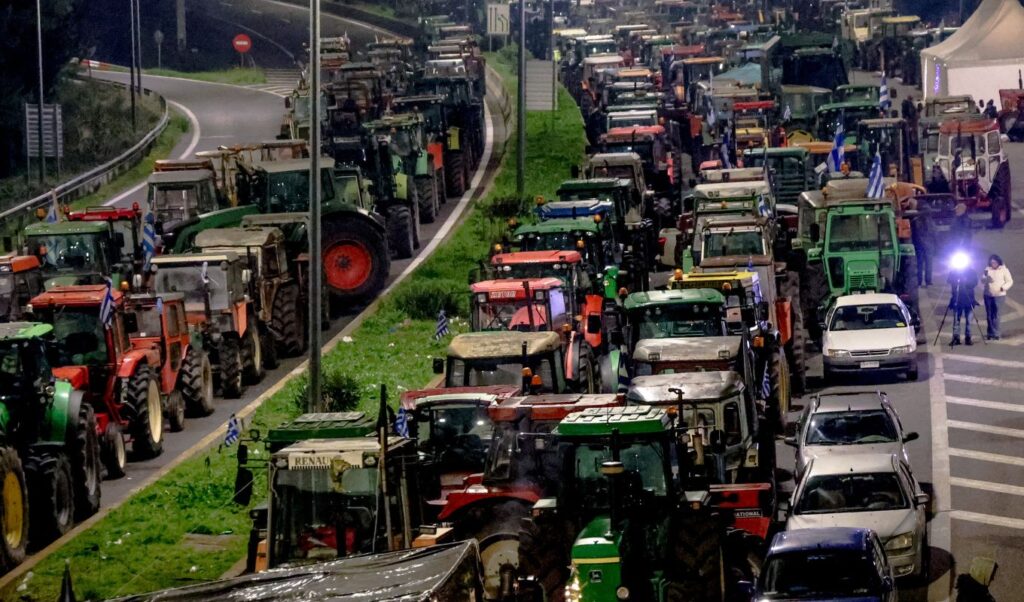
Farmers continue their mobilizations at an unrelenting pace, setting up blockades at various points across the country, while appearing determined to remain on the streets through the holidays. Parapolitika.gr conducted an online poll to record citizens’ attitudes toward farmer mobilizations, investigating critical questions about the legitimacy of their demands, the effectiveness of protest methods, and the impact on daily life and the economy. Regarding farmer mobilizations, the majority of citizens reject blockades as an appropriate form of protest. Specifically, 69% of respondents state that road blockades do not constitute an appropriate way of making demands, while only 19% consider them appropriate and 12% answer “partially”. At the same time, 59% of participants in the parapolitika.gr survey believe there are other more effective ways of protesting, 21% answer “maybe”, while 17% do not identify alternative solutions and only 3% have no opinion.


Farmer blockades: Division over demands, opposition to mobilizations
Regarding farmers’ demands, 49% of respondents state that farmers do not have legitimate demands, compared to 44% who believe the opposite, while 7% have no opinion. Concerning the mobilizations themselves, 57% who responded to the parapolitika.gr poll disagree with farmer mobilizations, 23% agree, 19% partially agree and only 1% have no opinion.


Doubts about the effectiveness of blockades
Citizens appear skeptical about the mobilizations’ ability to pressure the government for policy change. 38% believe mobilizations cannot bring about changes, 36% answer “maybe”, while 23% estimate they can exert pressure. 3% have no opinion. Regarding whether the government should make more concessions to farmers, 51% answer negatively, 28% positively, 18% answer “maybe” and 4% state they don’t know.


The impact of farmer mobilizations on daily life
Almost one in two citizens (49%) has been affected in their movements due to farmer blockades, while 33% have not been affected. An additional 18% state they know people who were affected, meaning that overall 67% of respondents have direct or indirect experience of blockade impacts. Regarding knowledge of the demands, 45% state they know the basic demands of farmers, 42% know them in general terms, while 13% admit they don’t know them. The high awareness rate (87% overall) reflects the great interest the issue has generated in public opinion.


Negative impact on economy and citizen hardship
76% believe farmer blockades negatively affect the economy, 17% consider the impact neutral, only 4% see it positively, while 3% have no opinion. When asked whether blockades pressure the government or cause hardship to citizens, 53% believe they mainly cause hardship to citizens, 26% answer “both”, 19% believe they pressure the government, while only 1% think neither happens. Overall, 79% of respondents recognize that blockades cause hardship to citizens, either exclusively or alongside pressuring the government.


Political implications
Regarding political consequences, 74% of citizens believe farmer blockades politically damage the government to some degree: 33% answer “yes”, 41% “to some degree”, while 24% believe there is no political damage and 2% don’t know. When asked if they would go to blockades to support farmers, 75% of respondents state they would not go, 20% answer positively and 6% don’t know.

Questioning media objectivity
Finally, the poll records significant distrust toward how news media cover the mobilizations: 68% believe media do not present mobilizations objectively, 20% answer “partially”, only 9% consider the coverage objective and 3% don’t know.