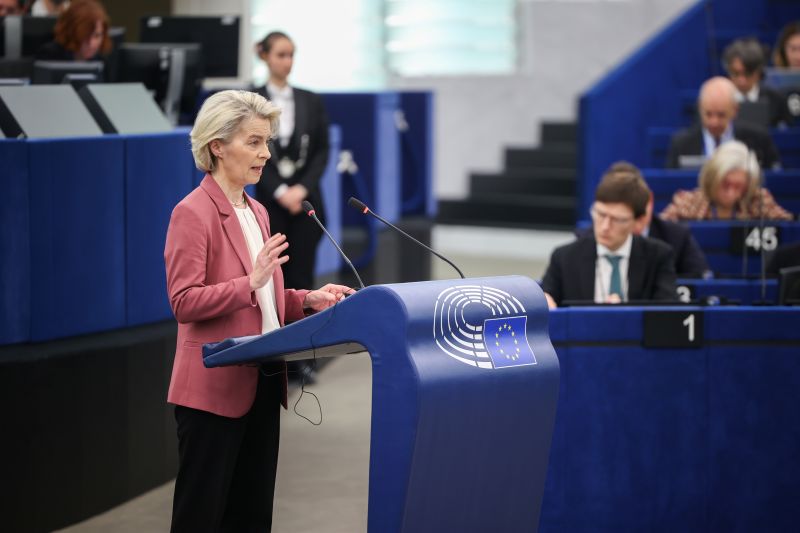
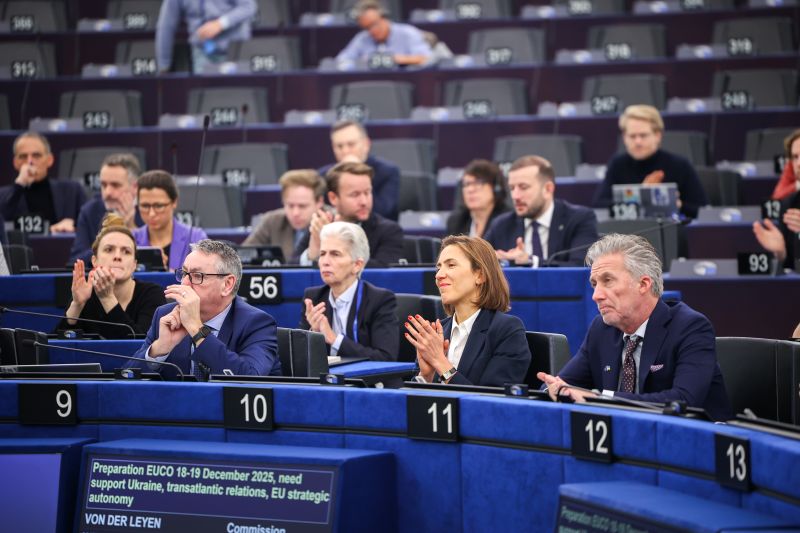
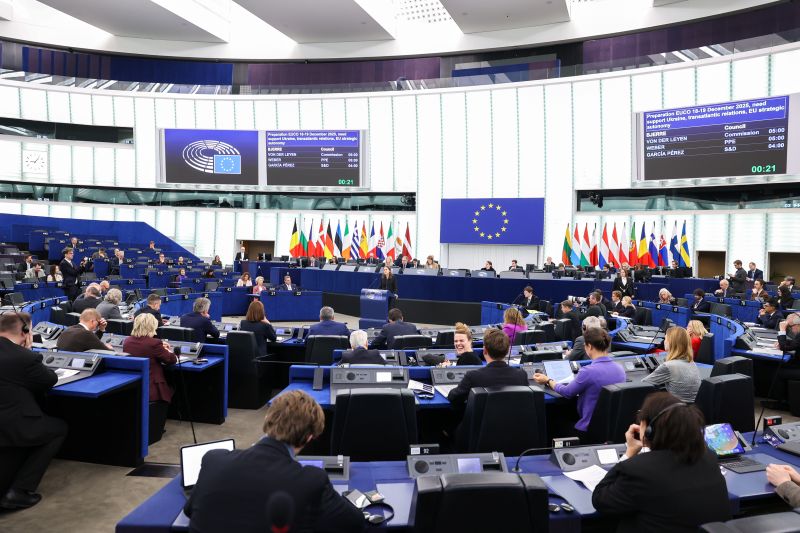
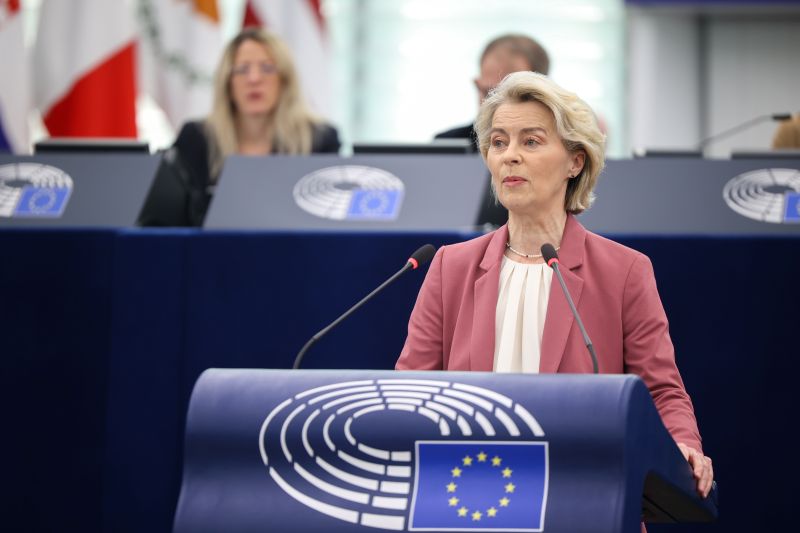
Following the European Parliament plenary session on the European Council Summit on Thursday, December 18, Ursula von der Leyen sent a letter to all leaders of European Union member states, outlining the migration situation and setting priorities. The balance between justice and control, on which the European Union’s strategy is based, characterized by cohesion, needs to continue, according to the Commission President. Cooperation between member states and with their partners is also a prerequisite, inspired by a sense of shared responsibility and solidarity.
Von der Leyen emphasized that “looking back at the past year, the number of illegal border crossings decreased further by more than a quarter compared to 2024, as a result of joint actions to prevent irregular departures, disrupt the business model of smugglers, and ensure swift, effective and dignified returns.” Additionally, she underlines that “we need to strengthen them even more, as we observe an increase in irregular border crossings in the Central and Western Mediterranean in recent months.”
Von der Leyen: “Significant work ahead of us”
With June 12, 2026 being the first implementation date of the Migration and Asylum Pact, the priority is completing all essential building blocks. As emphasized in the letter, “although progress has been steady, there remains significant work ahead of us,” particularly regarding Eurodac readiness, border procedure operations, and ensuring adequate reception capacities in all member states, with the Pact’s success depending on the right balance between solidarity and responsibility. Meanwhile, the EU is intensifying efforts to combat migrant smuggling through the Global Alliance, focusing on the online dimension and the “follow the money” approach, while preparing a new sanctions system against smugglers. Special emphasis is also placed on cooperation with the United Kingdom.
Von der Leyen emphasizes in the letter that “for a functional and reliable migration management system, increased return effectiveness is an essential prerequisite.” With an average EU return rate of only 24%, a stronger common legal framework is necessary, complemented by intensified operational measures. The proposed Regulation for a common European return system introduces key common elements, such as the European Return Order and the possibility of using return hubs, as well as stricter rules for managing absconding and security cases. Implementation of the Pact, through the new border return procedure, is expected to bring qualitative change to external border management, which must be accompanied by further strengthening of comprehensive partnerships with third countries to ensure a sustainable system. Meanwhile, Frontex is intensifying return operations, supporting the return of nearly 6,000 third-country nationals in September 2025, mainly through voluntary returns.
“Acute humanitarian challenges”
Returns to politically sensitive countries, particularly to Afghanistan, which continues to face acute humanitarian and human rights challenges, require a comprehensive and coordinated EU-level approach, with particular emphasis on security issues. “Between December 2024 and November 2025, over 1.2 million Syrians returned to their country and 1.9 million internally displaced persons to their place of origin. The EU, in cooperation with UNHCR, supports safe, dignified and sustainable returns and reintegration of returnees through a pilot cross-border program of 80 million euros in Lebanon and Syria.”
Cooperation with Turkey on migration issues continues according to European Council Conclusions. The Commission supports full and effective implementation of the EU-Turkey Statement and the EU-Turkey readmission agreement vis-à-vis all EU member states. With the 1.15 billion euro package approved on December 15, support to Turkey is strengthened to cover refugees’ basic needs and migration management, to enhance border management capabilities, and to improve protection aiming at sustainable voluntary returns to Syria. This includes a 150 million euro project to be implemented with UNHCR in Syria, with a 60 million euro cash assistance component. Cooperation on combating smuggling with Turkey also continues, as does cooperation with Turkish authorities and airlines to address the use of commercial transport to facilitate illegal migration to the EU.
European Union partnerships
The EU is strengthening the external dimension of migration policy through close cooperation with countries in the Southern and Central Mediterranean, North Africa and the Western Balkans. The Strategic and Integrated Partnership EU-Jordan will focus on migration, refugee management and support, with 240 million euros funding for social assistance and sustainable solutions for Syrian refugees. Meanwhile, cooperation with Egypt includes border management and combating smuggling, supporting vulnerable communities, returns and legal mobility pathways, while the Mediterranean Compact promotes a whole-of-route approach, emphasizing prevention of illegal migration and refugee protection.
The EU is also strengthening cooperation with Tunisia, Morocco, Mauritania and Senegal on migration management, migrant protection, combating smuggling and voluntary returns, with significant funding and return operations. Enhancing legal talent mobility through Talent Partnerships and the EU Talent Pool is also a significant priority, to attract students, researchers and skilled workers.
Finally, the EU continues to strengthen rules for the European Border and Coast Guard Agency and address the increasingly growing challenges of migration instrumentalization, aiming to protect borders and internal security, while preparing the EU Strategy on Migration and Asylum for the next five years, focusing on strengthening cohesion at European level and promoting innovative solutions.