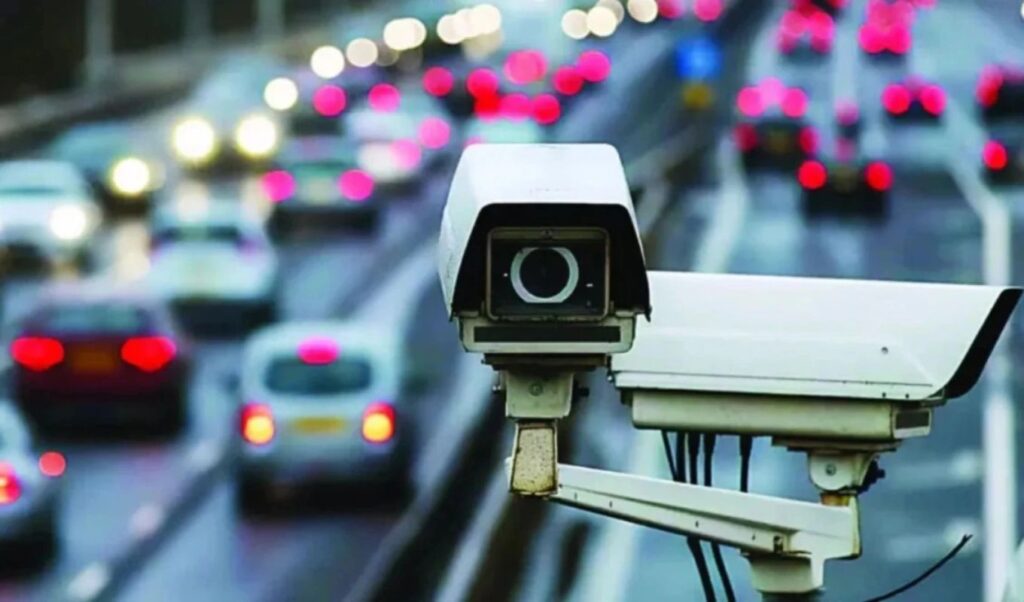
A new era in the unification and modernization of road safety procedures in Greece begins with the digital road safety enhancement law from the Ministry of Digital Governance, which is based on the addition of cameras for traffic monitoring.
The purpose, according to the ANA-MPA report, is to upgrade, record, verify and collect traffic violations through transparent digital processes, focusing on increasing road safety and preventing traffic accidents. According to the schedule, pilot cameras will operate at eight locations in Attica by the end of the year.
These areas include central roads such as Panepistimiou and Queen Sophia Avenue, as well as other important areas in municipalities like Agia Paraskevi and Rafina, according to the same report.
Where the cameras will be installed
In summary, the eight locations are:
Municipality of Athens – Panepistimiou and Queen Sophia Avenue
Municipality of Agia Paraskevi – Mesogeion Avenue and Chalandriou Avenue
Municipality of Rafina-Pikermi – Marathon Avenue and Fleming
Municipality of Kallithea – Syngrou Avenue and Agia Fotini
Municipality of Vari-Voula-Vouliagmeni – Poseidonos Avenue and Ermou
Municipality of Alimos – Poseidonos Avenue and Alimos Avenue
Municipality of Elliniko-Argyroupoli – Vouliagmenis Avenue and Tinou
Municipality of Filothei-Psychiko – Kifisias Avenue and National Resistance
These cameras, like the rest when the tender landscape is clarified, will be set up at high-risk points in Attica and will be integrated into the information system which will operate until Easter.
How the cameras will operate
The cameras will record significant violations of the Highway Code, such as running red lights, speeding, not wearing seatbelts, using mobile phones while driving, as well as driving in emergency lanes.
The intensity of controls aims to prevent traffic accidents and raise citizen awareness about road safety.
The central dimension of the reform is the creation of a Unified Electronic System for Recording and Managing Violations (E.H.S.), under the supervision of the Ministry of Digital Governance. This system will interconnect control data from portable devices and surveillance cameras, offering automated recording and processing of violations.
The data will include images, videos and temporal metadata, with encrypted transmission for personal data protection. Citizens will be informed about their violations through a digital mailbox on gov.gr or through messages and will have the ability to submit electronic appeals.
“The law for ‘Digital enhancement of road safety’ is a reform that concerns not just procedures, but the very protection of human life. Every person lost on the asphalt reminds us that inaction is not an option,” stated Digital Governance Minister Dimitris Papastergiou to ANA-MPA.
“That’s why,” continued Mr. Papastergiou, “we are proceeding with a modern, transparent and fully digital system for recording and managing violations, aimed at addressing the causes of collisions: excessive speed, mobile phone use, running traffic lights, not wearing helmets and seatbelts.”
“The reform we are proceeding with together with the Ministries of Infrastructure and Transport and Citizen Protection is based on two critical axes. First, installing cameras at dangerous points, where experience and data show increased probability of accidents. Second, the new ‘Unified Information System’, a digital tool that allows immediate citizen notification, quick violation verification, simplified appeals and electronic payment, ensuring complete transparency and accountability,” he emphasizes.
“Already, the pilot implementation of this new model begins, with camera installation at eight points in Attica, to test in practice the effectiveness of the new model. Our goal remains simple and deeply human: fewer violations, safer roads and, above all, more lives saved,” the minister concludes.
The new camera network will reach a total of 2,500, with 2,000 at fixed high-risk points and 500 on public transport buses for monitoring bus lanes. The Attica Region will also install 388 cameras, which will be integrated into the E.H.S., together with those already installed on Attiki Odos.
It’s worth noting that advanced license plate recognition technology with artificial intelligence will allow categorization of violations and contribute to faster identification of violators. Accordingly, digital license suspension will occur immediately upon recording violations, enhancing the sense of road safety.
Implementation of the measure will bring significant benefits to citizens’ daily lives, with more transparent violation recording procedures and effective fines. Citizens will be able to monitor their fine status in real time, reducing bureaucracy.
Also, the new system will lighten the “burden” on police authorities, allowing greater focus on policing and preventing traffic accidents. Additionally, the new framework ensures improved collection rates, which today are below 10% in the first year, with the goal of keeping municipal revenues not only completely intact but actually collected.
The E.H.S. will feature open data, completely anonymized, so that organizations, researchers and Local Government have access to critical information for designing road safety policies. One of the law’s main objectives is strengthening road safety culture in society. Information activities, educational campaigns and seminars will cultivate a new mindset around road safety.
Successful implementation of the plan will have immediate positive consequences for society. Citizens will feel safe on the roads and their trust in public authorities will be strengthened, promoting participation and responsibility. Enforcement procedures will be updated, while violators will face immediate consequences for their actions, thus deterring traffic violations.
Integration of cutting-edge technology will improve public resource management and minimize delays in fine enforcement. The new system requires cooperation and participation from everyone, aimed at informing citizens about procedures and promoting road safety.
Finally, system implementation emphasizes the importance of good governance and state responsibility toward citizens, strengthening participation and transparency in procedures.
Through this approach, the government seeks to build a safer road environment and strengthen citizen trust in public authorities. Citizen support and participation are critical for the positive development of the initiative and shaping a culture of awareness and responsibility around road safety.
ANA-MPA