If one thing has chronically characterized the Greek political scene and its protagonists, it’s the slow reflexes in taking initiatives. There are few exceptions to this rule. We’re talking about -very few- officials who consciously choose to focus on the big picture.
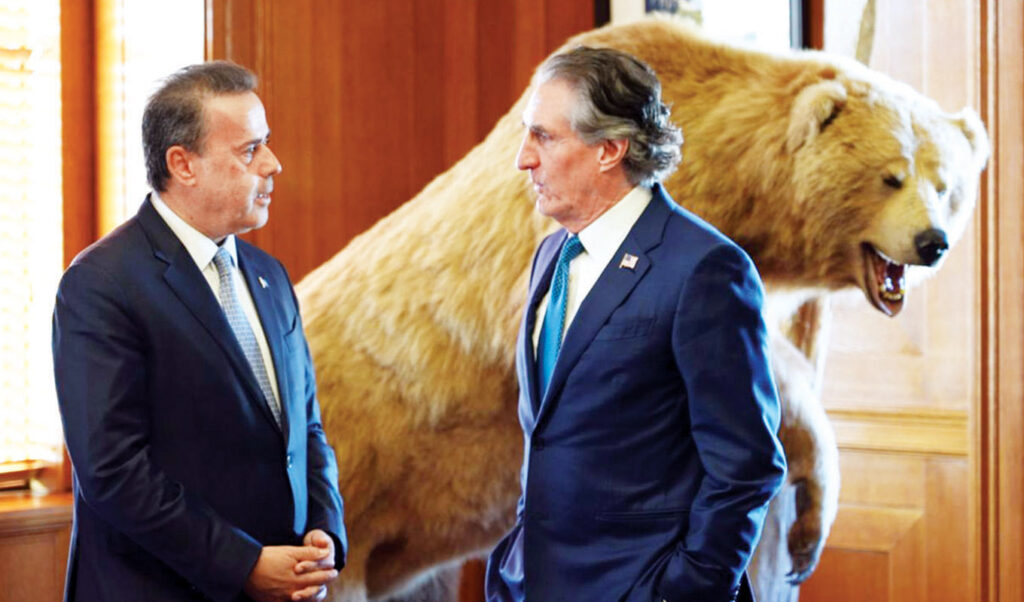
In this case, on the volatile and complex energy and geopolitical “chessboard,” where our country aspires to finally become a dominant “player.” For this reason, Stavros Papastavrou, just a few weeks after the P-TEC energy forum he organized at Zappeion in the presence of American and European ministers, decided to step on the “gas” instead of hitting “pause.” Aiming to strengthen and accelerate the energy agreements signed in November and further upgrade Greek-American energy cooperation, Mr. Papastavrou traveled again to Washington.
Papastavrou in Trump’s inner circle of contacts
Close associates of American Interior Secretary Doug Burgum and Energy Secretary Chris Wright told this reporter that very few have managed to communicate so frequently with the planet’s ruler’s… people. The fact that a Greek minister has been included in this closed core of contacts is, as experienced international relations experts comment to “Parapolitika,” a significant geopolitical asset for our country.
“Let’s face it, we don’t have Turkey’s size nor Luxembourg’s luck of not bordering revisionist powers. Therefore, having the superpower as our ally is clearly a positive development. To put it simply: The fact that our energy interests now align with American interests means that in times of crisis we won’t be alone,” a well-informed diplomatic source characteristically told this reporter.
“From the Aegean to the Atlantic, energy is changing the geopolitical architecture and Greece is the central pillar in this new architecture,” Mr. Papastavrou declared on the “Varney & Co.” show on American television station Fox Business. He added that during his meeting with the number 3 in the American government, Mr. Burgum, they discussed specific plans for Europe’s complete liberation from Russian gas and its replacement with American LNG: “This happens through Greece, which has the appropriate infrastructure -Revythousa and the FSRU in Alexandroupolis-, has the ideal geographical position, is located at the crossroads of three continents, has a strong economy and political stability and serves as the gateway for American LNG to Central Europe,” Mr. Papastavrou emphasized and then praised the decisive role played by the new US ambassador, Kimberly Guilfoyle, in this energy restructuring.
Overall, Mr. Papastavrou’s visit to the US reflected the strong energy relationship that has been cultivated over the past six months between the two countries, Greece’s upgraded position in the energy geography of the broader region, and the importance the US places on our country’s role as a stabilizing force.
Beyond the Vertical Corridor, there were meetings for investments in energy infrastructure, for rare earths and for regional resilience, as well as contacts with giant companies
Development of the Vertical Corridor at the center of Papastavrou’s US visit
According to sources, at the center of Mr. Papastavrou’s visit was the development of the much-discussed Vertical Corridor, through the formation of a Working Group that will implement its strategic goals, with the first meeting on December 10. The bipartisan institutional briefing in Congress and specifically meetings with Republican and Democratic senators on key committees, such as Energy, Foreign Affairs, Resource Allocation and Commerce, also stood out, while contacts were made with key actors of American political influence (AIPAC, AJC, think tank FDD).
Investment diplomacy certainly had its honor, with the Greek minister having meetings for investments in energy infrastructure, for rare earths and for regional resilience, as well as appointments with giant companies that signed agreements in November in Athens, such as Venture Global and ExxonMobil.
Stavros Papastavrou’s critical meetings
The minister’s schedule was therefore unusually packed. Besides his meetings with two ministers, Mr. Burgum and Mr. Wright, and with four deputy ministers of the American government, the agenda also included a tête-à-tête with a high-ranking White House official.
An official, even if it’s a country’s foreign minister, rarely manages to meet -in one visit- seven senators and congressmen. This time, however, it happened. Specifically, the Greek energy minister met Ted Cruz, Jerry Moran, Ruben Gallego, John Hoeven, Dina Titus, Jimmy Patronis Jr., Chuck Fleischmann and Michael Kratsios.
At the same time, his staff met with the teams of John Neely Kennedy, Bill Cassidy and Bill Hagerty. Ted Cruz, for example, has served as US senator for Texas since 2013. Today he is chairman of the Senate Committee on Commerce, Science, and Transportation, which is one of the most powerful committees in the Senate. As chairman, he shapes critical legislation for federal infrastructure funding, regulatory framework for aviation and the FAA, policies for trade and competition, as well as technology, Artificial Intelligence and cybersecurity issues. He is particularly active on economic policy and deregulation issues, supporting Texas’s energy sector (oil, natural gas, LNG), border security and freedom of speech.
The discussions concerned critical issues of particular importance for the US, the region and Europe and focused on the results generated by Athens’s P-TEC, as well as the next steps in the strategic relationship between our countries. The strengthening of the 3+1 scheme (Greece-Cyprus-Israel + US) and planning of future meetings were also put on the table.
What is the US-East Med Energy Center
According to this reporter’s sources, during Mr. Papastavrou’s contacts the possibility of creating the East Med Energy Center was also examined, a long-standing pursuit of Greek foreign policy in recent years. What will this be? A research and strategic planning center for energy security and prosperity in the region, headquartered most likely in Texas.
The term comes from the Eastern Mediterranean Security and Energy Partnership Act of 2019, which authorized the establishment of an Energy Center that would operate as a cooperation platform between the US and Eastern Mediterranean countries. Mainly Greece, Cyprus and Israel. The idea behind the center is to help strengthen energy cooperation, support infrastructure, develop deposits, enhance energy security and empower consortiums/companies with American interests in the region.
Published in Parapolitika