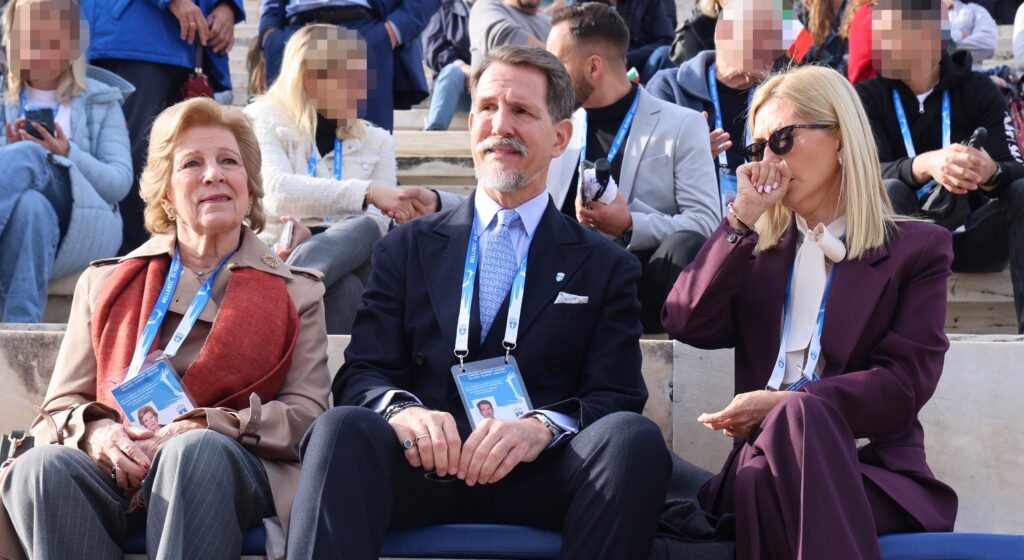
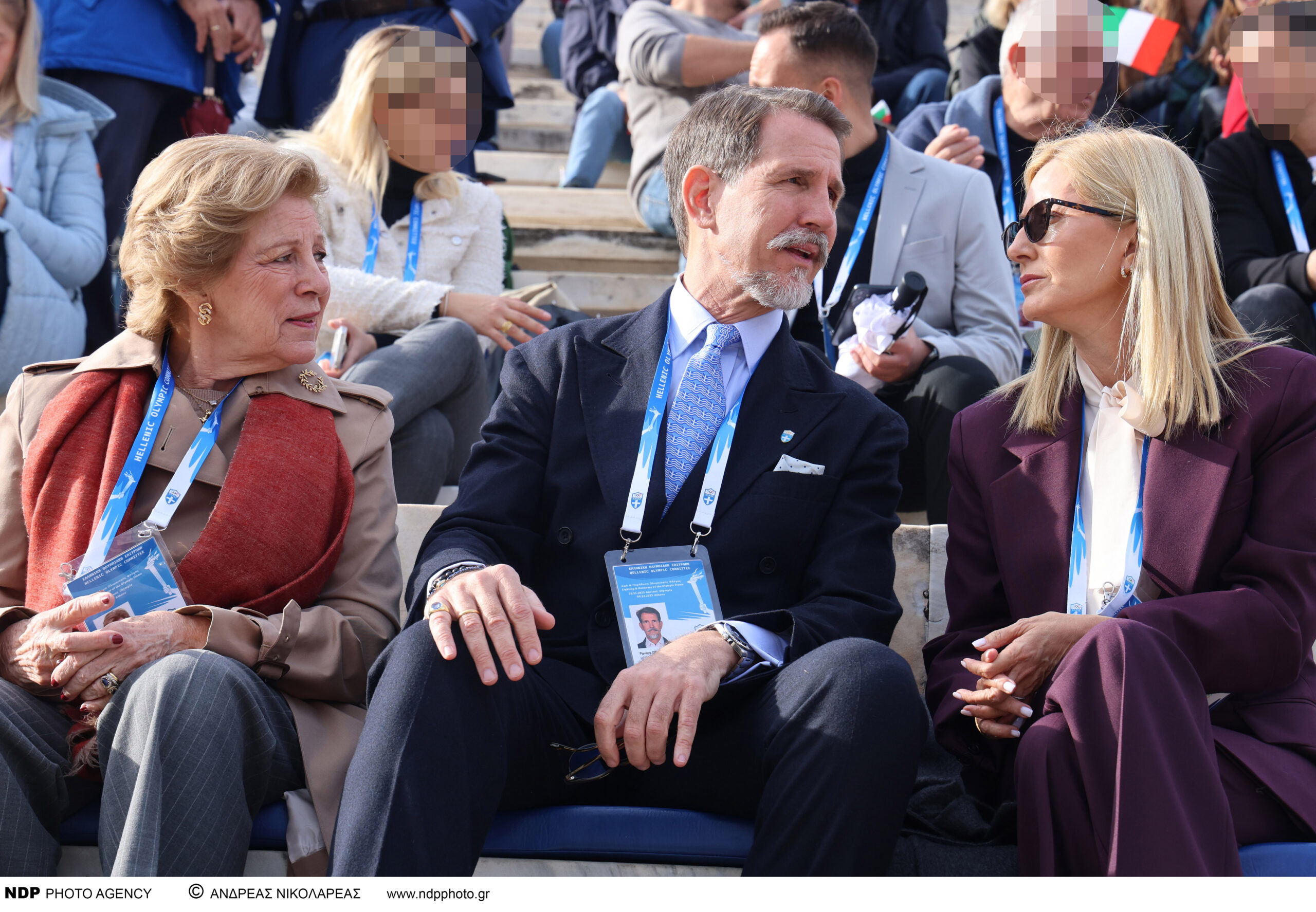
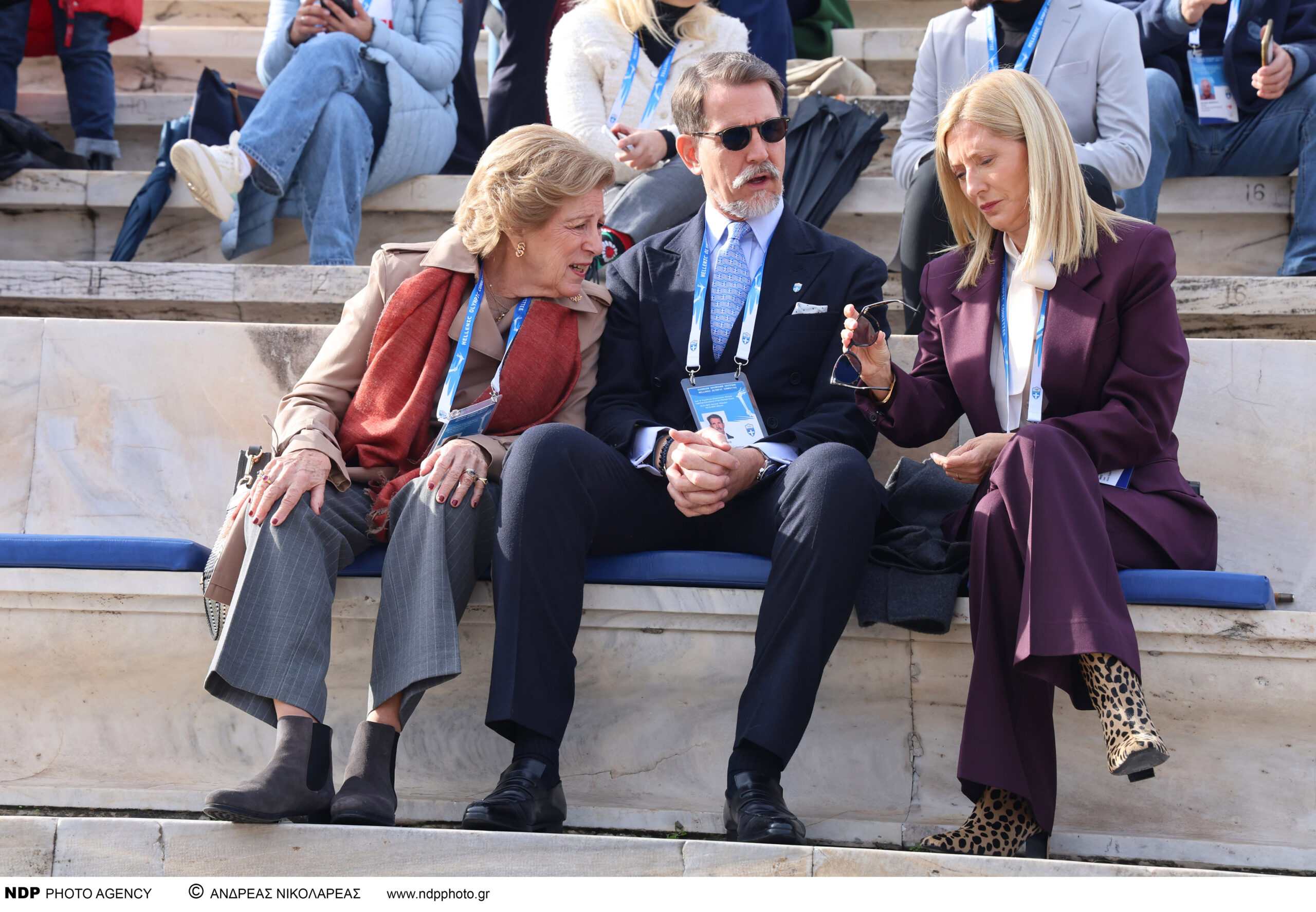
Athens hosted today, Thursday December 4, 2025, the handover ceremony of the Olympic flame to the Italian delegation ahead of the Winter Olympics Milano Cortina 2026. At the Panathenaic Stadium, where the first modern Olympic Games were revived, the ceremonial event unfolded as a modest yet impressive moment of international symbolism. Among the official attendees, the presence of Paul de Greece stood out, who attended the ceremony accompanied by his wife Marie Chantal and his mother Anna-Maria. With today’s appearance, he discretely connected his family’s historic Olympic legacy with the modern era of Olympism.
The Olympic flame handover ceremony at Kallimarmaro
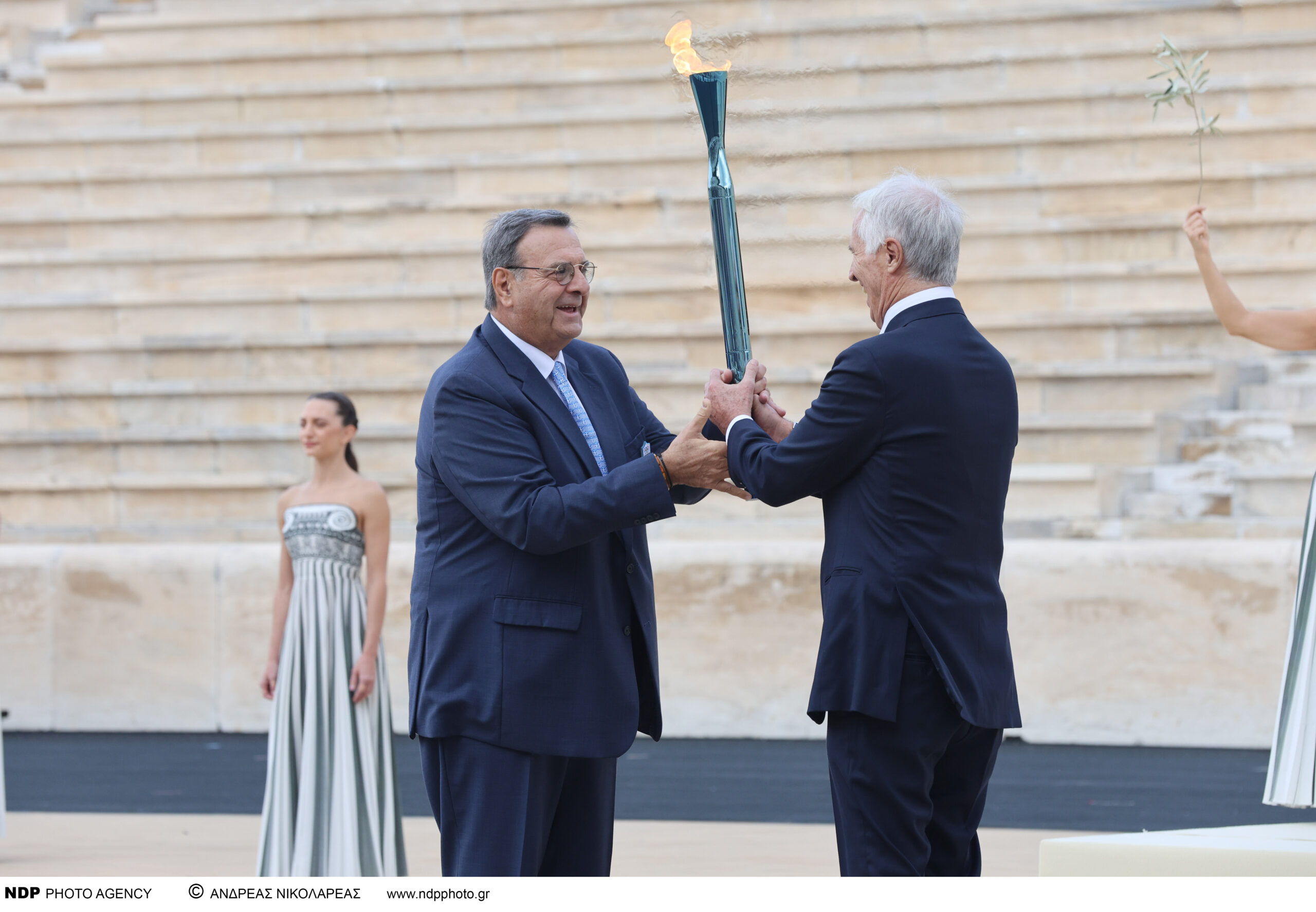
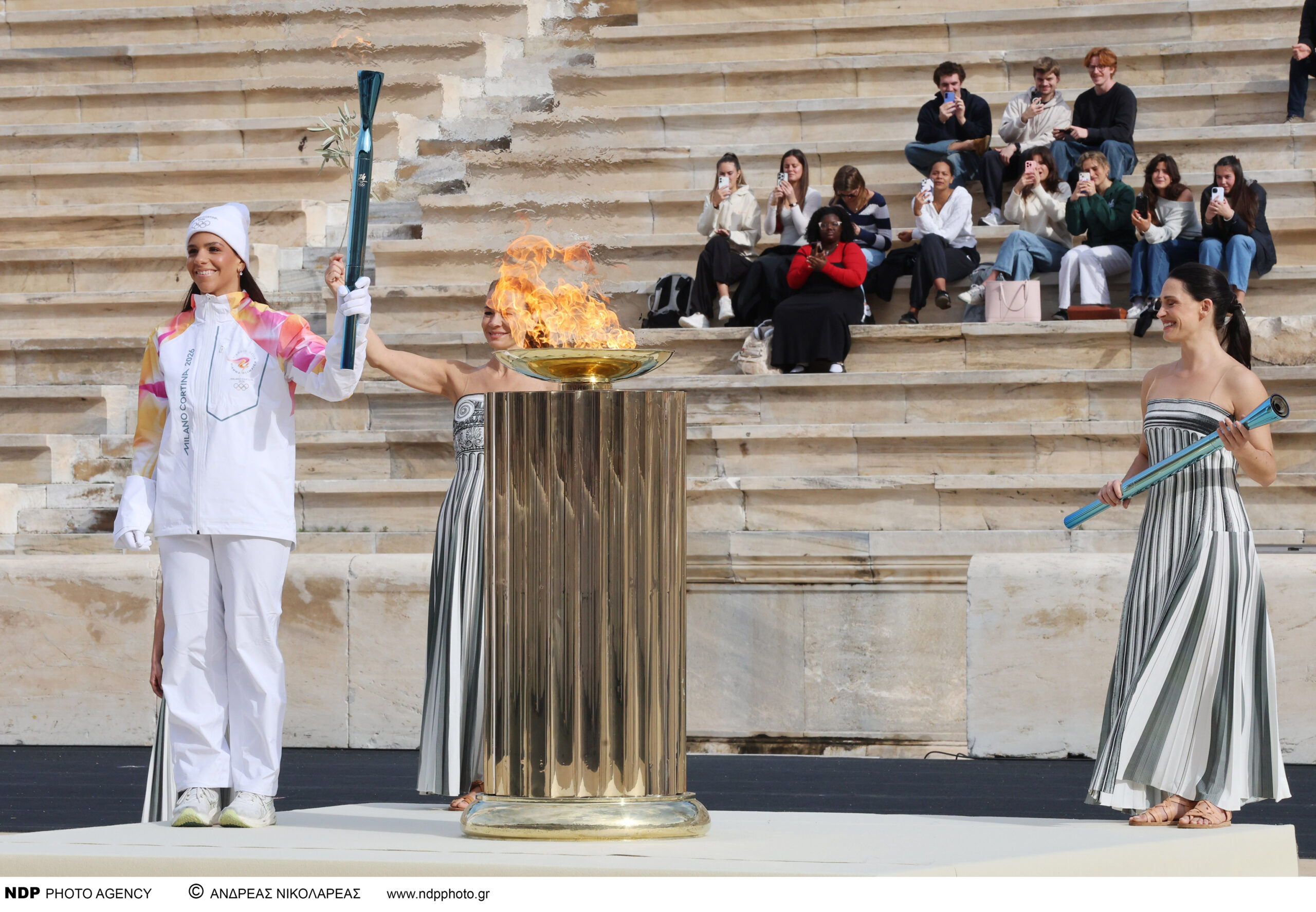
The Hellenic Olympic Committee had announced that the ceremony would be limited to the ceremonial aspect due to weather conditions, but the atmosphere at Kallimarmaro remained filled with awe and historic weight. The Olympic flame, which was lit in Ancient Olympia on November 26, was transferred to Athens and handed over with customary respect to the Italian representatives. The moment of handover, in a space dedicated to Olympic history, once again highlighted Greece’s role as guardian of tradition. The flame will now continue its international journey to the opening ceremony in Milan, carrying the Games’ message and the universal ideal of unity.
Paul de Greece: Free from the past in contemporary presence
Today’s presence of Paul de Greece at the Panathenaic Stadium held particular significance, not only due to the historic setting, but also because of his family’s relationship with Olympism. His father, Constantine II, was an Olympic champion in sailing at the Rome Games in 1960 and for years a member of the International Olympic Committee, representing one of the characteristic personalities who connected Greece with the international Olympic movement. Paul’s presence is not related to titles or neoclassical references, but to a deeper sense of continuity. Today at Kallimarmaro we saw him conversing with the president of the Hellenic Olympic Committee, Isidoros Kouvelos, while in another moment he was seen exchanging words with Spyros Kapralos, one of the most internationally recognized figures of Greek sports. The images of these conversations revealed a triangular connection between historic Olympic memory, today’s institutional presence, and Paul’s personal history.
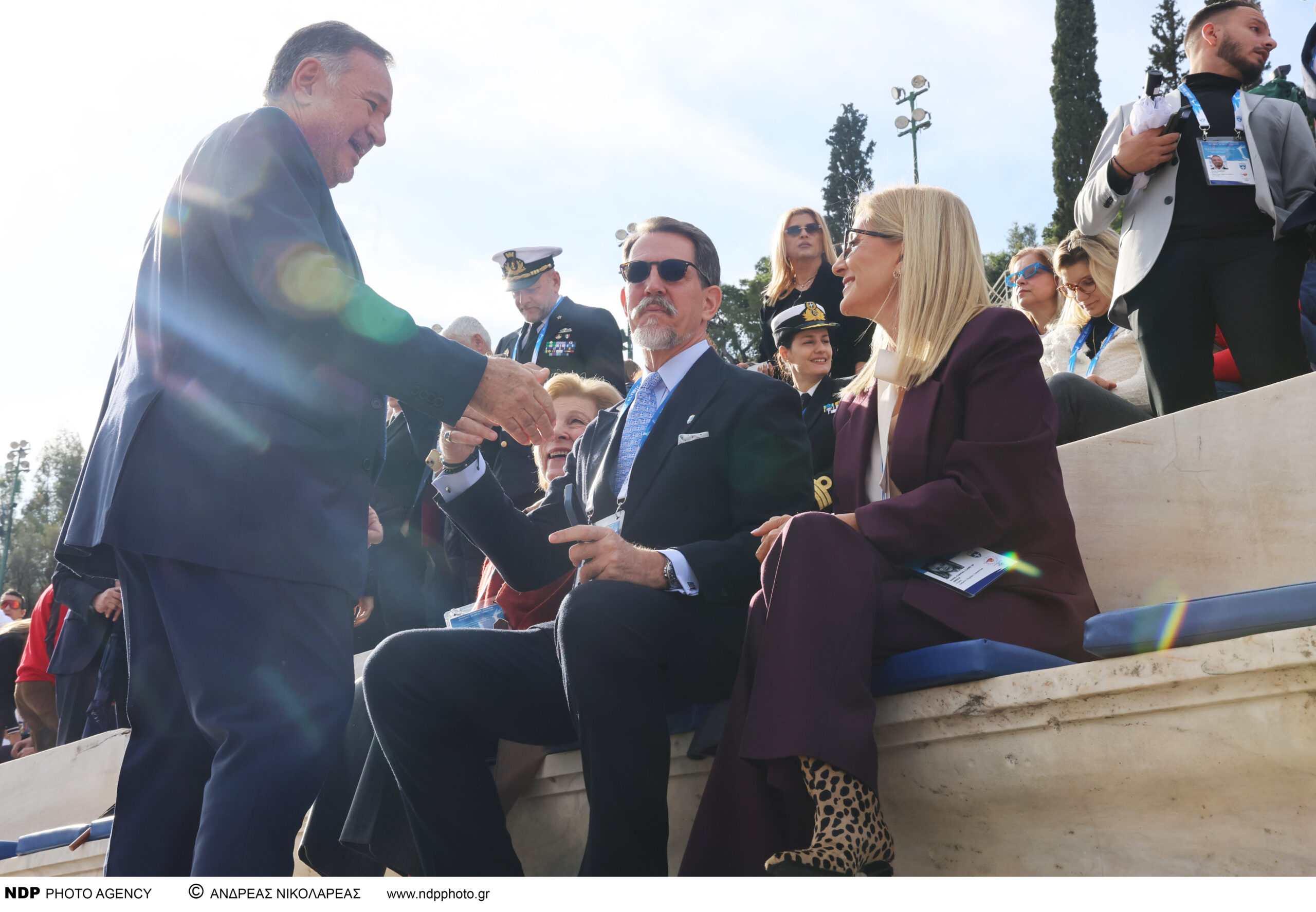
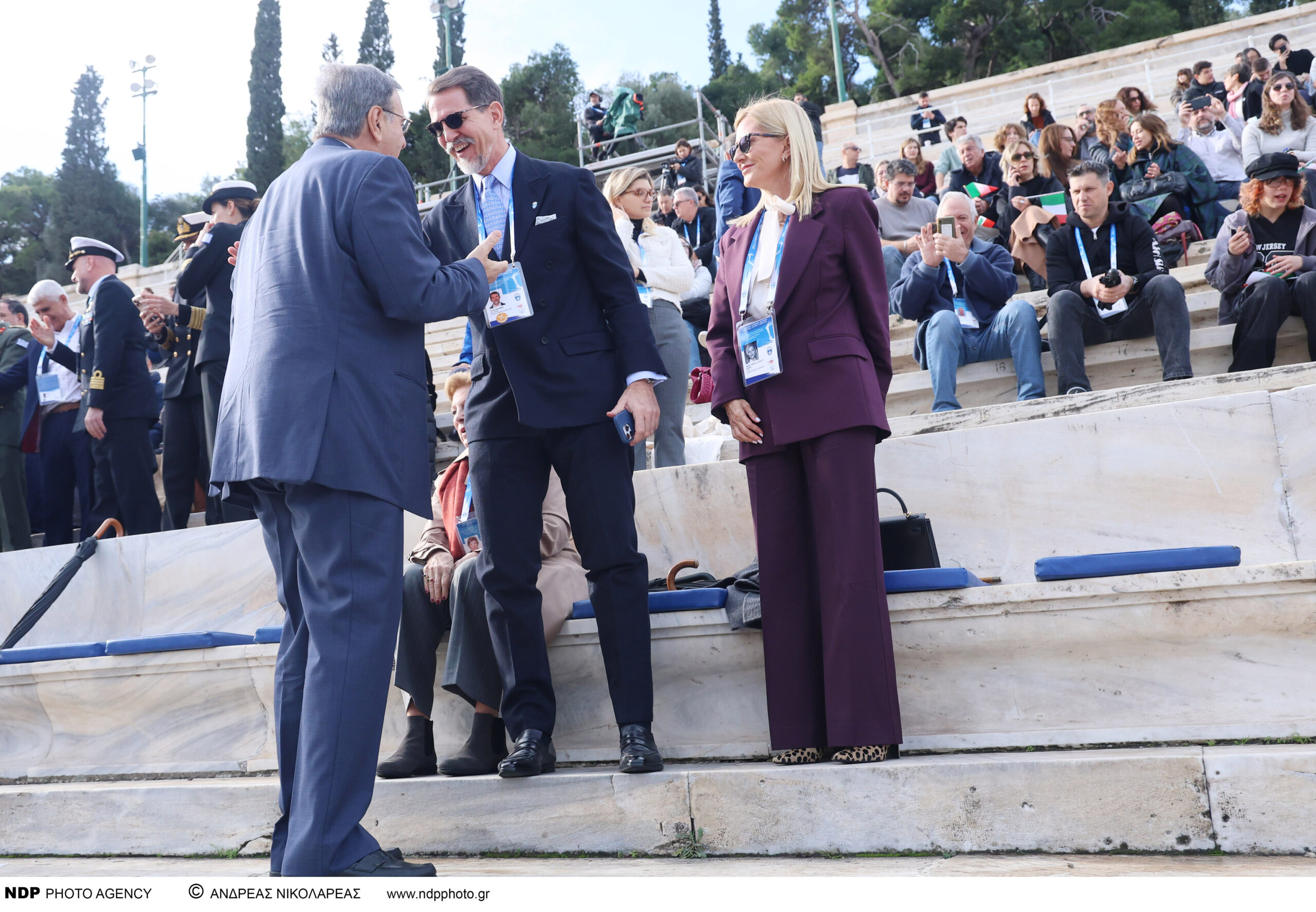
His participation in today’s ceremony showed that family tradition does not function as a symbol of power, but as a reminder of Greece’s deep relationship with the Olympic ideal. Paul approaches institutional moments with discretion, allowing the event to speak for itself and showing respect for the contemporary face of Olympism.
Paul de Greece’s public image in an era of new balances
In recent years Paul de Greece has chosen a quiet public role, far from formalities and publicity, preferring an approach that combines respect for history with connection to contemporary institutional reality. His presence at the Olympic flame handover ceremony exemplifies this balance, where his image does not reflect social glory but a timeless relationship with Olympism that continues to exist beyond titles and old references. His participation today confirms that history can be transferred to the modern era without exaggeration, through people who choose to give value to events that mark Greece’s international presence. Kallimarmaro, a place where past and present coexist, served as an ideal setting for this discreet yet substantial presence.
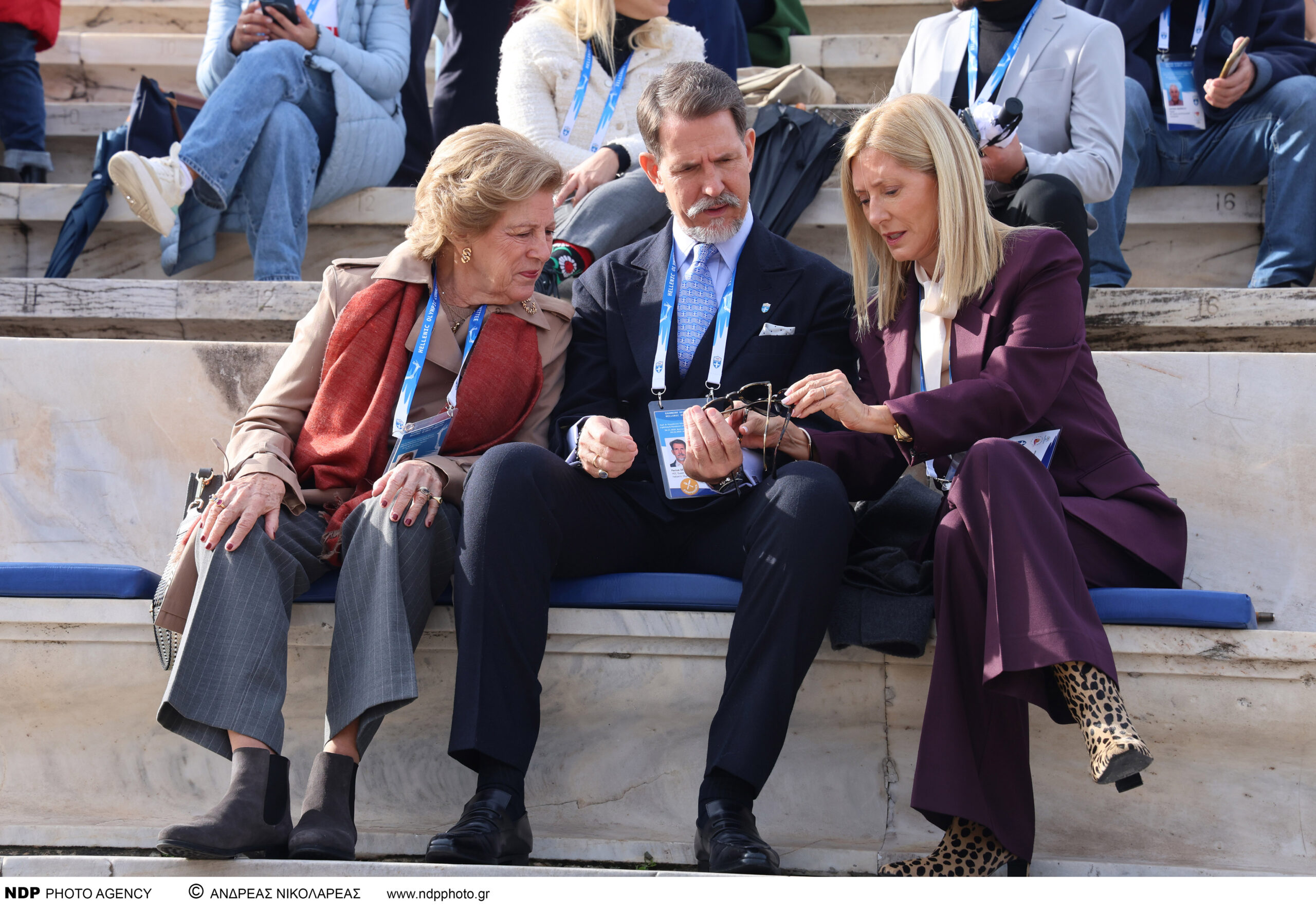
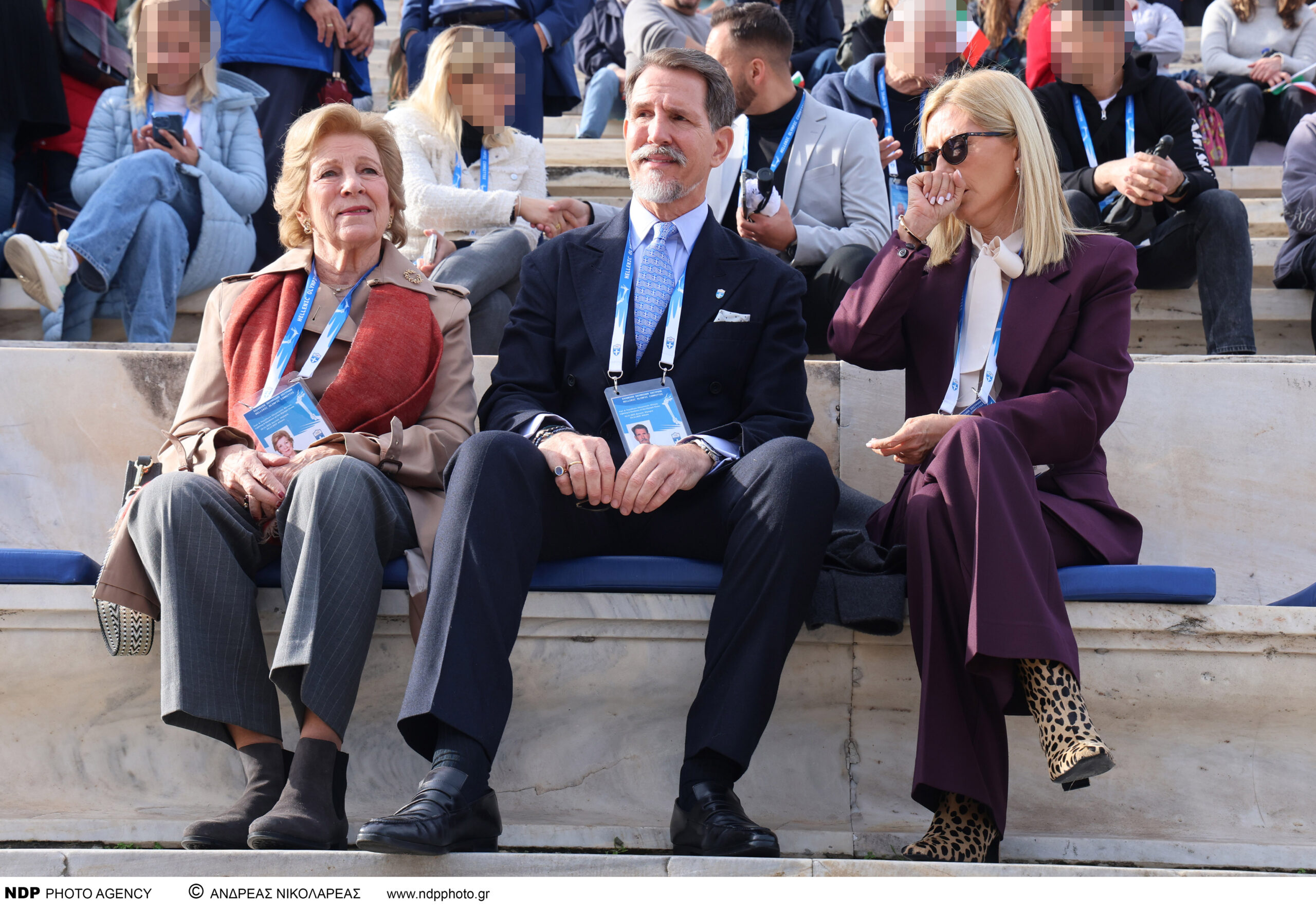
The significance of today’s ceremony for Greece and Olympism
The flame handover ceremony is not a simple procedure. It is a reminder that Greece remains the guardian of a global tradition, the Olympic Idea that unites peoples and cultures. The presence of people with historic ties to Olympism, such as Paul de Greece, alongside the contemporary leadership of the HOC, adds particular weight to this year’s ceremony, emphasizing that the Olympic message continues to pass from generation to generation.