The government aspires for the National Strategy for Local and Regional Development to serve as a “counterweight” to the negative climate created in the regions by protests and farmer mobilizations. However, this plan has been in development for at least two years. The Strategy will be presented by Prime Minister Kyriakos Mitsotakis, with oversight and coordination responsibilities assigned to Deputy Prime Minister Kostis Hatzidakis and Deputy Minister to the Prime Minister Thanasis Kontogeorgis, who has traveled throughout Greece over the past two years – and not alone.
For each regional unit, a working group has been established with participation from representatives of the Government Presidency, the Region, Municipalities, local MPs, scientific bodies, and Chambers of Commerce.
The implemented planning moves along two strategic axes: Local planning per prefecture and how national policies connect with the regions – for example, addressing water shortages or strengthening public universities.
The group’s work includes recording and processing proposals, monitoring the implementation of projects and policies integrated into the local development plan, evaluating project and policy proposals, and highlighting issues requiring inter-ministerial coordination to solve potential problems in projects or policies. Additionally, they prioritize projects and policies recorded as proposals during the consultation stage based on real needs, maturity level, and available funding resources.
This planning also connects with the new NSRF programming period and the Commission’s budget for 2028-2034, as many projects need time to mature and be ready for integration into European funding programs.
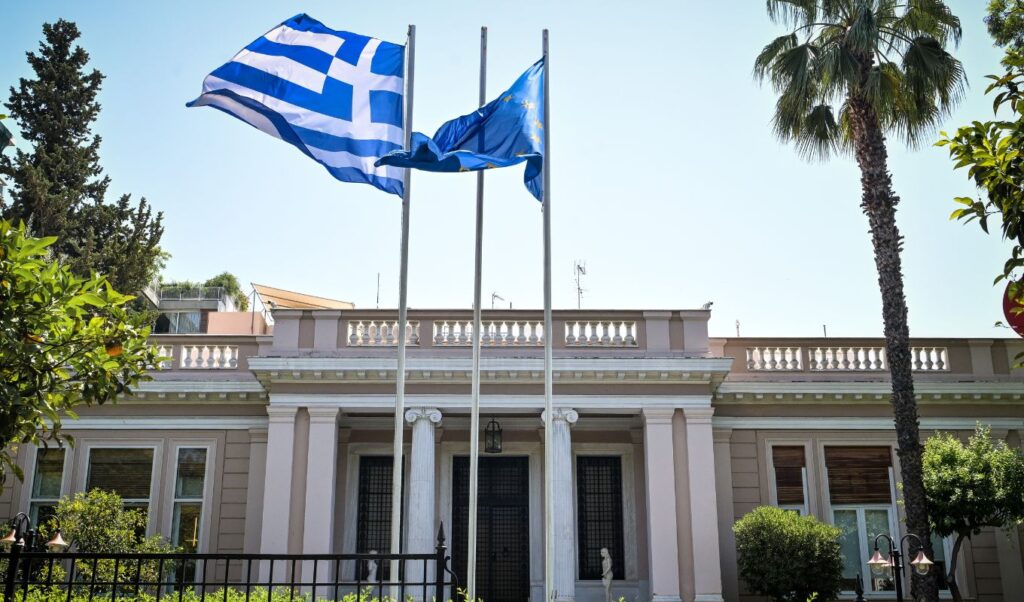
Today at 10 AM, the Government Council for Economic Policy will convene under Prime Minister Kyriakos Mitsotakis at the Maximos Mansion, where a complete roadmap is expected to be presented, featuring projects implemented throughout the country and a series of initiatives for convergence and elimination of regional inequalities. All of the above are included in the National Strategy for Regional and Local Development, which will be the meeting’s central theme.
According to government sources, a fundamental pillar of the National Strategy is resolving immediate issues concerning the Greek periphery and forming a national program throughout the country by 2026 for the coming years, in cooperation with local communities, so that the country can strategically direct national and EU resources in the most optimal and efficient way to the Greek periphery.
Toward this direction, 50 Local Development Plans are being prepared, one for each regional unit in the country, to be completed in 2026, combined with horizontal policies concerning the economic and social development of the periphery.
Regarding farmer mobilizations, which escalate day by day, the government’s message is “yes to dialogue, no to blockades that turn against society itself.” The Maximos Mansion reminds that after very productive dialogue two years ago, two of the primary sector’s most longstanding demands were implemented: permanent refund of Special Consumption Tax for agricultural fuel and cheaper electricity for a decade. They also emphasize that regarding subsidies, this year’s allocated funds exceed last year’s, totaling 3.7 billion euros, while for OPEKEPE it’s 3.3 billion euros, compared to 2.7 billion in 2024, and that all funds will be disbursed by the end of December.