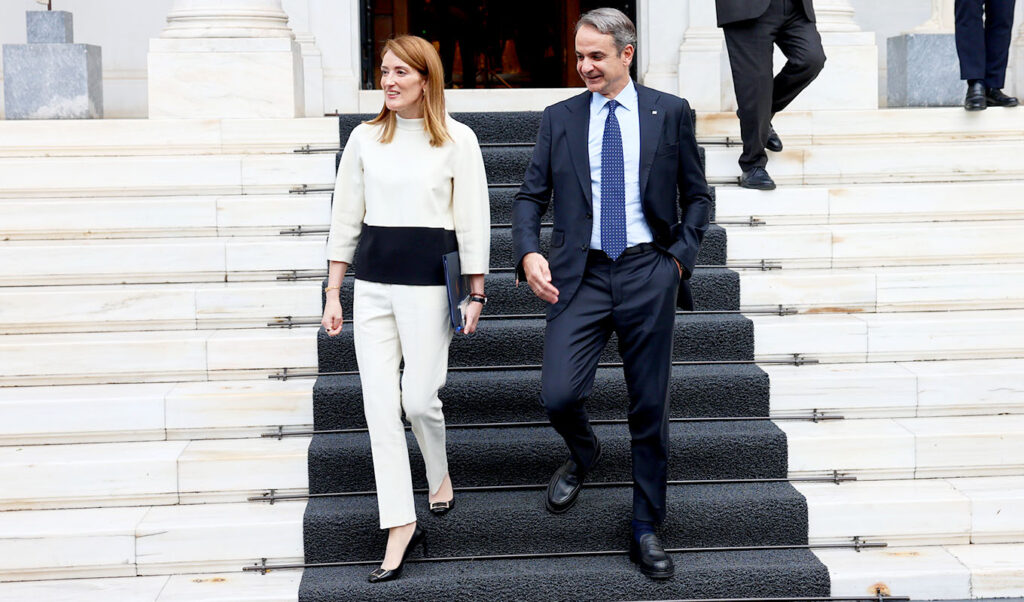
A substantive interactive discussion took place between Kyriakos Mitsotakis, Roberta Metsola and young people who attended the National Gallery. The Minister of Social Cohesion and Family, Domna Michailidou, served as the event’s moderator. The topic of discussion is timeless, as young people’s interest in public affairs and politics always exists as a touchstone, since, either as a reaction or as indifference, they tend toward privatization. Furthermore, in the modern era with almost unlimited tools, it is important to highlight challenges, such as artificial intelligence, and to seek solutions.
Read: Joint statements by Mitsotakis & Metsola: “We owe Ukraine a sustainable peace”
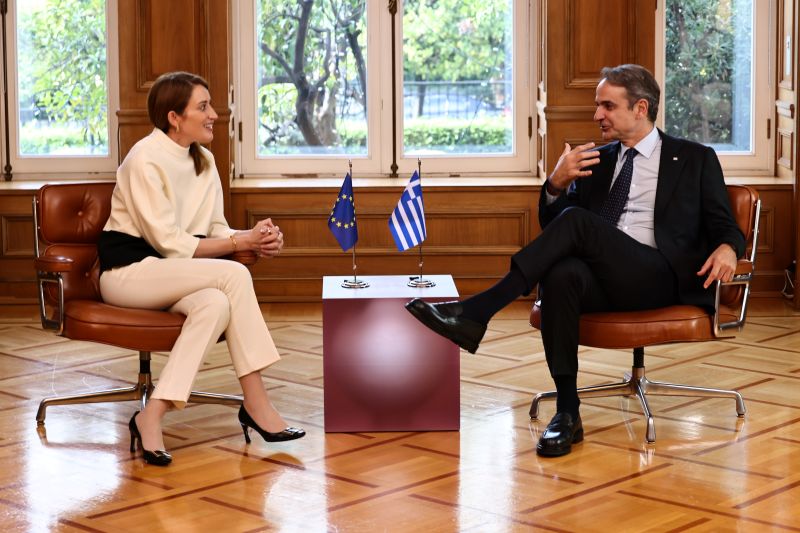
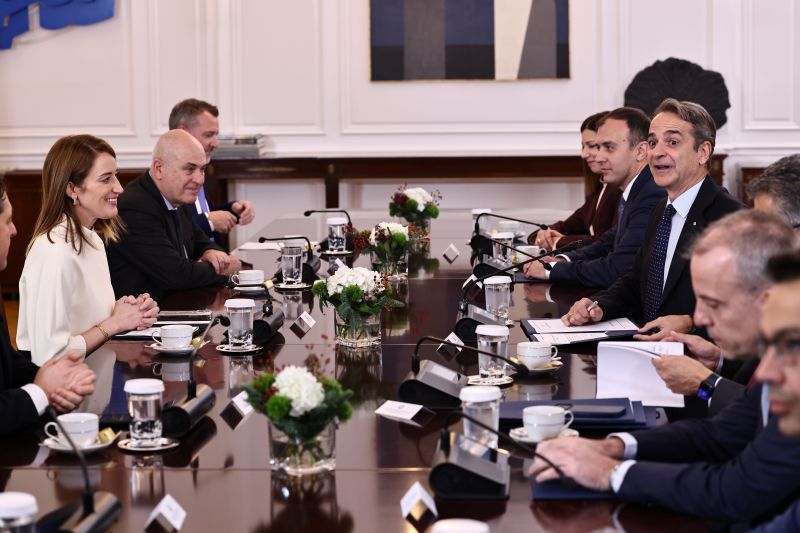
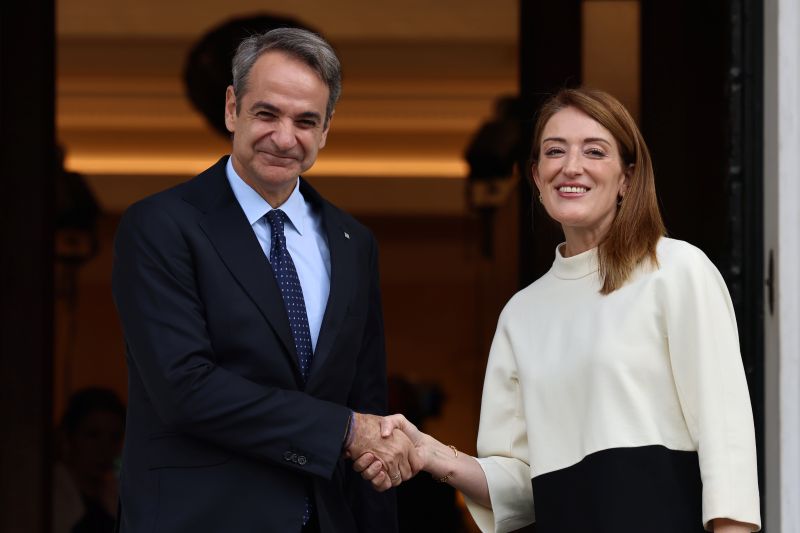
The discussion took place after the official meeting between the Greek Prime Minister and the President of the European Parliament at Maximos Mansion. Kyriakos Mitsotakis also reminded attendees of the measures the government has taken to benefit young people, crowned by zero taxation up to the age of 25.
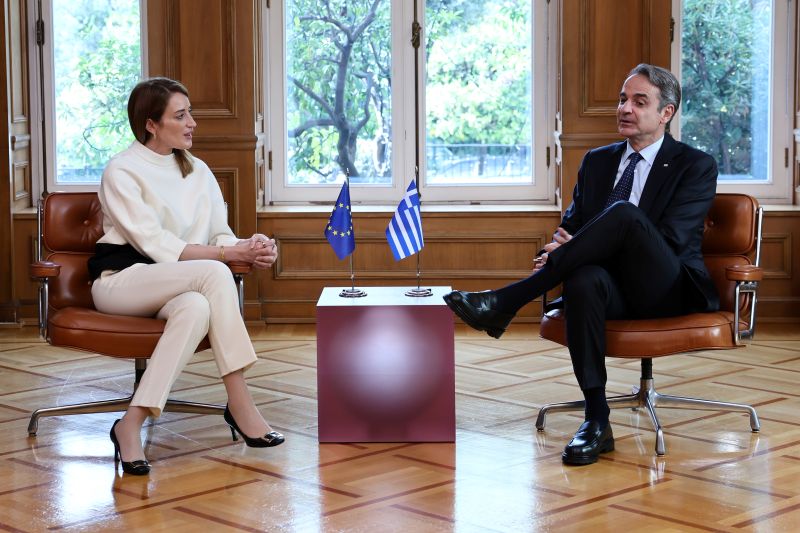
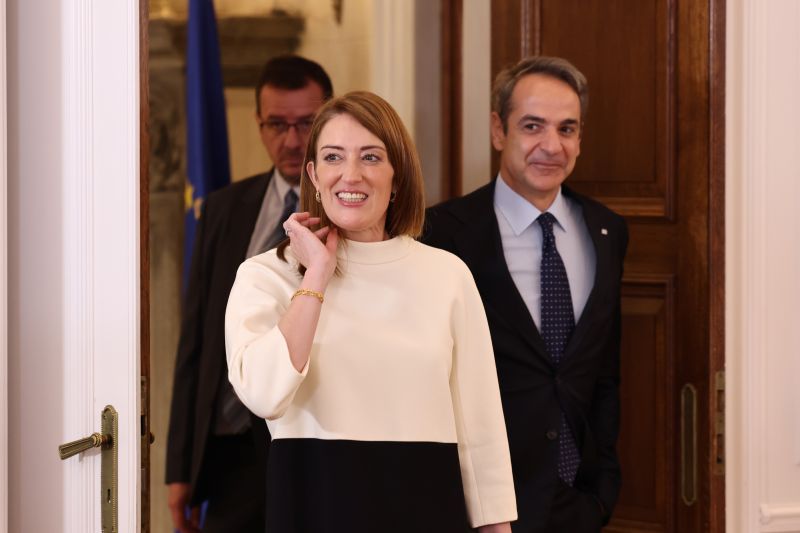
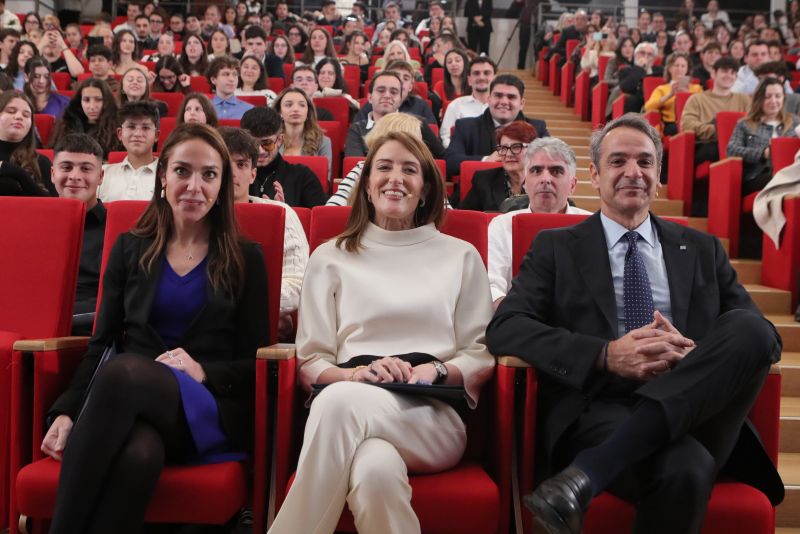
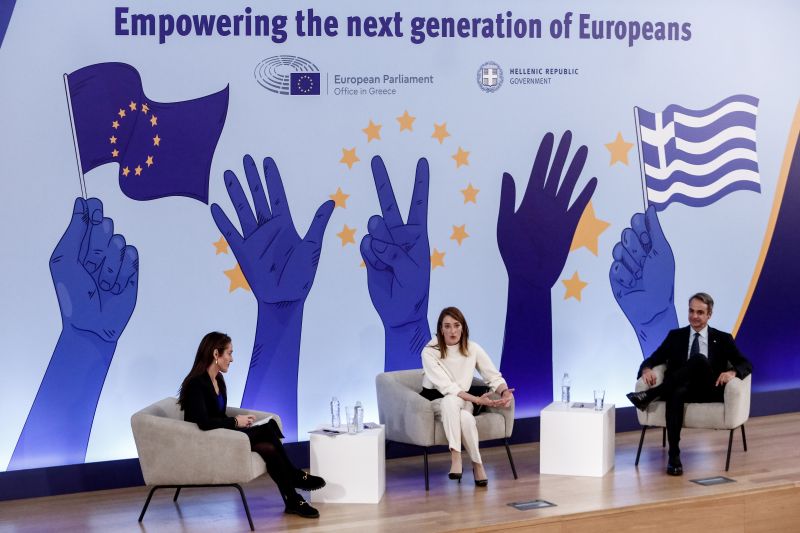
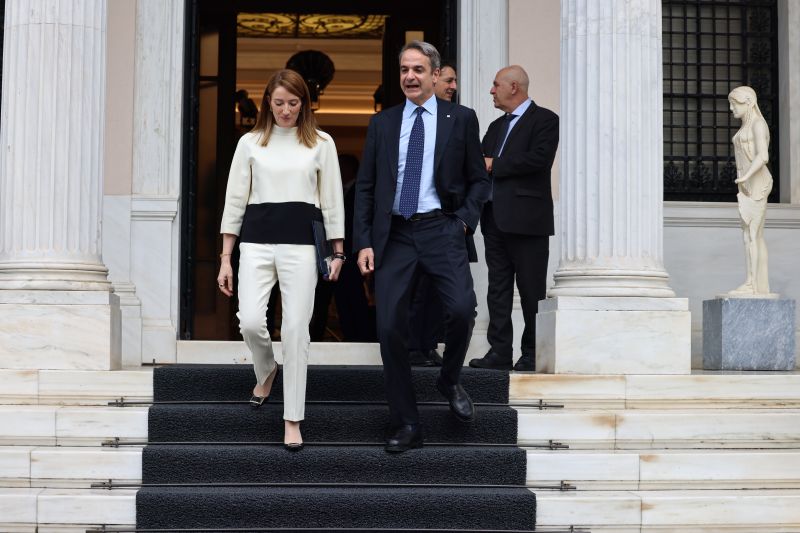
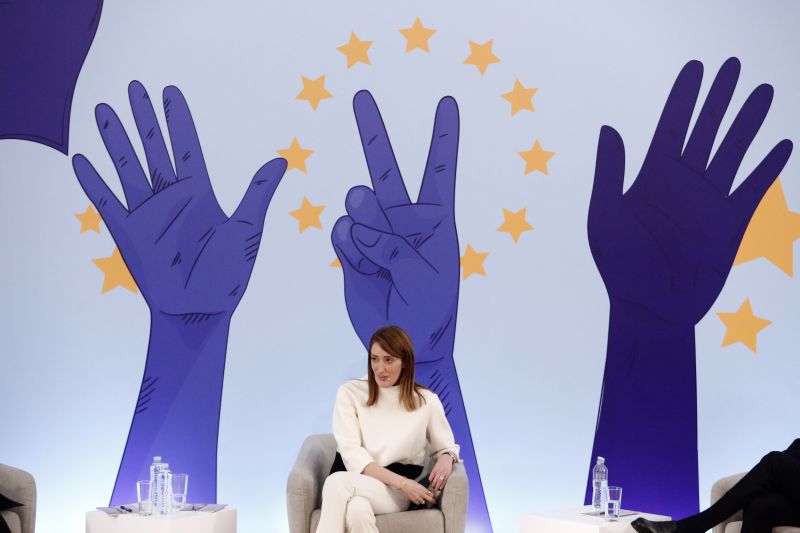
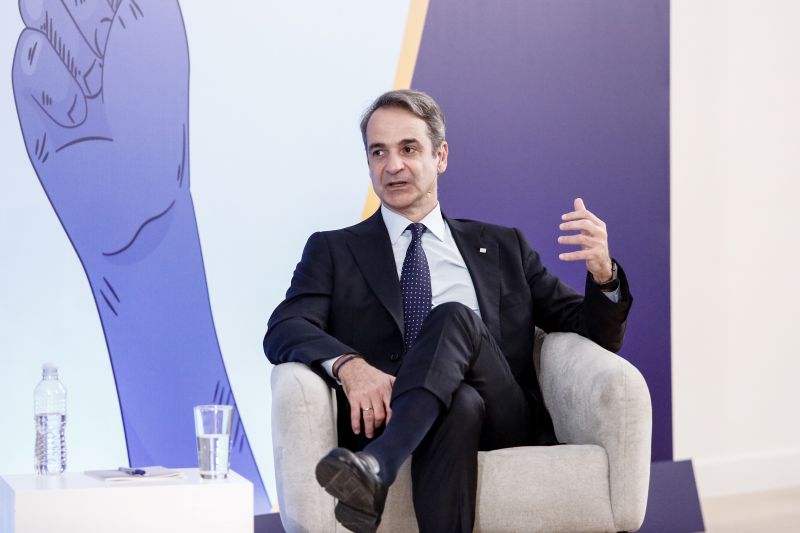
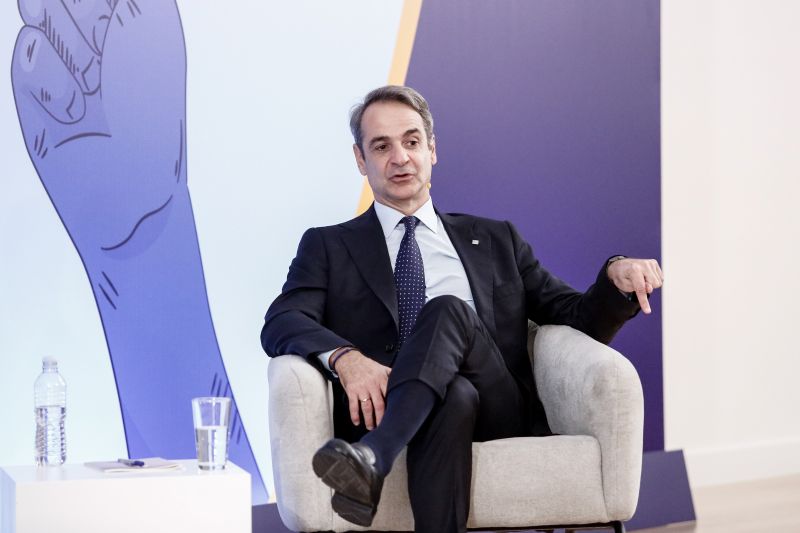
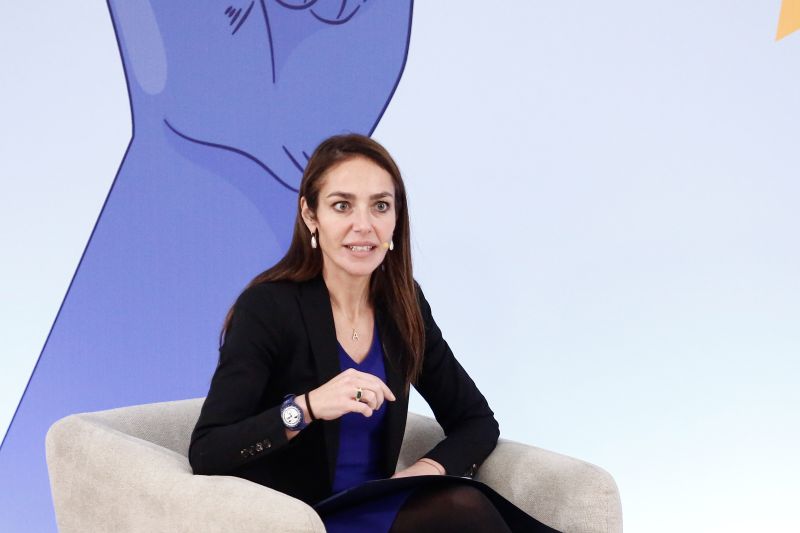
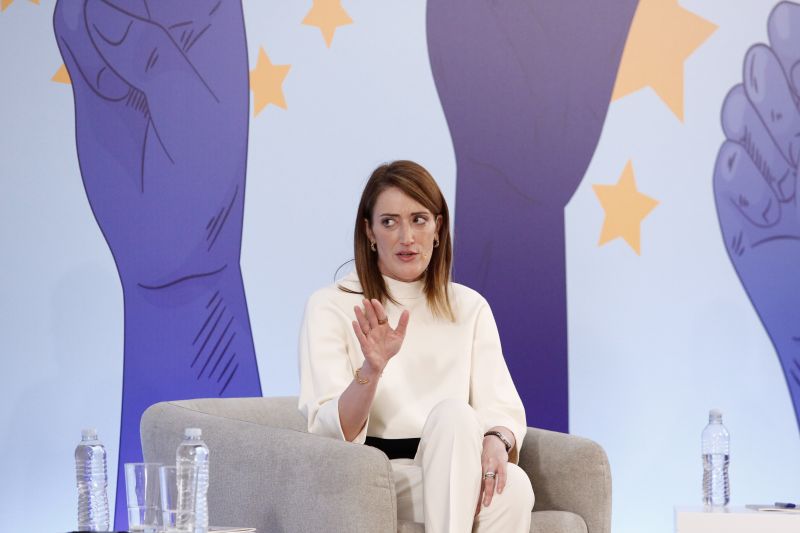
Roberta Metsola-Kyriakos Mitsotakis: decide for yourself
On the subject of engagement with politics and public affairs, Roberta Metsola spoke from personal experience. “Active participation in public affairs starts with a conscious decision: not letting others decide for you.” She also encouraged people who enter the world, essentially, after their academic tenure “to believe in their worth and not allow anyone to hold them back”.
For his part, Kyriakos Mitsotakis, who has discovered new horizons of communication with younger ages through social media, spoke about the substantial nature of their discussion with young people and stated that their participation in public affairs is essential: “The future is shaped only through collective participation. If you don’t do it, rest assured that others will.” Additionally, he spoke about a stigma concerning the generation that grew up during the crisis, characterizing it as “a generation that saw its future stolen”.
Satisfaction with the reversal of brain drain
Furthermore, the Prime Minister spoke about the measures the government has taken regarding young people. He focused on keeping them in the country, while mentioning that even those who had left Greece during the crisis years are returning to positions that provide them with good compensation. He expressed his satisfaction with the reversal of brain drain, saying that the government has created half a million jobs since 2019, while also proceeding with education reforms. He also spoke about the government’s new tax measures that will take effect from New Year’s Day 2026. Namely, zero taxation up to age 25 and its reduction to 9% from 22% for ages from 25 to 30.
An additional goal, which is also a priority, is to connect universities with the labor market. There is also a need, as he emphasized, for strengthening technical education. It is necessary, he said, “for young people to learn to adapt to rapid changes and accept that their career paths will not be predictable.” “Opening the political system to new voices” is a process for which efforts are already being made, with him and the government leading by example, seeking to staff the force with younger politicians, including in ministerial positions.
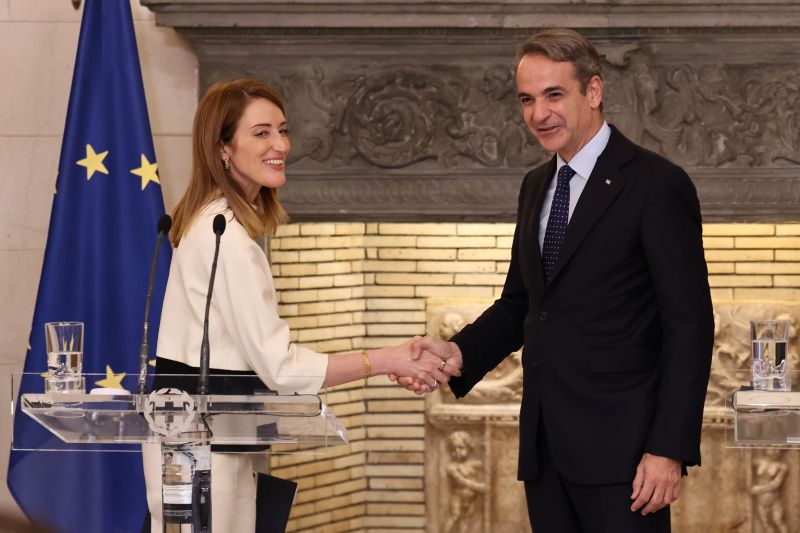

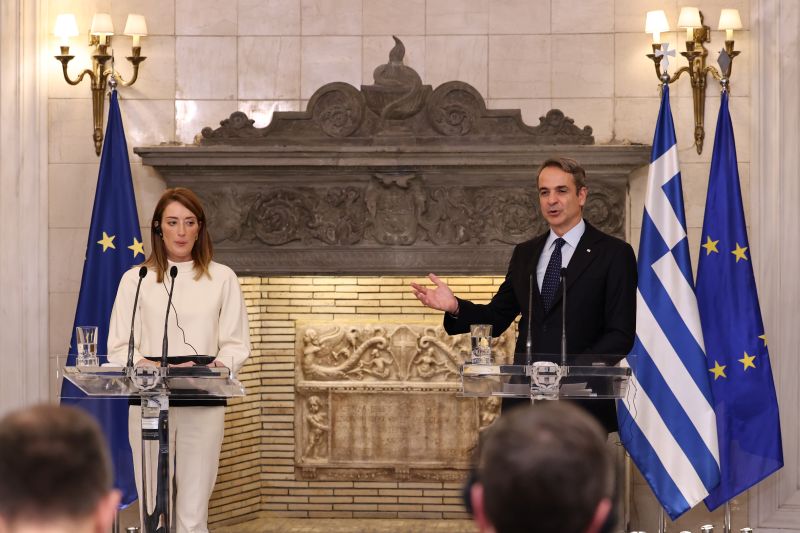
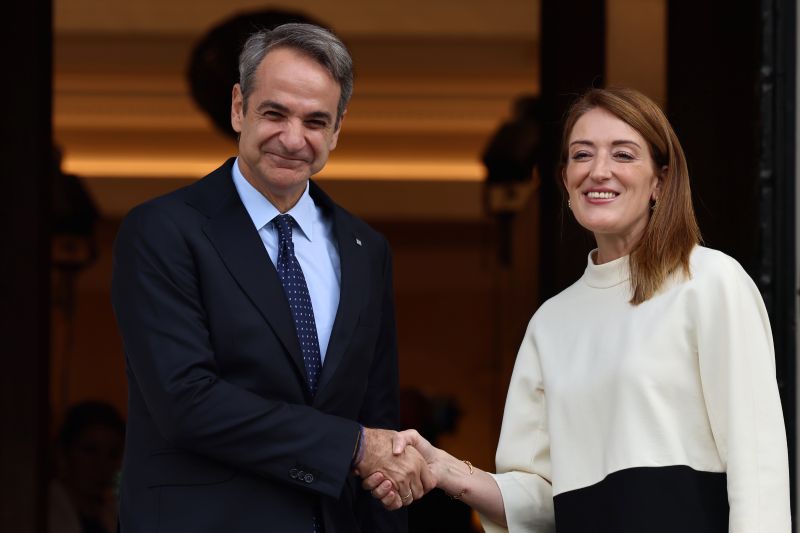
Turning the path for women into a highway
Roberta Metsola is, literally, an example of a female politician who not only outlined but implemented the blueprint of her journey that brought her to the European Parliament, as the third woman and first from the South in this position. Speaking again empirically but also with a sense of the difficulties on the road to office, she said that “I want to ensure that another twenty years won’t pass before another woman is elected.” She also reminded of the relatively unnecessary difficulties that women face, which multiply when they become mothers, in politics, even regarding the burden of criticism, as well as the equally probably unnecessary demands. She added that “it must become easier for young women to participate actively”.
Kyriakos Mitsotakis, for his part, spoke about the importance Europe has for Greece and the “responsibility” the government has to explain to citizens the reasons this happens. With the “transfer of national competencies,” which became the consequence of accession to the European Union, Greece received benefits in return, “gained significant advantages such as infrastructure funding, support during crises and geopolitical security.” He also gave examples, the funding of schools, hospitals, electric buses with European funds. He also characterized the implementation of reforms as essential for the absorption of European funds.
Artificial intelligence and social media
The good use of artificial intelligence has particular importance for the Prime Minister: “Artificial intelligence should not be a substitute for human relationships. It should be a tool that makes us better. Technology offers enormous possibilities, but at the same time deprives us of critical skills if used passively, e.g., to produce a paper instead of helping with thinking.” It is also important for Kyriakos Mitsotakis to “maintain our humanity and limit digital dependency.” He gave the same importance to social media use by minors. He mentioned, therefore, that it is a matter of European discussion. Regarding access restrictions, he commented that “smart regulation is being considered to protect young people’s mental health.” There is “tremendous difficulty in refuting a lie when it spreads at dizzying speed by armies of digital bots,” while he separated the wheat from the chaff: “Facts are facts and opinions are opinions”.
Roberta Metsola’s statements were on the same wavelength: “The European Parliament has already adopted a framework for artificial intelligence and is considering measures such as age verification and even restricting access to social media for minors under 16 years old”.
Finally, the President of the European Parliament characterized programs like Erasmus+ as milestone experiences for young people, which, as she emphasized, “strengthen understanding of European identity.” The Prime Minister, for his part, connected these programs with the prospect of labor mobility and increased opportunities for young people throughout Europe.